
WHY SAFETY MARGINS EXIST IN CIVIL ENGINEERING AND WHY THEY MUST NEVER BE COMPROMISED
- Anjali Regmi
- Jan 28
- 4 min read

One of the most fundamental concepts in civil engineering is the idea of safety margins. Every structure that stands safely for decades does so not because loads were guessed correctly, but because engineers designed with deliberate allowances for uncertainty. Safety margins are not signs of inefficiency or overcautious thinking. They are the backbone of responsible engineering. Many students and even early career engineers misunderstand safety margins, assuming they exist only to compensate for lack of confidence. In reality, safety margins exist because civil engineering deals with real world uncertainties that cannot be eliminated completely.
This blog explains why safety margins exist in civil engineering, how they protect public safety, and why compromising them is one of the most serious professional failures an engineer can commit.
WHAT SAFETY MARGINS MEAN IN CIVIL ENGINEERING
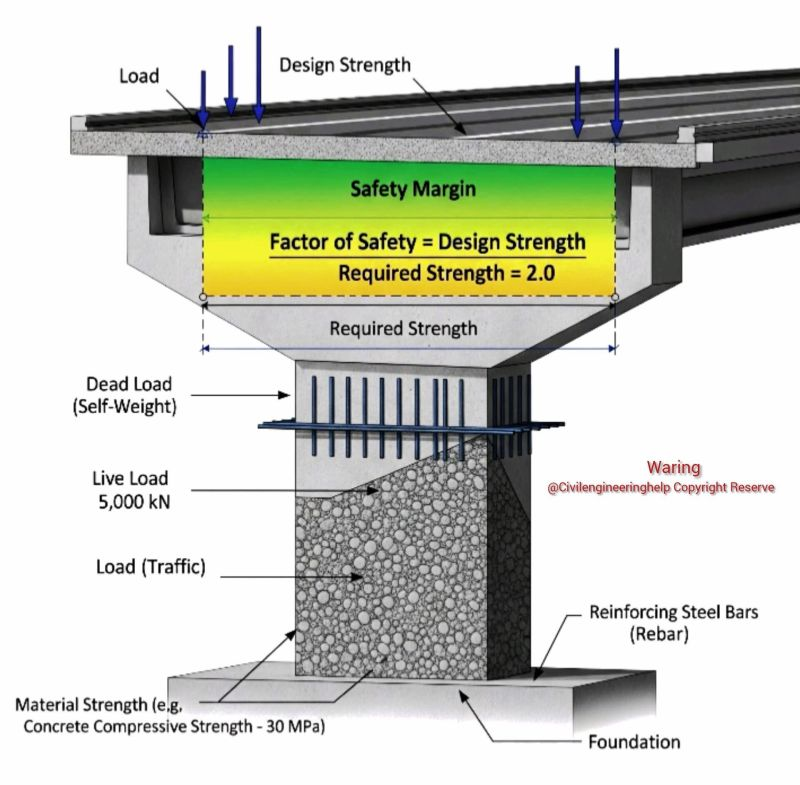
Safety margins in civil engineering refer to the additional capacity built into structures beyond the expected loads and stresses. Engineers calculate how much load a structure is likely to experience and then design it to withstand more than that value.
This additional capacity accounts for uncertainties in material strength, construction quality, loading variations, environmental effects, and future usage. Safety margins are expressed through factors of safety, load combinations, and conservative assumptions in design codes.
They exist because the real world is never as controlled as theoretical models.
UNCERTAINTY IS INEVITABLE IN REAL STRUCTURES
Civil engineering does not operate in laboratory conditions. Materials vary from batch to batch. Soil conditions change across a site. Loads fluctuate over time. Construction workmanship differs based on labor, supervision, and environment.
Even with the best planning and testing, uncertainty cannot be removed entirely. Safety margins absorb these uncertainties and prevent minor variations from becoming major failures. Ignoring uncertainty is not optimism. It is negligence.
ROLE OF SAFETY MARGINS IN PUBLIC SAFETY
Civil engineering structures serve the public. Bridges carry thousands of vehicles daily. Buildings house families, hospitals, and schools. Infrastructure failures can result in loss of life, economic damage, and erosion of public trust.
Safety margins ensure that structures remain safe even when unexpected events occur.
These may include heavier traffic than anticipated, minor construction defects, or environmental stresses beyond average conditions. When safety margins exist, structures fail gradually rather than suddenly, allowing time for detection and intervention.
WHY CODES ENFORCE SAFETY MARGINS
Engineering codes do not permit arbitrary design. They enforce minimum safety margins based on research, testing, and lessons learned from past failures.
These margins are not theoretical. Many code provisions exist because earlier structures failed when margins were insufficient. Each collapse, crack, or instability recorded in history has contributed to stricter and smarter safety requirements.
Engineers who respect codes respect the collective learning of the profession.
ECONOMY VS SAFETY A FALSE CONFLICT
A common misconception is that safety margins unnecessarily increase cost. In reality, properly designed safety margins optimize long term value.
Reducing safety margins may save material costs initially, but it increases the risk of repairs, retrofitting, litigation, and reputational damage. The cost of failure always exceeds the cost of safety.
True engineering economy balances safety and efficiency, not one at the expense of the other.
WHY SAFETY MARGINS MUST NEVER BE COMPROMISED

Compromising safety margins usually occurs due to commercial pressure, time constraints, or overconfidence. Engineers may be asked to reduce reinforcement, alter design assumptions, or ignore quality deviations.
Yielding to such pressure violates professional responsibility. Once safety margins are compromised, engineers lose control over structural behavior under extreme conditions. No amount of experience or intuition can justify ignoring calculated safety provisions.
SAFETY MARGINS AND ENGINEERING ETHICS
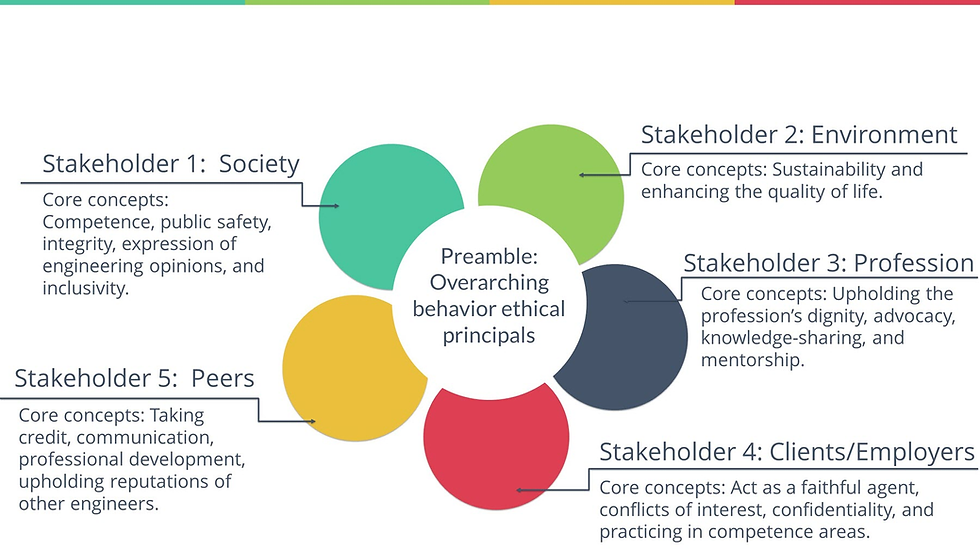
Engineering ethics demand that public safety be prioritized above all else. Civil engineers are entrusted with decisions that affect lives.
Safety margins provide engineers with objective justification to resist unsafe demands. They allow engineers to say no with technical authority rather than personal opinion.
An engineer who compromises safety margins compromises professional integrity.
COMMON MISUNDERSTANDINGS AMONG STUDENTS AND YOUNG ENGINEERS
Many students view safety factors as arbitrary numbers to be memorized for exams. This mindset undermines understanding.
Safety margins are the result of probabilistic thinking, material behavior studies, and failure analysis. Understanding why they exist helps engineers apply them intelligently rather than mechanically.
Young engineers must learn that safety margins are deliberate safeguards, not optional buffers.
SAFETY MARGINS IN MODERN ENGINEERING PRACTICE
Modern tools allow engineers to perform advanced analysis, but they do not eliminate uncertainty. In fact, complex models introduce new assumptions and dependencies.
Safety margins remain essential even in advanced computational design. They compensate for modeling limitations and unforeseen real world behavior.
Technology enhances engineering, but it does not replace the need for conservative judgment.
INTERVIEW AND PROFESSIONAL RELEVANCE
Interviewers often assess an engineer’s understanding of safety margins to evaluate maturity and ethics. Engineers who explain safety margins clearly demonstrate responsibility and conceptual clarity.
In professional practice, engineers known for respecting safety margins earn trust from clients, authorities, and peers. Such trust leads to leadership roles and long term career stability.
LONG TERM CONSEQUENCES OF IGNORING SAFETY MARGINS
History has repeatedly shown that ignoring safety margins leads to failures. Structural collapses, bridge failures, and infrastructure accidents often trace back to compromised design or execution. These failures damage lives, careers, and public confidence. Engineers involved face legal, professional, and moral consequences that far outweigh short term gains.
CONCLUSION
Safety margins exist in civil engineering because uncertainty is unavoidable and public safety is paramount. They represent the profession’s collective wisdom and ethical responsibility.
Civil engineers must treat safety margins as non negotiable principles, not adjustable conveniences. Respecting them protects lives, upholds professional integrity, and preserves public trust.
In civil engineering, strength is not measured by how close designs come to failure, but by how responsibly they prevent it.


Comments