
Why Future Highways Might Charge Electric Cars While Driving

The global transition toward electric vehicles (EVs) is accelerating at an unprecedented pace. Major automobile companies such as Tesla, BYD, and Hyundai Motor Company are rapidly expanding their EV lineups, while governments worldwide are pushing for cleaner transportation systems. However, despite the growing popularity of electric vehicles, one major challenge continues to slow adoption: battery limitations and charging infrastructure. Engineers are now exploring a revolutionary solution that could transform the future of mobility highways capable of charging electric cars while they are driving.

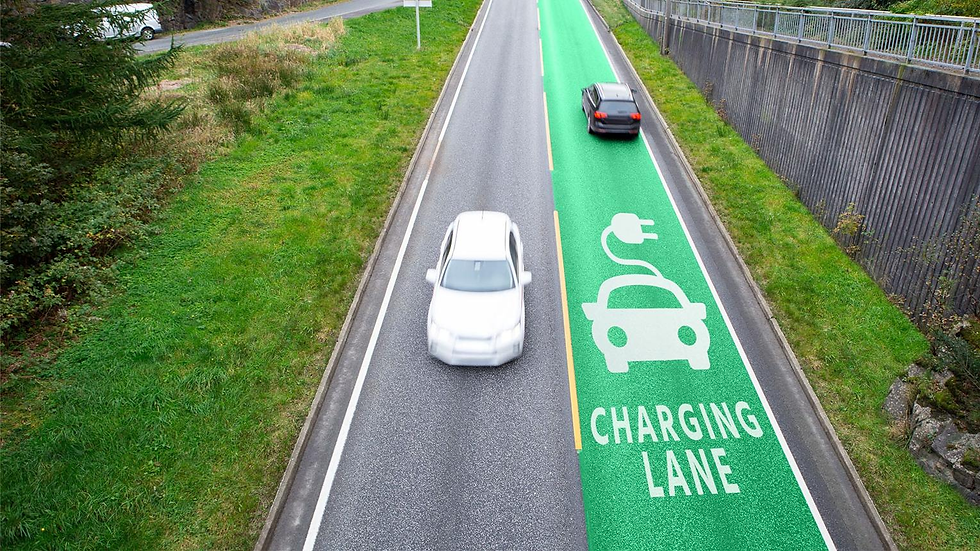
This concept, often referred to as dynamic wireless charging or electric road systems (ERS), aims to eliminate the need for frequent charging stops by allowing vehicles to receive power continuously as they travel. If successfully implemented on a large scale, future highways may completely redefine how transportation infrastructure works.
At present, electric vehicles depend heavily on charging stations. Drivers often need to stop for anywhere between 30 minutes to several hours, depending on the battery capacity and charger speed. Long-distance travel can become inconvenient because charging stations are not always available in remote areas, and waiting times can create delays. Future charging highways could solve this problem by turning the road itself into a power source.
There are several engineering methods being tested to make this technology possible. One of the most promising approaches is wireless inductive charging. This technology works similarly to wireless phone charging but on a much larger scale. Coils embedded beneath the road surface generate an electromagnetic field, and vehicles equipped with compatible receivers can collect that energy while moving. The process happens without physical contact between the car and the road, making it safe and efficient.
Another approach involves conductive charging through rails or electric strips embedded directly into the road. Vehicles use mechanical connectors to draw electricity while driving. Countries like Sweden have already tested such systems on certain road sections. Sweden has been one of the leading nations experimenting with electrified highways as part of its plan to become fossil-fuel independent in transportation.
Germany has also launched pilot projects to test electric highways specifically for trucks. In one such initiative, engineers installed overhead electric cables on sections of highways that allow hybrid trucks to connect through pantograph systems, similar to electric trains. Germany is investing heavily in these systems because freight transport contributes significantly to carbon emissions.
One of the biggest advantages of charging highways is the possibility of smaller vehicle batteries. Today, EV manufacturers install large batteries primarily to provide long driving ranges. These batteries are expensive, heavy, and require large amounts of lithium, cobalt, and nickel. If vehicles can recharge continuously while driving, manufacturers may no longer need oversized batteries. This could reduce vehicle costs, lower weight, and improve overall energy efficiency.
Charging highways could also help solve urban infrastructure challenges. Cities currently need thousands of charging stations to support growing EV adoption. Installing and maintaining these charging stations requires significant investment and land use. Roads that supply power directly would reduce dependency on stationary charging networks and simplify urban planning.
However, building such highways presents serious engineering challenges. Embedding charging systems beneath roads requires massive infrastructure upgrades. Construction costs would be extremely high, especially for countries with extensive highway networks. Engineers must also ensure durability because roads constantly face pressure from heavy vehicles, weather changes, water damage, and maintenance requirements.
Standardization is another major issue. Car manufacturers worldwide would need to agree on universal charging technologies so vehicles from different brands can use the same roads. Without global standards, adoption could become fragmented.
Safety concerns also remain critical. Engineers must ensure electromagnetic fields remain safe for humans, prevent electrical accidents during rain or flooding, and create systems resistant to damage or vandalism.

Countries including Sweden, Germany, South Korea, and Israel are already investing in research and pilot projects to test these futuristic transportation systems. While widespread adoption may still take years, experts believe electric highways could become one of the most important infrastructure innovations of the 21st century.
The roads of the future may no longer simply connect destinations they may actively power the vehicles traveling on them. If engineers can overcome the technical and financial challenges, highways that charge cars while driving could remove range anxiety, accelerate EV adoption, and push humanity closer toward a cleaner and smarter transportation future.


Comments