
Why Construction Quality Fails on Site Even When Materials Are Good
- Anjali Regmi
- Mar 16
- 3 min read

In civil engineering, the quality of a structure depends on both good materials and proper construction practices. Many people assume that if high-quality materials such as cement, steel, and aggregates are used, the structure will automatically be strong and durable. However, in real construction projects, quality failures often occur even when the materials meet all engineering standards.
This happens because construction quality is heavily influenced by execution on site. Mistakes during mixing, placement, supervision, or curing can weaken a structure even when good materials are used. Understanding these real-life issues is important for civil engineers responsible for maintaining construction quality.
Improper Concrete Mixing on Site
Concrete strength depends on the correct proportion of cement, sand, aggregates, and water. If the mixing process is not properly controlled, the resulting concrete may not achieve the required strength.
Common mixing mistakes include:
Adding too much water to improve workability
Incorrect measurement of materials
Uneven mixing in manual concrete preparation
Too much water in the mix is a frequent problem because workers sometimes add extra water to make concrete easier to place.
Poor Concrete Compaction
After concrete is poured into formwork, it must be properly compacted to remove air voids. If compaction is inadequate, the concrete may contain voids that reduce its strength and durability.
Typical problems caused by poor compaction include:
Honeycombing in concrete surfaces
Reduced structural strength
Increased permeability allowing water penetration
Using proper vibration techniques helps ensure that concrete fills all spaces around reinforcement bars.
Inadequate Concrete Curing
Concrete requires proper curing to achieve its designed strength. Curing involves maintaining moisture and temperature conditions that allow cement hydration to occur.
However, curing is often neglected on construction sites.
Common curing mistakes include:
Removing formwork too early
Insufficient water curing
Allowing concrete surfaces to dry quickly
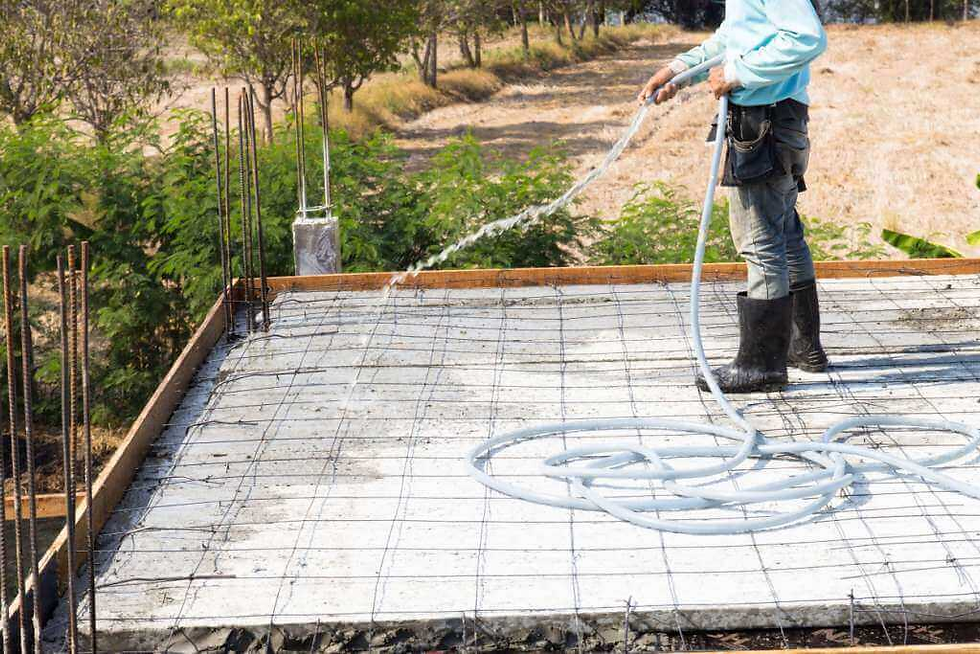
Without proper curing, concrete may develop cracks and reduced compressive strength.
Incorrect Reinforcement Placement
Steel reinforcement provides tensile strength to reinforced concrete structures. If reinforcement bars are not placed correctly according to design drawings, the structure may not perform as intended.
Typical reinforcement mistakes include:
Incorrect spacing between bars
Insufficient lap length between bars
Missing cover blocks
Improper reinforcement placement weakens the load-carrying capacity of structural elements.
Weak Formwork Installation
Formwork provides the shape for concrete elements during construction. If formwork is poorly installed or not properly supported, the concrete structure may develop dimensional inaccuracies.
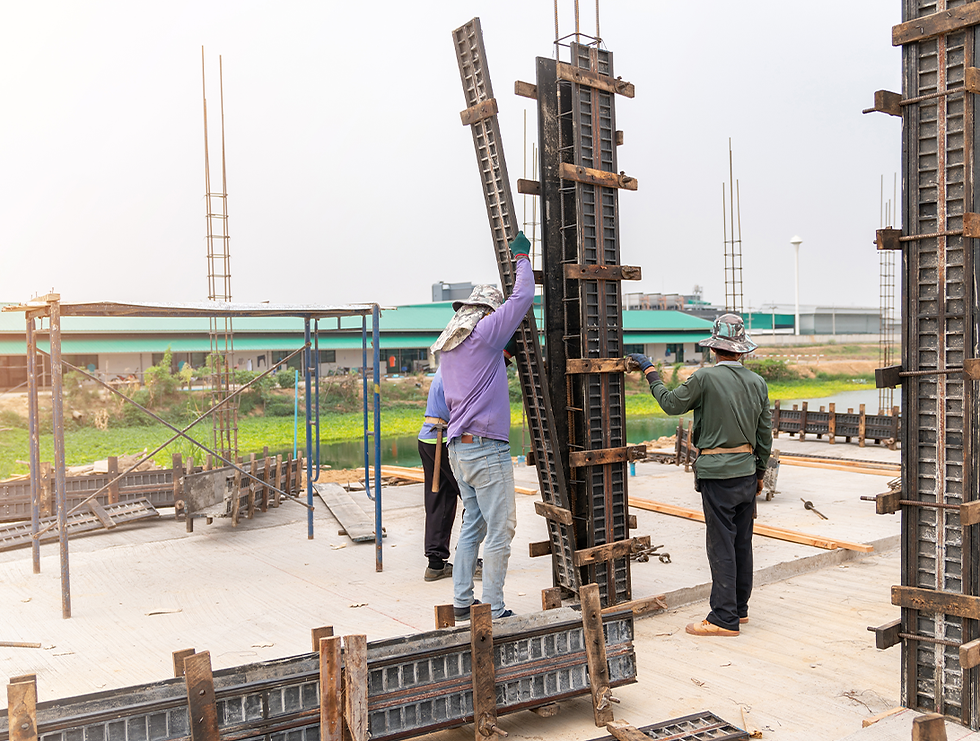
Common formwork problems include:
Misaligned columns or beams
Uneven slab thickness
Concrete leakage from shutter joints
Proper formwork alignment ensures accurate structural geometry.
Lack of Continuous Site Supervision
Construction quality depends heavily on effective supervision. If engineers do not monitor site activities regularly, workers may unknowingly perform tasks incorrectly.
Examples include:
Improper reinforcement tying
Incomplete concrete compaction
Poor masonry alignment
Frequent inspections help detect mistakes before they become permanent structural defects.
Poor Communication Between Engineers and Workers
Communication gaps between engineers and labor teams often cause construction errors.
Workers may misunderstand instructions regarding:
Reinforcement placement
Concrete mix proportions
Structural dimensions
Clear instructions and supervision help reduce such mistakes.
Time Pressure and Rushed Work
Construction projects often operate under tight deadlines. When schedules become tight, some construction teams rush work activities to maintain project timelines.

Rushed work can result in:
Incomplete compaction
Poor finishing
Insufficient curing
Maintaining quality while meeting deadlines is one of the biggest challenges in construction management.
Poor Training of Construction Workers
Construction workers may not always be fully trained in modern construction practices. Lack of training can lead to incorrect work techniques and reduced construction quality.
Training programs for workers can significantly improve project outcomes.
Ignoring Quality Control Procedures
Quality control procedures such as material testing, inspection checklists, and documentation are essential for maintaining construction standards.
If these procedures are ignored, defects may go unnoticed until the structure is already completed.
Proper quality management systems help prevent construction failures.
Conclusion
Construction quality does not depend solely on the quality of materials used in a project. Even high-grade materials can produce weak structures if construction processes are not properly executed.
Problems such as improper concrete mixing, poor compaction, inadequate curing, incorrect reinforcement placement, and weak supervision can significantly reduce structural performance. Civil engineers must therefore focus not only on material quality but also on proper construction practices and continuous site monitoring.
In real construction projects, the success of a structure depends on both good engineering design and disciplined execution on site.


Comments