
WHY CIVIL ENGINEERS MUST DESIGN FOR HUMAN ERROR
- Anjali Regmi
- Feb 6
- 3 min read

INTRODUCTION
Civil engineering operates in the real world, not in controlled laboratory conditions. No matter how detailed the drawings, how strict the procedures, or how skilled the workforce, human error is unavoidable. People get tired, distracted, rushed, or misinformed. Assuming perfect behavior on construction sites is one of the most dangerous assumptions an engineer can make.
Designing for human error does not mean accepting negligence. It means acknowledging reality. Civil engineers must anticipate mistakes and ensure that systems remain safe even when things do not go exactly as planned. This mindset separates responsible engineers from theoretical ones. This blog explains why designing for human error is essential in civil engineering and how it protects lives, infrastructure, and professional integrity.
UNDERSTANDING HUMAN ERROR IN CONSTRUCTION
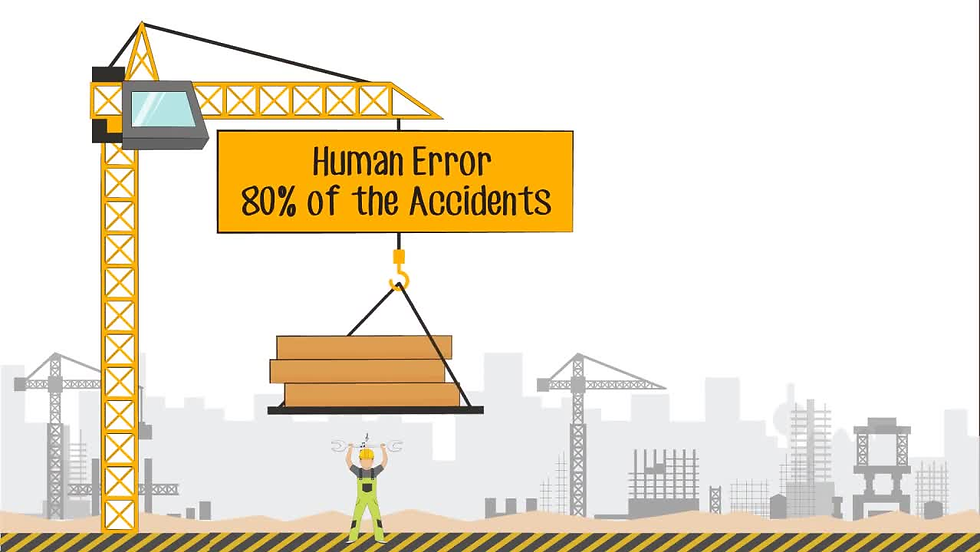
Human error in construction can take many forms. Incorrect placement of reinforcement, improper curing, misinterpretation of drawings, skipped inspections, or unsafe sequencing are common examples. These errors often occur not because workers lack skill, but because of fatigue, pressure, communication gaps, or poor coordination.
Civil engineers work within complex systems involving multiple teams and changing conditions. Expecting flawless execution ignores these realities. Engineers who understand human limitations design systems that remain safe despite occasional mistakes.
WHY ASSUMING PERFECT EXECUTION IS DANGEROUS
Many failures occur not because designs were incorrect, but because designs assumed ideal execution. When systems have no tolerance for error, small mistakes escalate into serious failures.
For example, a design that requires extreme precision without allowance for deviation increases risk. Designs that depend heavily on manual judgment without checks invite failure. Engineers must ask how a system behaves when something goes wrong, not only when everything goes right.
DESIGNING SAFETY INTO SYSTEMS
Designing for human error means incorporating safety layers. Redundancy, clear load paths, conservative assumptions, and simple details increase error tolerance. Inspection access, clear detailing, and standardized components reduce reliance on individual perfection.
Fail safe design ensures that if one element fails, the system does not collapse immediately. Civil engineers must think beyond minimum compliance and design with resilience in mind.
ROLE OF CHECKS AND VERIFICATION
Verification systems exist because humans make mistakes. Drawings are reviewed, inspections are conducted, and tests are performed to catch errors before they cause harm.

Civil engineers must respect these processes and not treat them as formalities. Skipping checks assumes perfection, which reality rarely delivers. Engineers who design with verification in mind create systems that detect errors early rather than suffer their consequences later.
HUMAN ERROR AND SITE CONDITIONS
Construction sites are dynamic environments. Noise, heat, weather, and time pressure affect concentration and judgment. Engineers who design without considering site conditions underestimate risk. Simple details, clear markings, and logical sequencing help reduce errors under stress. Good design supports humans instead of working against them.
INDIAN CONTEXT AND PRACTICAL REALITIES
In India, construction often involves diverse skill levels, language differences, and high pressure schedules. These factors increase the likelihood of human error.
Designs that are robust, simple, and forgiving perform better under such conditions. Indian civil engineers who design with error tolerance improve safety and execution quality significantly.
WHY EXPERIENCED ENGINEERS DESIGN DIFFERENTLY
Experienced engineers have seen how projects unfold on site. They understand that mistakes happen despite best intentions. As a result, they design with margins, clarity, and redundancy.
This approach is not pessimistic. It is realistic. Experience teaches that protecting against error protects everyone involved.
IMPACT ON PROFESSIONAL RESPONSIBILITY AND ETHICS
Civil engineers are ethically responsible for public safety. Ignoring human error shifts risk onto workers and users.
Designing for error reflects moral responsibility. It acknowledges that systems must protect people, not punish them for being human.
WHAT STUDENTS AND YOUNG ENGINEERS MUST LEARN
Students often focus on ideal solutions. Real world engineering demands anticipation of imperfection.Young engineers should observe where mistakes occur on site and ask how design could reduce their impact. Learning to design for error builds professional maturity early.
DESIGNING FOR HUMAN ERROR IS NOT WEAKNESS
Some believe that designing for error encourages carelessness. In reality, it acknowledges reality while still enforcing discipline. Airplanes are designed assuming human error, yet aviation remains one of the safest industries. Civil engineering must adopt the same mindset.

CONCLUSION
Human error is inevitable in construction. Civil engineers who ignore this reality create fragile systems. Engineers who design for human error create resilient, safe, and responsible infrastructure.
Designing for error does not lower standards. It raises them. It reflects intelligence, experience, and ethical commitment. In civil engineering, the best designs are those that remain safe even when humans are imperfect.


Comments