
What Civil Engineering Students Should Learn Before Their First Site Visit
- Anjali Regmi
- Feb 11
- 4 min read

Introduction
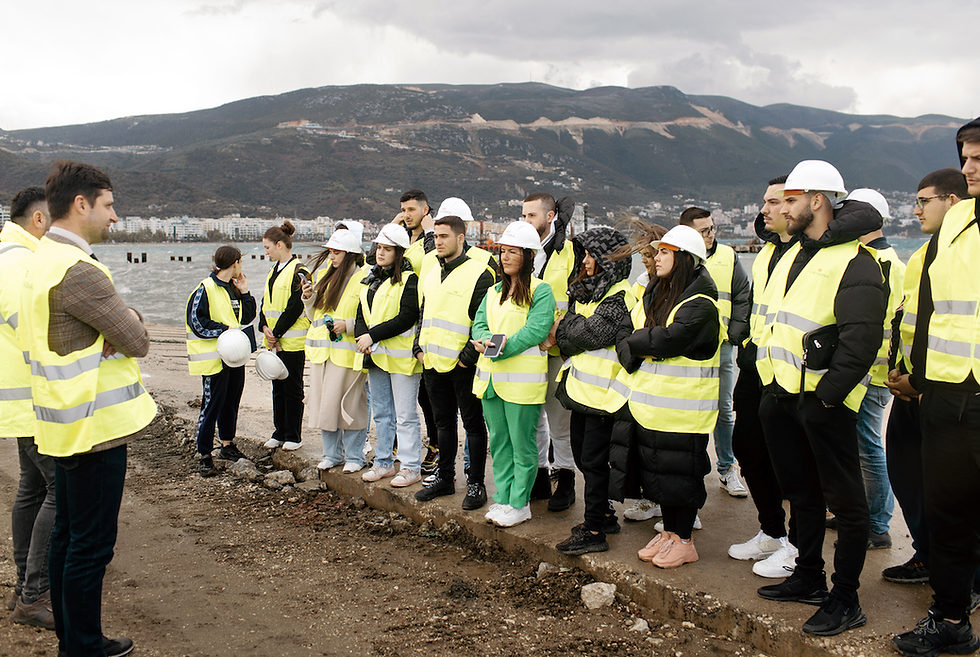
For most civil engineering students, the first construction site visit is both exciting and intimidating. Textbooks, drawings, and classroom problems suddenly turn into moving machines, noisy labor, tight schedules, and real consequences. Many students walk onto site expecting to “learn everything there,” but the truth is harsh: sites don’t teach basics—they test whether you already have them. Students who prepare before their first visit learn faster, earn respect, and avoid costly mistakes. This article explains what every civil engineering student should know before stepping onto a construction site for the first time.

Understanding What a Construction Site Really Is
A construction site is not a classroom or a training lab. It is a production environment where time, money, and safety are constantly at stake. Engineers on site are focused on execution, coordination, and problem-solving—not teaching fundamentals. Students who arrive expecting step-by-step explanations often feel ignored. Understanding this reality beforehand helps students observe actively instead of waiting passively for instructions.
Basic Site Safety Knowledge Is Non-Negotiable
Before entering a site, students must understand basic safety rules. Personal protective equipment such as helmets, safety shoes, reflective vests, and gloves are not optional accessories; they are minimum entry requirements. Students should know why helmets are worn even when nothing seems overhead, why open footwear is dangerous, and why barricaded zones must never be crossed.
Equally important is behavior. Standing under suspended loads, walking near operating machinery, or using mobile phones while moving around site are serious safety violations. A student who shows safety awareness is immediately taken more seriously by site engineers.
Ability to Read Basic Construction Drawings
One of the biggest shocks for first-time site visitors is realizing that everything on site flows from drawings. Students should be comfortable reading basic plans, sections, and elevations before visiting. Understanding column grids, levels, dimensions, and symbols is essential. Without this skill, site activities appear chaotic and confusing.
Students don’t need to master complex detailing initially, but they should be able to identify structural elements on drawings and relate them to what they see on ground. This ability turns a site visit from passive watching into active learning.
Familiarity With Common Site Terminology
Construction sites use a language that textbooks rarely teach. Words like shuttering, centering, cover block, kicker, lap length, honeycombing, slump, curing, and de-shuttering are used casually and frequently. Students unfamiliar with these terms struggle to follow even basic conversations.
Before visiting site, students should familiarize themselves with common construction terminology. This not only improves understanding but also builds confidence while interacting with engineers and supervisors.
Basic Knowledge of RCC Construction Sequence
Students should understand the basic sequence of RCC work before visiting a site. This includes reinforcement fixing, shuttering installation, pre-pour inspection, concreting, vibration, curing, and de-shuttering. Knowing this sequence helps students anticipate what comes next and why certain activities are happening at specific times.
Without this understanding, site work appears random. With it, students can mentally connect theory with practice and ask more meaningful questions.

Awareness of Construction Materials and Their Purpose
Before stepping onto site, students should know basic construction materials and why they are used. Cement types, steel reinforcement, aggregates, admixtures, bricks, blocks, and curing compounds are encountered daily on site. Understanding material purpose helps students grasp quality control decisions.
For example, knowing why cover blocks are important or why water-cement ratio matters makes site instructions logical rather than arbitrary. This knowledge also prevents students from absorbing wrong practices blindly.
Respect for Site Hierarchy and Roles
Construction sites function through clear hierarchy. Site engineers, supervisors, foremen, contractors, and laborers all have defined roles. Students must understand that bypassing this hierarchy or questioning instructions casually can create confusion or conflict.
Respecting site hierarchy does not mean staying silent. It means knowing whom to approach, when to ask questions, and how to observe respectfully. Students who show discipline and humility are more likely to be guided and trusted.
Observation Skills Matter More Than Talking
One of the most valuable skills students should develop before site visits is observation. Watching how reinforcement is tied, how shuttering is aligned, how checks are done before concreting, and how problems are resolved teaches more than constant questioning.
Sites reward students who observe quietly, take notes, and connect what they see with what they have studied. Talking too much without understanding often labels a student as unserious.
Basic Measurement and Level Understanding
Students should have a working understanding of measurements, levels, and benchmarks. Knowing how levels are transferred, why tolerance matters, and how dimensions are verified helps students understand layout work. Even basic familiarity with leveling instruments or total station concepts improves comprehension.
This knowledge also highlights how small measurement errors can lead to large execution problems—an insight textbooks rarely emphasize.
Professional Attitude and Site Etiquette
A construction site judges students more by attitude than marks. Being punctual, dressing appropriately, listening carefully, and avoiding overconfidence go a long way. Writing notes, sketching details, and asking thoughtful questions at appropriate times show seriousness.
Students should remember that site engineers are responsible for safety and progress. Interrupting critical activities or treating the site like a casual visit leaves a poor impression.
Mental Readiness for Imperfect Conditions
Unlike labs, sites are dusty, noisy, stressful, and often uncomfortable. Weather, labor issues, and material delays are part of daily life. Students who expect clean conditions and perfect execution are often disappointed.
Understanding beforehand that real engineering happens under imperfect conditions prepares students mentally and emotionally. This mindset shift is crucial for long-term success in civil engineering.
Conclusion
A first site visit can either confuse or transform a civil engineering student—the difference lies in preparation. Learning basic safety, drawings, terminology, construction sequence, and site behavior before visiting turns confusion into clarity. Construction sites do not slow down to teach fundamentals, but they reward students who arrive prepared to observe, understand, and respect the process. For civil engineering students, the site is not just a place to visit—it is where theory finally becomes reality.


Comments