
THE SCIENCE BEHIND CIVIL ENGINEERING DECISIONS WHY CALCULATIONS MATTER
- Anjali Regmi
- Jan 28
- 4 min read

Civil engineering is often perceived from the outside as a profession focused mainly on construction and supervision. However, behind every structure that stands safely for decades lies a deep layer of scientific reasoning and calculation. Every beam, column, foundation, and road alignment exists because an engineer calculated, verified, and justified its behavior under real world conditions.
Calculations in civil engineering are not academic exercises. They are decisions with direct consequences on public safety, economic investment, and environmental impact. This blog explains why calculations form the backbone of civil engineering decisions, how they influence every stage of a project, and why respecting the science behind them is essential for professional maturity.
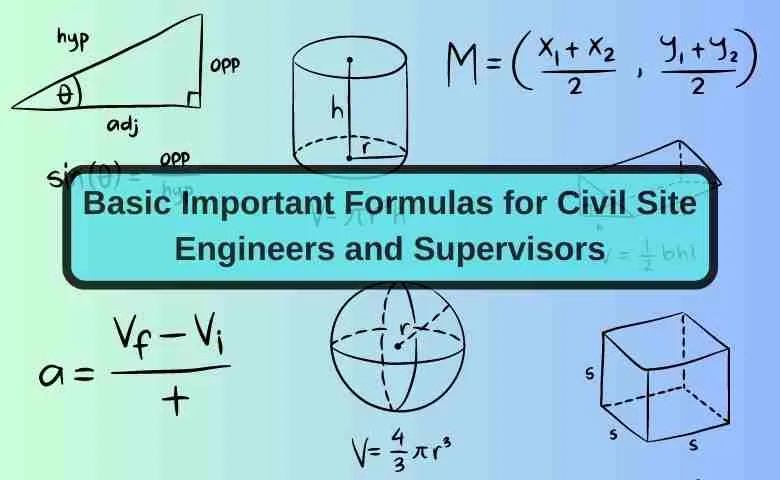
CIVIL ENGINEERING IS A SCIENCE BEFORE IT IS A PRACTICE
At its core, civil engineering is applied science. It uses principles of physics, mechanics, material science, and mathematics to predict how structures behave under various conditions. Gravity, wind, earthquakes, temperature changes, and soil behavior constantly act on structures.
Civil engineers do not guess outcomes. They calculate how forces flow through a structure, how materials respond to stress, and how foundations interact with the ground. Without this scientific base, construction would be unsafe experimentation rather than engineering.
Understanding this distinction separates trained engineers from unqualified builders.
WHY EVERY DESIGN DECISION REQUIRES CALCULATION
Every design decision in civil engineering carries responsibility. Choosing the size of a beam, the depth of a foundation, or the thickness of a slab is never arbitrary.
Calculations help engineers determine whether a structural element can safely resist applied loads with acceptable deformation. They also help optimize material usage so that structures are safe without being wasteful. Overdesign increases cost and resource consumption, while underdesign risks failure.
Calculations create balance between safety, economy, and performance.
LOADS AND FORCES GOVERN ENGINEERING CHOICES

Structures are constantly subjected to different types of loads. These include self weight, occupancy loads, wind forces, seismic effects, and sometimes impact or temperature related stresses.
Engineers calculate how these loads act individually and in combination. They then design structural elements to safely transfer these forces to the ground. This process is called load path analysis.
Ignoring load behavior or simplifying it without justification leads to dangerous assumptions. Engineers rely on calculations to visualize invisible forces acting on visible structures.
MATERIAL BEHAVIOR CANNOT BE ASSUMED
Materials behave differently under stress. Concrete cracks under tension but performs well in compression. Steel behaves elastically up to a point and then yields. Soil deforms based on moisture, density, and loading conditions.
Civil engineering calculations account for these behaviors using tested material properties and safety factors. Engineers must understand how materials react over time, including effects like creep, shrinkage, and fatigue.
Assuming ideal material behavior without calculation is one of the biggest risks in construction.
CALCULATIONS PROTECT PUBLIC SAFETY

Civil engineering structures are used by the public every day. Bridges carry thousands of vehicles. Buildings house families, offices, and hospitals. Infrastructure failures can result in loss of life and public trust.
Calculations ensure that structures remain safe under expected and unexpected conditions. Safety factors are applied to account for uncertainties and variations in material quality and loading.
When engineers calculate conservatively and responsibly, they protect lives, not just structures.
ROLE OF CODES AND STANDARDS IN CALCULATIONS
Engineering calculations are not performed in isolation. They follow codified standards developed through research, experience, and lessons learned from past failures.
Codes provide minimum requirements, load combinations, material limits, and safety margins. Engineers must understand the logic behind code provisions rather than applying formulas mechanically. Codes guide calculations, but engineering judgment interprets them responsibly.
WHY EXPERIENCE CANNOT REPLACE CALCULATIONS
Many young engineers believe that site experience alone can replace calculation based understanding. While experience is invaluable, it cannot substitute scientific reasoning.
Experience teaches what usually works. Calculations explain why something works and when it may fail. Engineers who combine experience with calculation based thinking make better decisions, especially in unusual or high risk situations.
True professionalism lies in balancing experience with analytical clarity.
CALCULATIONS AND ENGINEERING ETHICS
Engineering ethics demand that decisions be based on verified logic rather than convenience or pressure. Skipping calculations to save time or cost violates professional responsibility.
Engineers are ethically bound to ensure safety even when faced with commercial constraints. Calculations provide objective justification for decisions and help engineers stand firm against unsafe compromises.
Ethics and science work together in responsible civil engineering practice.
INTERVIEW AND CAREER RELEVANCE OF CALCULATION KNOWLEDGE
Interviewers often test understanding of calculations to assess conceptual clarity. They may not expect numerical solutions but want to evaluate how candidates think.
Engineers who understand the science behind decisions explain concepts confidently and logically. This ability reflects maturity and readiness for responsibility.
Strong fundamentals also support career transitions into design, consulting, and leadership roles.
CALCULATIONS IN THE MODERN ENGINEERING ERA
Modern tools and software assist engineers in performing complex calculations quickly. However, software does not replace understanding.
Engineers must validate outputs, check assumptions, and interpret results correctly. Blind reliance on software without conceptual clarity increases risk rather than reducing it.
The future demands engineers who understand both theory and technology.
WHY STUDENTS MUST RESPECT FUNDAMENTALS EARLY
Students often focus on passing exams rather than understanding concepts. This approach weakens long term professional growth.
Strong fundamentals help engineers adapt to new challenges, technologies, and project types. Concepts learned early form the base for all future decisions.
Civil engineering rewards those who respect fundamentals throughout their careers.
CONCLUSION
Civil engineering decisions are rooted in science, not intuition. Calculations translate physical laws into safe and functional structures that serve society for decades. They protect public safety, ensure economic efficiency, and uphold professional ethics.
Engineers who understand the science behind calculations make better decisions, earn professional respect, and handle responsibility with confidence. In a profession where mistakes can have serious consequences, calculations are not optional. They are the language of responsible engineering.Civil engineering is not just about building structures. It is about understanding why those structures stand.


Comments