
The Hidden Role of Geotechnical Engineering in Preventing Building Failures!
- Anjali Regmi
- Jun 12
- 5 min read

When people look at a tall building, bridge, residential tower, or any large infrastructure project, they usually admire the architecture, structural design, and construction quality. However, one of the most critical factors determining whether that structure will stand safely for decades often remains invisible: geotechnical engineering. While structural engineering focuses on the visible components of a building such as columns, beams, and slabs, geotechnical engineering deals with the ground beneath the structure the very foundation on which everything depends. In many cases of building collapse or structural failure, the hidden issue lies not in the building itself but in poor understanding of soil behavior, weak foundation design, or neglected ground conditions. This makes geotechnical engineering one of the most important yet underappreciated branches of civil engineering.

What is Geotechnical Engineering?
Geotechnical Engineering is a branch of civil engineering that studies the behavior of soil, rock, groundwater, and earth materials in relation to construction. It helps engineers understand whether the ground can safely support a structure and what kind of foundation system should be used. Before construction begins, geotechnical engineers investigate the site to determine properties such as soil strength, bearing capacity, moisture content, permeability, density, and settlement characteristics.
Without this information, construction becomes a dangerous guesswork process. Even the strongest concrete or steel structure can fail if the ground underneath is unstable.
Why the Ground Matters More Than Most People Realize
A building transfers its entire load including its own weight, occupants, furniture, equipment, and environmental forces into the ground through its foundation. If the soil beneath cannot support this load properly, the structure may begin sinking, tilting, cracking, or collapsing.
Different soil types behave differently. Clay soils expand when wet and shrink when dry. Sandy soils may shift under vibration or earthquake activity. Loose soil deposits may settle unevenly over time. Rocky ground generally provides excellent support, but fractured rock can also create unexpected instability.
This means every construction project requires a detailed understanding of subsurface conditions rather than relying on surface appearance alone.
Soil Investigation: The First Step Toward Safe Construction
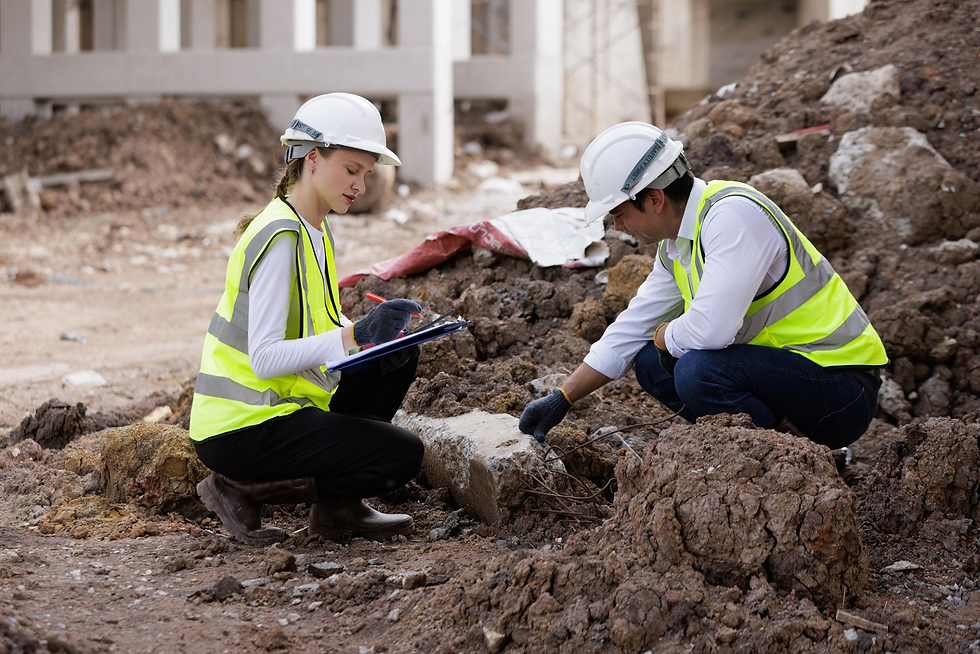
One of the most important responsibilities of geotechnical engineers is conducting soil investigation before construction begins. This process includes drilling boreholes, collecting soil samples, performing laboratory testing, and analyzing underground conditions.
The purpose is to answer critical questions:
Can the soil carry the building load safely?
How deep should the foundation be placed?
Is groundwater present below the site?
Will the soil settle over time?
Are there risks of landslides or erosion?
If this stage is skipped to save time or money, the consequences can be disastrous. Many construction failures around the world have occurred simply because proper soil testing was ignored.
Foundation Design Depends on Geotechnical Analysis
Foundation Engineering is directly connected to geotechnical engineering. Once soil conditions are understood, engineers decide which type of foundation should be used.
Common foundation systems include:
Shallow foundations for stable ground and lighter structures
Raft foundations where loads need wider distribution
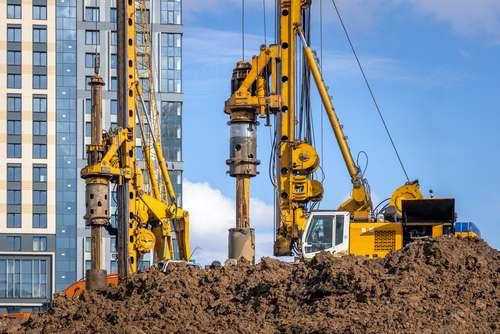
Pile foundations for transferring load to deeper stable soil layers
Deep foundations for skyscrapers and heavy infrastructure
A wrong foundation choice can cause uneven settlement, structural cracks, and eventual building failure.
For example, constructing a heavy commercial building on soft clay soil using shallow foundations may lead to gradual sinking because the soil compresses under pressure.
Settlement: The Silent Cause of Structural Damage
Settlement occurs when soil compresses under the weight of a structure. Small settlement is normal and expected, but excessive or uneven settlement becomes dangerous.
When one side of a building settles more than another, cracks begin appearing in walls, floors become uneven, and doors stop closing properly. Over time, this differential settlement weakens structural integrity.
Geotechnical engineers predict settlement behavior before construction begins by calculating how soil layers will respond to long-term loading.
Without proper prediction, damage may appear years after construction, creating expensive repair costs or total structural failure.
The Role of Geotechnical Engineering in Earthquake Resistance
During earthquakes, ground behavior changes dramatically. Certain soil types can experience a dangerous phenomenon called liquefaction, where water-saturated loose soil temporarily behaves like a liquid.
Soil Liquefaction can cause buildings to sink, tilt, or collapse even when the building structure itself remains intact.
Geotechnical engineers analyze seismic risk and design foundations capable of resisting these forces. In earthquake-prone regions, this work becomes essential for public safety.
Ignoring soil behavior during seismic design has caused major structural disasters in many earthquakes worldwide.
Preventing Landslides and Slope Failures
Buildings constructed on hillsides or sloping terrain face additional risks. Rainwater infiltration, erosion, poor drainage, and weak soil layers can trigger slope failure.
Geotechnical engineers study slope stability using soil strength analysis and groundwater behavior models. They design preventive systems such as:
Retaining walls
Soil anchors
Drainage systems
Reinforced earth structures
Ground improvement techniques
Without proper slope analysis, homes, roads, and commercial buildings can suffer sudden collapse.
Groundwater: An Invisible Threat
Underground water can significantly affect structural stability. High groundwater levels reduce soil strength, increase pressure on underground structures, and create challenges during excavation.
For basements, tunnels, underground parking structures, and deep foundations, uncontrolled groundwater may cause flooding or soil movement.
Geotechnical engineers design dewatering systems and waterproofing solutions to manage these risks effectively.
Many structural failures occur because groundwater conditions were poorly understood during planning stages.
Learning from Past Building Failures
History shows that many famous structural failures were caused by foundation or soil problems rather than poor structural design.
Common causes include:
Building on weak compressible soil
Ignoring groundwater conditions
Poor compaction during construction
Inadequate soil testing
Underestimating earthquake soil behavior
Incorrect foundation selection
In most cases, visible cracks and structural distress are simply symptoms of hidden geotechnical problems underground.
Why Future Civil Engineers Must Understand Geotechnical Engineering
As cities become denser and buildings become taller, foundation challenges are increasing. Urban development often forces construction on difficult land such as reclaimed land, coastal areas, soft soil zones, and seismic regions.
Modern civil engineers cannot depend only on structural knowledge. Understanding geotechnical engineering helps professionals make safer construction decisions and reduce long-term risk.
Technologies like ground penetrating radar, advanced soil simulation software, and AI-driven site analysis are making geotechnical engineering even more important in modern construction.
Conclusion
Geotechnical engineering works behind the scenes, hidden beneath every successful structure. While people admire the visible parts of a building, its true strength often depends on the invisible relationship between foundation and soil. Many building failures that appear sudden are actually the result of ignored geotechnical warnings during planning and construction.
The future of safe infrastructure depends not only on stronger materials or better architectural design but also on understanding the earth beneath our feet. By carefully studying soil conditions, designing proper foundations, and predicting ground behavior, geotechnical engineers prevent disasters before they happen.
In the world of construction, what lies underground is often more important than what rises above it.


Comments