
Technical Skills Every Civil Engineering Fresher Must Have on Day One
- Anjali Regmi
- Feb 12
- 3 min read

Introduction
Graduating with a civil engineering degree does not automatically make someone job-ready. Many freshers enter their first job expecting to be trained from scratch, only to discover that companies silently expect a certain level of technical readiness from day one. Site engineers, contractors, and consultants work in high-pressure environments where time, cost, and safety are constantly at stake. A fresher who lacks basic technical skills struggles to gain trust, while one who arrives prepared quickly becomes valuable. This article outlines the essential technical skills every civil engineering fresher must possess on their first day at work.
Ability to Read Construction Drawings Confidently
The first and most important skill is drawing literacy. Freshers must be able to read structural and architectural drawings, understand grid systems, identify column locations, interpret beam sizes, and follow reinforcement details. A site engineer’s daily work revolves around drawings.
A fresher who constantly asks where to find information on drawings loses credibility. On the other hand, someone who can independently locate details, check dimensions, and identify discrepancies stands out immediately.
Basic Knowledge of RCC Construction Process
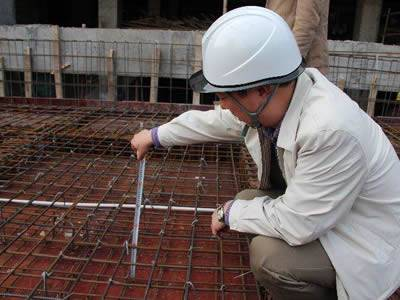
Reinforced Cement Concrete (RCC) work forms the backbone of most construction projects. Freshers should understand the sequence of reinforcement fixing, shuttering, inspection, concreting, vibration, curing, and de-shuttering.
Understanding lap length, cover blocks, bar spacing, and concrete compaction methods is essential. Even if not yet experienced, a fresher should know what to check and why it matters. This shows technical awareness and seriousness.
Strong Surveying and Leveling Fundamentals
Surveying is often one of the first responsibilities given to fresh engineers. They may be asked to check levels, verify grid lines, or assist in layout marking. Knowing how benchmarks work, how reduced levels are calculated, and how to interpret total station readings is critical.
Mistakes in layout can lead to major structural and financial consequences. Companies expect freshers to handle basic measurement tasks with confidence.

Understanding of Construction Materials
A fresher should know the basics of cement types, aggregate quality, reinforcement grades, and concrete mix concepts. On site, engineers frequently make material-related decisions. If a fresher cannot distinguish between different cement types or understand the impact of water-cement ratio, their technical value decreases.
Material knowledge enables freshers to participate in quality discussions rather than observing passively.
Quantity Estimation and Basic Measurement Skills
Measurement and quantity calculation are core tasks for fresh engineers. They may be asked to calculate concrete volume, reinforcement quantity, or brickwork area. Comfort with area, volume, and unit conversions is essential.
Companies value freshers who can quickly measure and verify work without repeated errors. Estimation skills directly impact project cost control.
Awareness of Quality Control Procedures
Freshers should understand the purpose of cube testing, slump testing, reinforcement inspection, and checklists used before major activities. Even if they are not leading inspections, knowing what quality parameters are critical helps them observe effectively.
Quality awareness differentiates technically strong freshers from average ones.

Basic Software Proficiency
While site roles are practical, software knowledge remains important. Freshers should be comfortable with AutoCAD for drawing interpretation and Excel for quantity calculations and reporting. Even basic spreadsheet skills improve productivity.
Companies expect freshers to prepare reports, track quantities, and organize data digitally. Weak software skills limit efficiency.
Safety Awareness and Professional Discipline
Technical skill without safety awareness is incomplete. Freshers must understand basic site safety practices, including PPE usage, hazard identification, and safe movement within site. Safety violations not only risk accidents but also damage professional reputation.
Professional discipline punctuality, documentation habits, and clear communication—is equally important.
Ability to Ask Intelligent Questions
A technically prepared fresher does not remain silent but asks thoughtful, relevant questions. Instead of asking textbook definitions, they inquire about design logic, sequencing decisions, or material choices. This shows engagement and curiosity.
Companies value freshers who learn actively rather than waiting passively.
Confidence Without Overconfidence
Freshers must balance confidence with humility. Understanding basics allows them to participate meaningfully, but acknowledging limits prevents mistakes. Arrogance creates friction; confidence builds trust.
Day one is not about proving superiority it is about demonstrating readiness to learn and contribute.
Conclusion
The first day on site sets the tone for a civil engineer’s career. Companies expect freshers to understand drawings, RCC processes, surveying basics, materials, estimation, quality control, and software fundamentals. These are not advanced skills they are foundational competencies. A fresher who arrives technically prepared gains responsibility faster, earns respect from seniors, and accelerates career growth. In civil engineering, readiness on day one is not about experience it is about preparation.


Comments