
Surveying Skills Every Civil Engineering Student Must Practice Beyond Labs
- Anjali Regmi
- Feb 11
- 4 min read

Introduction
Surveying is one of the oldest and most fundamental branches of civil engineering. It forms the backbone of construction layout, alignment, leveling, and infrastructure development. However, in many engineering colleges, surveying is treated as a laboratory subject limited to temporary field exercises and record books. When students step onto real construction sites, they quickly realize that surveying is not just academic it directly controls accuracy, quality, and structural safety. A small surveying error can lead to misaligned columns, uneven floors, drainage failures, and even legal boundary disputes. That is why civil engineering students must practice surveying skills beyond classroom labs.

Why Surveying Skills Matter More Than Students Realize
Surveying defines where and how a structure will be built. Every column grid, road alignment, foundation level, and boundary line depends on accurate measurement and transfer of data from drawings to ground. While design errors can sometimes be corrected, surveying errors often require demolition and rework.
Engineers who understand surveying deeply become reliable on site because they control precision. Those who rely blindly on technicians without understanding the process risk approving incorrect layouts.
Mastering Basic Leveling Concepts
Leveling is one of the most frequently used surveying operations on construction sites. Whether it is checking plinth level, slab level, or road gradient, accurate leveling ensures structural functionality. Students should move beyond lab exercises and practice understanding benchmarks, backsight, foresight, and reduced levels in real scenarios.
On site, engineers must quickly identify if a slab is cast at the correct level or if a foundation excavation has reached the required depth. Confidence in leveling calculations prevents costly execution errors.
Understanding Total Station and Modern Equipment
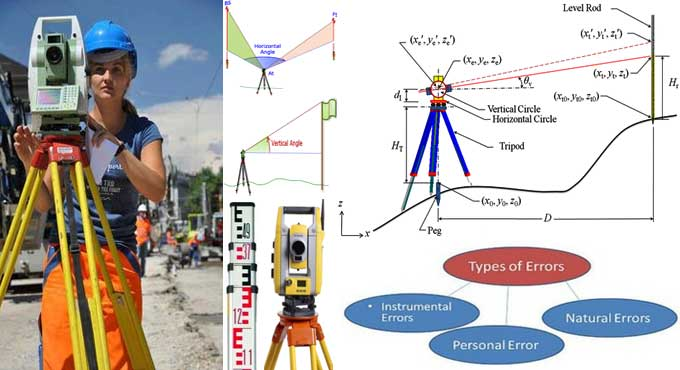
Modern construction projects rely heavily on total stations for layout and alignment. While many students see total stations in labs, they rarely understand their practical application. Students should focus on how grid lines are transferred from drawings to site coordinates, how points are fixed, and how alignment is verified.
Knowing how to interpret coordinate data, set reference points, and verify readings makes a student far more valuable during internships and early job roles.

Practical Layout Skills Beyond Theory
Layout or setting-out is where surveying meets execution. Marking column positions, wall lines, and foundation boundaries requires precision. Students should understand how to check right angles using geometric principles, how to confirm diagonal measurements for squareness, and how to prevent cumulative measurement errors.
Relying only on measuring tapes without cross-checking angles often results in misaligned structures. Practicing layout skills in real conditions builds confidence and spatial understanding.
Importance of Slope and Gradient Calculations
Surveying is not limited to flat surfaces. Roads, ramps, drainage systems, and pipelines depend on correct slope calculations. A minor error in gradient results in water stagnation or reverse flow. Students should practice calculating and setting slopes practically rather than only solving theoretical problems.
Understanding gradient ratios and how to implement them on uneven terrain prepares students for infrastructure and site development roles.
Identifying and Avoiding Common Surveying Mistakes
Many surveying mistakes occur due to lack of attention rather than lack of knowledge. Common errors include improper instrument leveling, ignoring instrument calibration, misreading staff values, and failing to verify reference benchmarks.
Students should develop a habit of double-checking readings and cross-verifying critical points. On site, even experienced engineers confirm important measurements before execution. Accuracy is a discipline, not a one-time action.
Role of Surveying in Preventing Rework and Disputes
Incorrect surveying leads to misaligned columns, uneven floors, incorrect boundary walls, and even encroachment issues. In large projects, boundary disputes due to incorrect measurements can result in legal complications and project delays.
Students who understand the legal and financial implications of surveying errors treat measurement work with seriousness. Surveying is not just a technical skill—it is a responsibility.
Connecting Surveying With Other Engineering Activities
Surveying does not operate in isolation. It directly affects structural work, MEP installation, road alignment, and finishing levels. For example, incorrect slab levels affect plumbing slopes and door clearances. Misaligned grids complicate reinforcement placement and shuttering.
Students who see surveying as part of a larger engineering system rather than a separate subject develop better coordination skills.
Building Confidence Through Real Practice
Beyond labs, students should observe real site surveys during internships. Watching how engineers set control points, transfer levels, and verify dimensions builds practical understanding. Even simple observation of layout processes provides insights that classroom exercises cannot offer.
Hands-on exposure reduces fear of instruments and builds comfort with field conditions.
Why Surveying Skills Differentiate Strong Freshers
Fresh civil engineers are often assigned measurement and layout tasks. Seniors expect them to verify dimensions accurately and assist in setting out. A fresher with strong surveying knowledge gains responsibility quickly, while those lacking confidence struggle to contribute meaningfully.
Surveying competence builds credibility early in a career.
Conclusion
Surveying is not just a lab subject it is the foundation of accurate construction. From leveling and alignment to slope calculation and boundary verification, surveying skills directly impact structural quality and project success. Civil engineering students who practice and strengthen surveying skills beyond classroom requirements gain a major advantage in internships and jobs. Precision in measurement is the first step toward becoming a dependable and competent civil engineer.


Comments