
Surveying Errors That Can Destroy an Entire Construction Project: Real Site Risks & Preventive Engineering Practices
- Anjali Regmi
- Feb 28
- 4 min read

Surveying is the foundation of accuracy in civil engineering projects. Before excavation begins, before foundations are cast, and before structural alignment is executed, the entire project depends on correct surveying and layout marking. A small error in leveling, benchmarking, or alignment can propagate throughout the construction lifecycle, leading to structural misalignment, rework, legal disputes, and massive financial losses. In real construction environments, surveying mistakes are among the most dangerous technical failures because they are often unnoticed until major structural work is already completed.
For site engineers, survey engineers, and project managers, understanding practical surveying risks and implementing preventive measures is essential for ensuring precision, structural integrity, and long-term project success.
Importance of Surveying Accuracy in Construction Execution
Surveying translates design drawings into physical ground coordinates. It ensures correct positioning of foundations, columns, roads, and structural elements according to layout plans. Unlike theoretical coordinates on drawings, real site conditions involve uneven terrain, obstacles, environmental factors, and human errors that affect measurement accuracy. A minor deviation of a few millimeters in initial layout can result in major structural deviations in high-rise buildings and infrastructure projects.

Major Surveying Errors Observed on Real Construction Sites
1. Incorrect Benchmark Establishment
Benchmark (BM) is the reference elevation point for the entire project. If the benchmark is wrongly established or not properly verified, all vertical measurements including foundation depth, plinth level, and slab levels become inaccurate. This leads to uneven floor levels and structural alignment issues.
2. Improper Leveling and Height Transfer Errors
Errors during leveling operations using auto levels or dumpy levels can result in incorrect elevation transfer. Miscalculation of reduced levels (RL) affects excavation depth, PCC levels, and structural heights, causing major deviations from design specifications.
Layout Marking and Alignment Mistakes
Centerline Marking Errors
Incorrect centerline marking of columns, footings, and walls leads to structural misalignment. Once foundation work is completed, correcting alignment errors becomes extremely expensive and technically complex.
Grid Line Deviation
Grid lines act as the backbone of structural layout. Any deviation in grid positioning results in incorrect column placement, beam misalignment, and architectural inconsistencies.
Equipment-Related Surveying Failures
Poor Calibration of Survey Instruments
Using uncalibrated total stations, auto levels, or theodolites introduces systematic errors in measurements. Regular calibration and instrument checks are essential for maintaining accuracy.
Incorrect Handling of Survey Equipment
Unstable tripod setup, improper leveling of instruments, and incorrect prism alignment cause measurement deviations that affect layout precision.
Human and Operational Factors Leading to Survey Errors
Lack of trained survey personnel
Rushing layout work to meet deadlines
Ignoring cross-verification of measurements
Miscommunication between design and site teams
Inadequate supervision during marking and leveling
Surveying is a precision-driven task, and even minor negligence can cause long-term structural complications.
Impact of Surveying Errors on Construction Projects
Structural Misalignment and Rework
Incorrect column and footing positioning leads to structural imbalance and costly demolition or redesign.
Cost Overruns and Project Delays
Rectifying surveying mistakes involves re-excavation, material wastage, and additional labor costs, significantly affecting project timelines and budgets.
Legal and Compliance Issues
Deviation from approved layout plans may violate municipal regulations and lead to legal complications or project rejection.
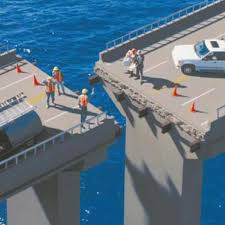
Surveying Challenges in Complex Construction Environments
Large-scale infrastructure, high-rise buildings, and urban construction projects present additional surveying challenges such as limited working space, vibration from nearby construction, and environmental obstructions. Engineers must adopt advanced surveying techniques and continuous verification to maintain accuracy in such conditions.
Preventive Engineering Practices to Avoid Surveying Errors
Double-Checking Benchmarks and Reference Points
Always verify benchmarks using multiple reference points before starting layout and excavation work.
Cross-Verification with Drawings and Coordinates
Survey data must be cross-checked with structural and architectural drawings to avoid dimensional conflicts.
Regular Calibration of Survey Instruments
Routine calibration ensures measurement precision and eliminates systematic instrument errors.
Maintaining Proper Survey Documentation
Recording field measurements, level books, and coordinate logs helps maintain accountability and traceability in case of disputes.

Role of Site Engineers in Survey Accuracy Control
Site engineers must actively supervise layout marking, leveling, and alignment processes instead of relying solely on survey teams. Verification of grid lines, centerlines, and elevations before foundation and structural work is a critical responsibility that prevents costly execution errors.
Modern Surveying Technologies for Improved Accuracy
Technological advancements such as GPS surveying, laser scanning, drone mapping, and BIM-based layout systems have significantly improved surveying precision. These tools help detect alignment clashes, measure large areas efficiently, and reduce manual measurement errors. However, practical site verification remains essential even with advanced technology.
Quality Control and Inspection Based on Survey Data
Survey checkpoints should be established at key construction stages such as excavation, footing, plinth, and slab levels. Regular inspection ensures that construction remains aligned with approved layout and design specifications throughout the project lifecycle.
Conclusion: Precision in Surveying Determines Project Success
Surveying errors are silent but highly destructive failures in civil engineering projects. Unlike visible construction defects, layout and leveling mistakes often go unnoticed until advanced stages of construction, making corrections costly and complex. A technically competent civil engineer must prioritize surveying accuracy through proper planning, instrument calibration, cross-verification, and continuous supervision.
In real-world construction practice, accurate surveying is not just a preliminary activity but a continuous engineering process that safeguards structural alignment, cost efficiency, and project reliability. Engineers who master surveying precision demonstrate strong technical discipline and operational excellence, ensuring that projects are executed exactly as designed without costly deviations or structural risks.


Comments