
Soil Bearing Capacity Failures: Why Foundations Fail in Real Construction Projects
- Anjali Regmi
- Mar 4
- 3 min read

Every structure ultimately depends on the soil beneath it. No matter how strong the concrete or steel structure is, if the soil cannot support the load, the entire building becomes vulnerable to settlement, cracks, and structural instability. Soil Bearing Capacity (SBC) is one of the most fundamental geotechnical parameters in civil engineering, yet many construction failures originate from ignoring or misinterpreting soil conditions.
In real construction environments, foundation failures rarely happen because of weak concrete or insufficient reinforcement. Instead, they often occur because engineers underestimated soil conditions, skipped proper soil investigation, or executed foundations incorrectly.
What is Soil Bearing Capacity in Practical Terms?
Soil Bearing Capacity refers to the maximum load per unit area that soil can safely support without experiencing excessive settlement or shear failure. Foundations transfer structural loads to the ground, and the soil must resist this load without collapsing or deforming.
If the applied load exceeds the soil’s bearing capacity:
Foundations settle unevenly
Structural cracks appear
Structural stability is compromised

Why Soil Investigation is Critical Before Construction
Before designing foundations, engineers conduct geotechnical investigations to determine soil properties such as:
Bearing capacity
Soil type and composition
Groundwater level
Settlement potential
Common soil tests include borehole drilling, Standard Penetration Test (SPT), and plate load tests.
Skipping proper soil testing is one of the most dangerous shortcuts in construction projects.
Common Soil Types and Their Bearing Capacities
Different soils behave differently under structural loads.
Rock and gravel: High bearing capacity
Dense sand: Moderate to high capacity
Clay soil: Variable capacity depending on moisture
Filled or loose soil: Very low bearing capacity
Understanding soil type helps engineers choose the correct foundation system.

Real Causes of Foundation Failures on Construction Sites
Ignoring Soil Test Reports
Some small projects skip soil testing to save time or cost, leading to inaccurate foundation design.
Uneven Soil Compaction
Poorly compacted soil beneath foundations causes differential settlement.
High Groundwater Levels
Water weakens soil strength and reduces bearing capacity.
Construction on Filled Soil
Artificially filled land often lacks adequate compaction and stability.
Signs of Soil Bearing Capacity Failure
When soil cannot support structural loads, the building begins to show visible distress.
Common symptoms include:
Diagonal cracks in walls
Uneven floor settlement
Tilting columns
Doors and windows not closing properly

Differential Settlement: A Major Structural Risk
Even when soil is capable of supporting the structure, uneven settlement between different parts of the building can cause severe structural damage.
This usually happens when:
Soil conditions vary across the site
Foundations are placed at different depths
Groundwater conditions change
Differential settlement creates stress concentrations in structural members.
Engineering Solutions to Improve Soil Bearing Capacity
When soil is weak, engineers adopt several ground improvement techniques:
Soil Compaction
Mechanical compaction increases soil density and strength.
Soil Stabilization
Adding cement, lime, or chemical stabilizers improves soil properties.
Replacement of Weak Soil
Removing weak soil and replacing it with stronger fill material.
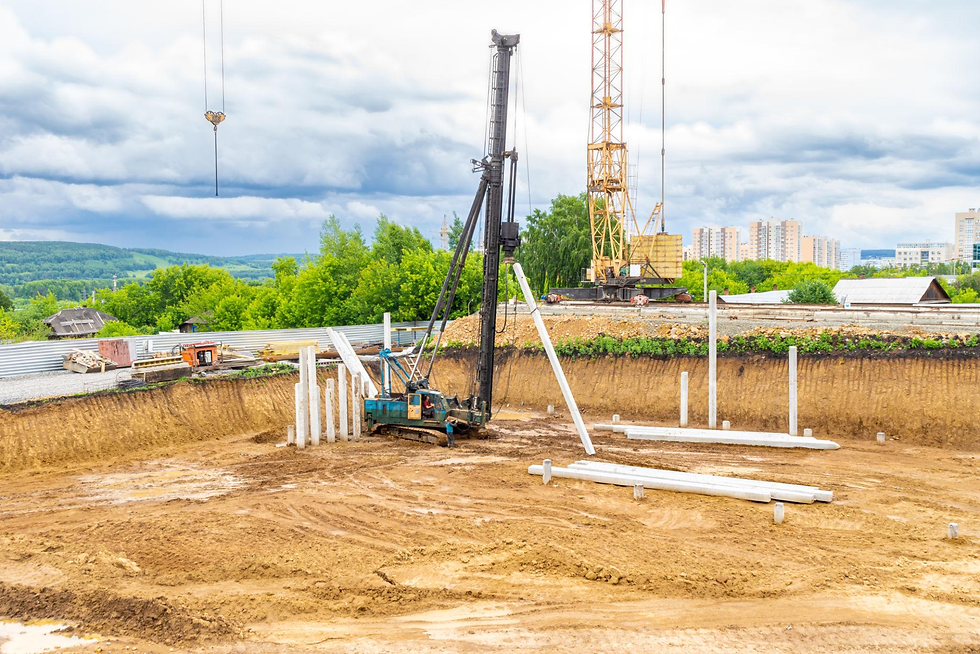
Pile Foundations
Transferring structural load to deeper, stronger soil layers.
Role of Civil Engineers in Preventing Foundation Failures
Site engineers must ensure:
Soil investigation reports are followed
Foundation excavation reaches correct depth
Soil compaction is properly executed
Groundwater control measures are implemented
Ignoring geotechnical recommendations can lead to irreversible structural damage.
Urban Construction Challenges Related to Soil
In urban areas, soil conditions may be affected by:
Previous construction activities
Underground utilities
Filled land or reclaimed areas
Vibration from nearby traffic
These factors require extra caution and detailed soil analysis.
Long-Term Impact of Weak Foundations
Poor foundation design or soil misjudgment can lead to:
Structural cracking
Reduced building lifespan
Expensive foundation strengthening
Potential building collapse in extreme cases
Foundation correction is often extremely expensive and technically complex.
Modern Technology in Soil Investigation
Advanced tools such as geophysical surveys, ground-penetrating radar (GPR), and computer-based soil analysis models help engineers predict soil behavior more accurately before construction.
However, field verification remains essential for reliable results.
Conclusion: Strong Foundations Begin with Soil Understanding
Soil bearing capacity is the foundation of structural safety in civil engineering projects. Ignoring soil conditions or underestimating geotechnical factors can lead to serious structural problems that are difficult and costly to fix later.
Civil engineers who prioritize soil investigation, follow geotechnical recommendations, and implement proper foundation design ensure the long-term stability and durability of structures. In real construction practice, understanding the ground beneath a structure is just as important as designing the structure itself.


Comments