
Smart Highways: The Future of Transportation Infrastructure
- Anjali Regmi
- Jun 12
- 4 min read

Transportation infrastructure has always played a critical role in shaping economies, connecting communities, and supporting development. From ancient trade routes to modern expressways, roads have evolved continuously to meet the growing demands of society.
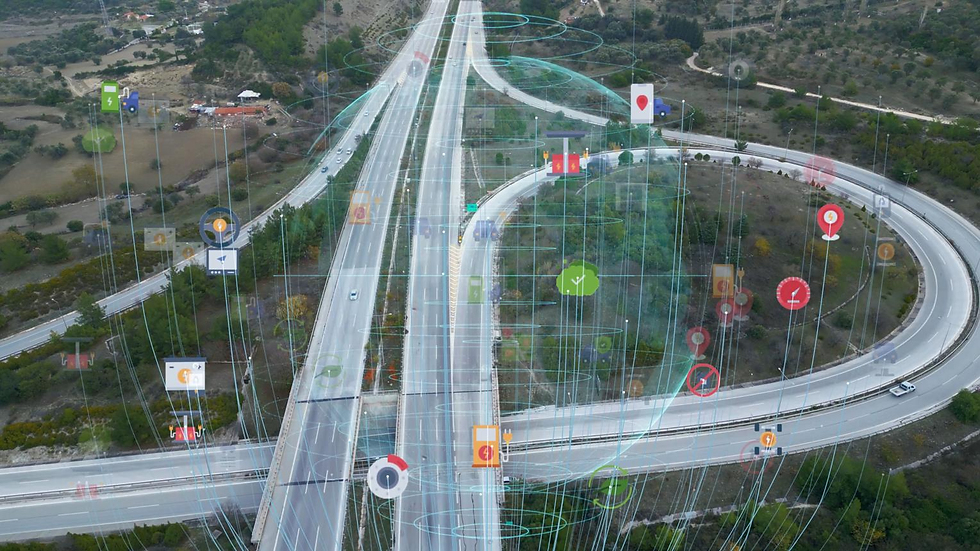
In the 21st century, rapid urbanization, increasing vehicle ownership, environmental concerns, and advancements in digital technology have created the need for a smarter and more efficient transportation system. This has led to the emergence of Smart Highways, a revolutionary concept that is transforming how roads are designed, constructed, and managed.
Smart highways are technologically advanced road systems that integrate digital communication, sensors, automation, renewable energy, and data analytics to improve transportation efficiency, safety, and sustainability. Unlike traditional highways, smart highways are capable of interacting with vehicles, monitoring traffic conditions in real time, and responding intelligently to changing situations. They represent the future of transportation infrastructure and are expected to play a major role in the development of modern cities and nations.
One of the most important features of smart highways is the use of Intelligent Transportation Systems (ITS). Intelligent Transportation Systems ITS combines communication technologies, sensors, cameras, GPS tracking, and data networks to collect and process information about traffic movement. This system helps authorities monitor congestion, accidents, road conditions, and weather changes instantly. By analyzing real-time data, traffic can be redirected efficiently, reducing delays and improving travel time for commuters.
Another significant advantage of smart highways is enhanced road safety. Road accidents remain one of the biggest global challenges, often caused by overspeeding, poor visibility, distracted driving, and delayed emergency response. Smart highways can significantly reduce these risks through technologies such as automated speed monitoring systems, lane departure warnings, collision detection sensors, and AI-powered surveillance cameras. In dangerous weather conditions like fog or heavy rain, smart roads can automatically trigger warning lights or communicate hazard alerts directly to connected vehicles, helping drivers make safer decisions.
The rise of autonomous vehicles is another major reason why smart highways are becoming essential. Autonomous Vehicle Self-driving cars rely on constant communication with surrounding infrastructure to operate safely and efficiently. Smart highways are designed with embedded sensors and vehicle-to-infrastructure communication systems that provide autonomous vehicles with real-time data about traffic flow, road obstacles, speed regulations, and nearby vehicles. This communication network enables smoother traffic movement and reduces the chances of human error, which is one of the leading causes of accidents.
Smart highways are also contributing to environmental sustainability, an increasingly important concern in infrastructure development. Traditional transportation systems consume large amounts of energy and contribute significantly to air pollution due to traffic congestion and inefficient fuel consumption. Smart highways can reduce environmental impact by optimizing traffic flow and minimizing unnecessary vehicle idling. Some advanced highway designs even incorporate solar panels directly into road surfaces or roadside installations, generating renewable energy that can power streetlights, traffic systems, and nearby electric charging stations.

A remarkable innovation associated with smart highways is dynamic road marking technology. Traditional road markings remain static regardless of weather or traffic conditions. Smart roads, however, can use LED-based paint or embedded lighting systems that change visibility depending on road conditions. During nighttime, heavy rainfall, or construction work, lane markings can become brighter or adjust to guide drivers safely. This technology improves visibility and makes highways far more adaptive than conventional road infrastructure.
Another exciting development is electric vehicle charging roads. Electric Vehicle As electric vehicles continue gaining popularity worldwide, infrastructure must evolve to support their widespread adoption. Smart highways are being developed with wireless charging technology embedded beneath the road surface. This allows electric vehicles to charge while driving, reducing dependence on charging stations and eliminating concerns about battery range limitations. Such innovations could completely transform the future of sustainable transportation.
Maintenance and infrastructure management are also becoming more efficient through smart highway technology. Roads naturally deteriorate over time because of heavy traffic loads, weather conditions, and material fatigue. Traditionally, road maintenance depends on manual inspections, which can be time-consuming and expensive. Smart highways use embedded sensors that continuously monitor pavement conditions, detect cracks, measure structural stress, and identify damage before it becomes severe. This predictive maintenance approach helps governments and construction companies repair infrastructure proactively, reducing long-term maintenance costs and improving road durability.
Smart highways also support better traffic management and reduced congestion. Urban traffic congestion causes economic losses due to wasted fuel, delayed deliveries, and lost productivity. By analyzing traffic patterns using artificial intelligence and connected infrastructure, smart highways can dynamically control speed limits, traffic signals, and lane usage to improve overall traffic flow. During peak hours, lanes can be reassigned temporarily to handle increased traffic volume, preventing bottlenecks and improving transportation efficiency.
Several countries are already experimenting with smart highway technologies. Netherlands has introduced glow-in-the-dark road markings and interactive traffic systems. South Korea has developed smart expressways with connected vehicle communication systems. China is investing heavily in AI-driven highway monitoring and autonomous transportation corridors. These projects demonstrate that smart highways are not just theoretical ideas but practical solutions already being implemented worldwide.
For civil engineers, the development of smart highways creates exciting career opportunities. Modern infrastructure projects now require knowledge beyond traditional road design and construction. Engineers must understand digital systems, sensor integration, data management, sustainable materials, renewable energy systems, and intelligent traffic technologies. The future civil engineer will need both technical construction knowledge and an understanding of advanced technology integration.
Despite their enormous benefits, smart highways also face challenges. High installation costs, cybersecurity risks, infrastructure compatibility issues, and the need for advanced maintenance systems can slow adoption. Governments must invest significantly in research, policy development, and skilled workforce training to ensure successful implementation. Protecting connected infrastructure from cyberattacks will become particularly important as transportation systems become increasingly dependent on digital networks.

In conclusion, smart highways represent the next major evolution in transportation infrastructure. They combine civil engineering with digital innovation to create roads that are safer, more efficient, environmentally friendly, and capable of supporting future technologies such as autonomous and electric vehicles. As cities continue expanding and transportation demands increase, traditional highways alone will no longer be sufficient. Smart highways offer a sustainable and intelligent solution that will define the future of mobility. For engineers, governments, and society as a whole, investing in smart highway technology is not just an option but a necessary step toward building the transportation systems of tomorrow.


Comments