
RFI (Request for Information) & Site Documentation: The Hidden Skill That Saves Civil Engineering Projects from Costly Errors
- Anjali Regmi
- Feb 28
- 4 min read

In real construction projects, technical clarity is rarely perfect. Drawings may have missing details, specifications may be ambiguous, and site conditions may differ from design assumptions. This is where RFIs (Request for Information) and proper site documentation become critical operational tools. However, many fresh civil engineers ignore documentation and rely on verbal instructions, which leads to execution errors, disputes, rework, and financial losses.
In professional construction environments, undocumented decisions are considered engineering risks. A technically sound project is not only built with concrete and steel but also with structured communication, written records, and traceable approvals. Engineers who master RFI management and documentation significantly reduce project uncertainties, legal risks, and execution mistakes.
What is an RFI in Practical Construction Projects?
A Request for Information (RFI) is a formal document submitted by site engineers or contractors to consultants, architects, or clients when drawings, specifications, or site instructions are unclear. Instead of making assumptions, engineers seek written clarification to ensure technically correct execution. RFIs are especially common during structural, MEP, and finishing stages where design interpretation directly affects construction quality.

Why RFIs Are Critical in Real Site Execution
Avoiding Wrong Assumptions in Construction
One of the biggest site risks is executing work based on assumptions rather than confirmed technical instructions. For example, unclear reinforcement detailing, slab opening dimensions, or beam depth discrepancies can cause major structural defects if executed incorrectly.
Ensuring Accountability and Traceability
Written RFIs create a documented trail of decisions and approvals. In case of disputes, delays, or design conflicts, documented communication protects engineers and contractors from liability claims.
Common Situations Where RFIs Become Necessary
Missing reinforcement details in structural drawings
Conflicts between architectural and structural drawings
Unclear material specifications
Unexpected site conditions (soil, utilities, levels)
Design revisions during construction
In real projects, RFIs act as a technical bridge between design intent and site execution reality.
Consequences of Poor Documentation on Construction Sites
Execution Errors and Rework
When instructions are communicated verbally without documentation, misunderstandings occur. Incorrect execution then leads to demolition, reconstruction, and cost overruns.
Payment and Contractual Disputes
Lack of proper documentation makes it difficult to justify variation work, delay claims, and additional costs. Contractors often face financial losses due to undocumented changes.
Essential Site Documents Every Civil Engineer Must Maintain
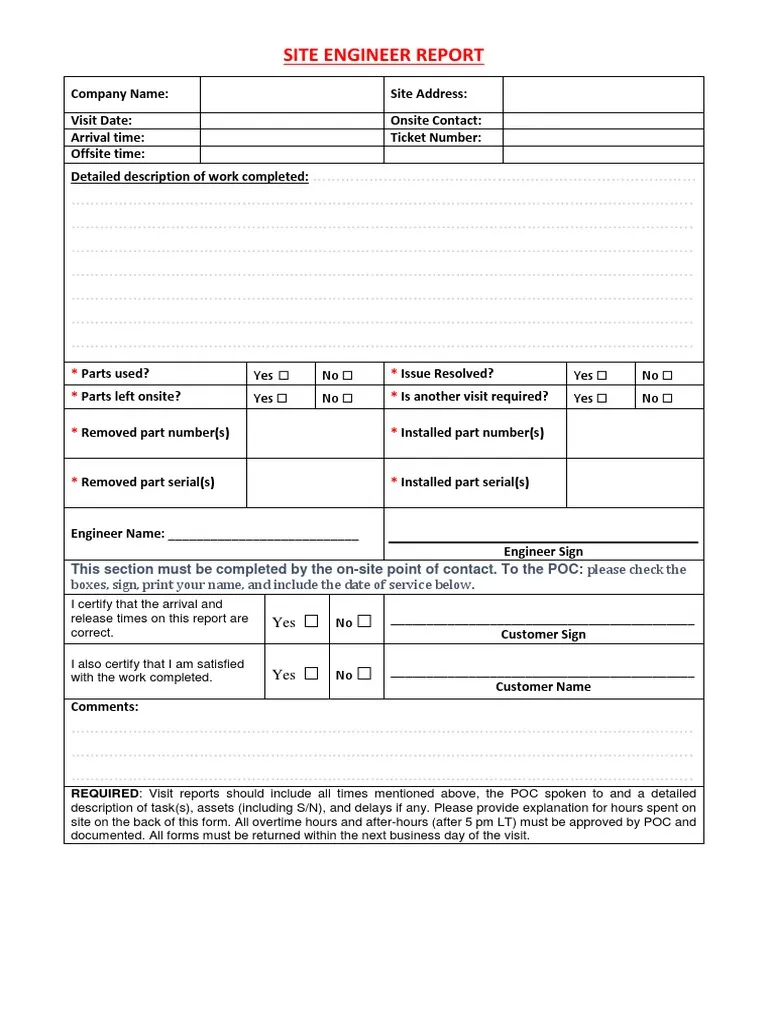
Daily Progress Report (DPR)
DPR records daily activities, labor strength, weather conditions, and work progress. It is crucial for tracking productivity and delay analysis.
Site Inspection Reports
Inspection reports ensure that work is executed as per drawings, specifications, and quality standards before approval for next stages.
Material Consumption Records
Tracking issued and consumed materials helps in cost control, reconciliation, and wastage prevention.
Method Statements and Checklists
Method statements define the technical procedure for executing specific activities like concreting, excavation, or waterproofing, ensuring standardized execution.
Role of Documentation in Delay and Claim Management
Construction delays often lead to Extension of Time (EOT) claims and cost variations. Proper documentation including site logs, RFI responses, progress reports, and meeting minutes provides factual evidence for delay analysis and contractual justification. Without documentation, even genuine claims may be rejected.
Best Practices for Writing Effective RFIs
Clearly mention drawing reference and issue description
Attach marked-up drawings or site photographs
Avoid vague language and assumptions
Specify urgency level and required response time
Maintain proper RFI tracking register
A well-written RFI saves time, prevents confusion, and ensures technically accurate execution.
Digital Documentation in Modern Construction Projects
With the adoption of construction management software, documentation has become more structured and accessible. Tools like cloud-based document management systems, BIM platforms, and mobile reporting apps allow real-time tracking of RFIs, drawings, and site records. This improves coordination and reduces communication gaps between stakeholders.
Communication Gap vs Documented Communication
Verbal instructions are often forgotten, misinterpreted, or disputed later. Documented communication through emails, RFIs, and meeting minutes ensures clarity and professional accountability. In large infrastructure projects, documented approvals are mandatory before executing any design changes.
Operational Challenges in Maintaining Site Documentation
Time pressure and workload on site engineers
Lack of documentation training among fresh engineers
Poor coordination between office and site teams
Ignoring documentation due to overconfidence in verbal instructions
Despite these challenges, disciplined documentation is a hallmark of professional engineering practice.
How Strong Documentation Improves Project Quality and Efficiency
Reduces execution errors and rework
Improves coordination between stakeholders
Enhances transparency and accountability
Supports legal and contractual protection
Strengthens project planning and monitoring
Engineers who maintain proper documentation gain better control over project execution and decision-making.
Conclusion: Documentation is a Technical Skill, Not Just Paperwork
RFI management and site documentation are among the most underrated yet powerful skills in civil engineering project execution. Most construction failures, disputes, and cost overruns occur due to unclear communication and lack of written records rather than major technical flaws. Engineers who rely only on verbal instructions expose projects to unnecessary risks and operational confusion.
In real-world construction practice, documentation is not administrative work but a strategic engineering function that ensures clarity, accountability, and technical accuracy. A civil engineer who masters RFIs, DPRs, inspection reports, and documented communication demonstrates professional discipline, operational competence, and leadership — qualities that are essential for delivering complex construction projects successfully, efficiently, and without costly errors.


Comments