
Pre-Pour Engineering Checks: A Technical Guide Before Concrete Placement
- Anjali Regmi
- Feb 16
- 4 min read

Introduction
Concrete placement is one of the most critical stages in any construction project. Once concrete is poured, corrections become extremely difficult, expensive, and sometimes structurally impossible. This is why experienced civil engineers treat pre-pour inspection as a non-negotiable technical checkpoint rather than a routine formality. A single overlooked error in reinforcement, shuttering, alignment, or embedment can lead to structural defects such as honeycombing, cracks, misalignment, or long-term durability issues. Pre-pour engineering checks ensure that the structure is ready to receive concrete safely, accurately, and in accordance with design intent and quality standards.

Understanding the Engineering Importance of Pre-Pour Checks
Pre-pour checks are not just quality procedures; they are structural assurance mechanisms. Concrete hides all internal components such as reinforcement, conduits, and embedded items. If errors exist at this stage, they become permanently embedded in the structure. Engineers must verify that all structural, dimensional, and quality parameters match the approved drawings and specifications before concreting begins.
This stage reflects engineering responsibility, technical discipline, and risk prevention in real construction practice.
Verification of Structural Drawings and Latest Revisions
The first technical step before any concrete pour is verifying that execution aligns with the latest approved drawings. Engineers must confirm:
Structural drawings revision number
Bar bending schedule (BBS) consistency
Approved shop drawings (if applicable)
Consultant instructions and modifications
Using outdated drawings is one of the most common and dangerous site errors. Even minor design revisions can affect reinforcement spacing, slab thickness, or beam depth, directly impacting structural performance.
Reinforcement Inspection and Technical Compliance
Reinforcement is the backbone of RCC structures and requires detailed inspection before pouring. Engineers must check bar diameter, spacing, lap lengths, anchorage, and bending shapes as per drawings. Proper placement of cover blocks is equally critical to ensure durability and corrosion protection.
Loose bindings, incorrect spacing, or missing bars compromise load distribution and structural integrity. Pre-pour reinforcement checks ensure that the embedded steel framework performs as designed.
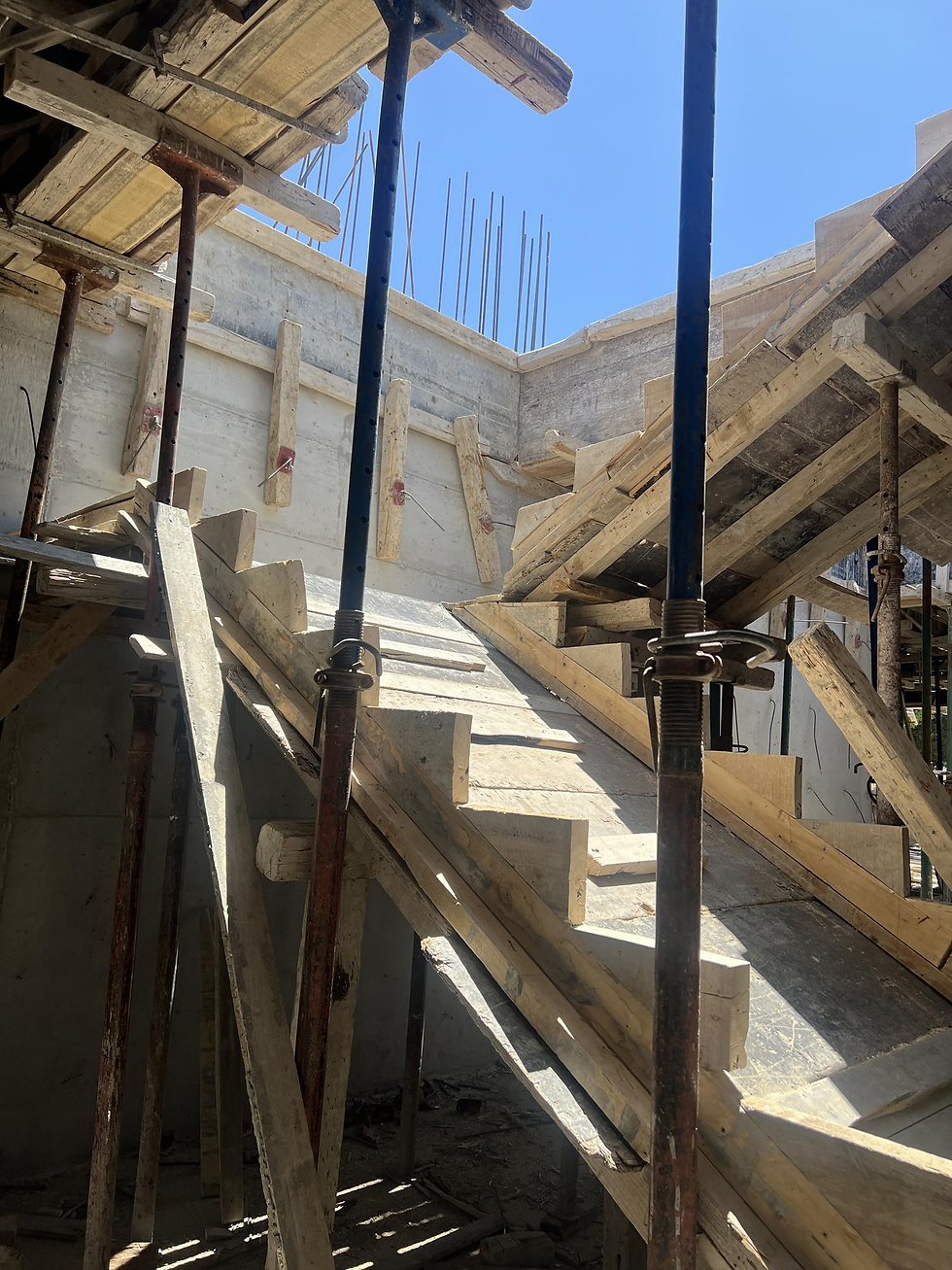
Formwork (Shuttering) Alignment and Stability Check
Formwork acts as the temporary mold that defines the shape, dimensions, and surface finish of concrete elements. Engineers must verify vertical alignment, level accuracy, joint tightness, and structural stability of shuttering. Any misalignment in formwork results in dimensional inaccuracies and structural deviations.
Leakage gaps in shuttering can cause slurry loss, honeycombing, and surface defects. Proper bracing and support must be confirmed to withstand concrete pressure during pouring.
Level, Line, and Dimensional Accuracy Verification
Pre-pour engineering control includes checking levels, grid lines, and dimensions using surveying instruments or leveling tools. Slab thickness, beam depth, and column alignment must match design specifications.
Incorrect levels lead to uneven floors, drainage problems, and architectural misfits. Engineers must cross-check benchmark levels and reference points to ensure dimensional precision.

Inspection of Embedded Items and Services
Before pouring concrete, all embedded elements such as sleeves, conduits, anchor bolts, inserts, and pipes must be checked. Once concrete is placed, installing or modifying these elements becomes extremely difficult.
Missing embedments often result in structural drilling, weakening of members, and additional repair costs. Engineers must coordinate with MEP teams to ensure proper placement of all embedded components.
Cleanliness and Surface Preparation of the Pour Area
Dust, debris, standing water, oil, or loose materials inside formwork negatively affect concrete bonding and strength. Engineers must ensure that the pouring area is clean and properly prepared. Reinforcement should be free from excessive rust, mud, or contaminants.
Surface preparation directly influences concrete quality, durability, and structural integrity.
Concrete Mix Readiness and Material Quality Check
Pre-pour inspection also involves verifying concrete readiness, including mix design, slump requirements, and material quality. Engineers must confirm:
Approved mix design
Availability of testing equipment (slump cone, cube molds)
Transit time and batching coordination
Temperature and weather conditions
Improper mix consistency or delayed supply can affect workability and strength development.
Manpower, Equipment, and Pour Planning Coordination
A technically sound pour requires proper coordination of labor, machinery, and supervision. Engineers must ensure the availability of:
Concrete vibrators
Pumps or transit mixers
Backup equipment
Skilled labor and supervisors
Lack of equipment or manpower during pouring can lead to cold joints, improper compaction, and uneven finishing.
Safety and Risk Assessment Before Concreting
Concrete pouring involves heavy machinery, wet surfaces, and high activity levels. Engineers must verify safety measures including PPE usage, safe access paths, and equipment operation zones. Proper risk assessment prevents accidents during high-pressure operations.
Safety checks are an integral part of professional pre-pour engineering protocols.
Documentation and Pre-Pour Approval Process
In professional construction projects, a formal pre-pour checklist and inspection report are maintained. Consultants, quality engineers, and site engineers jointly approve the pour after verifying technical compliance. This documentation ensures accountability and traceability in case of future defects or audits.
Proper documentation reflects structured engineering control and professional project management.
Consequences of Skipping Pre-Pour Engineering Checks
Neglecting pre-pour inspections can result in severe structural and financial consequences, including honeycombing, misaligned members, insufficient cover, cracking, and costly rework. In extreme cases, structural safety may be compromised, leading to long-term performance failures.
Most major construction defects originate from errors that were overlooked before concreting.
Conclusion
Pre-pour engineering checks are a critical technical responsibility that ensures structural accuracy, quality control, and long-term durability of concrete structures. From reinforcement inspection and formwork stability to level verification and material readiness, every checkpoint plays a vital role in successful concrete placement. Professional civil engineers treat pre-pour inspection as a systematic engineering process rather than a routine task. In real construction practice, the quality of a structure is largely determined before the concrete is poured, not after it hardens.


Comments