
Overloading of Buildings During Use: Design Load vs Actual Occupancy
- Anjali Regmi
- Feb 9
- 4 min read

Introduction
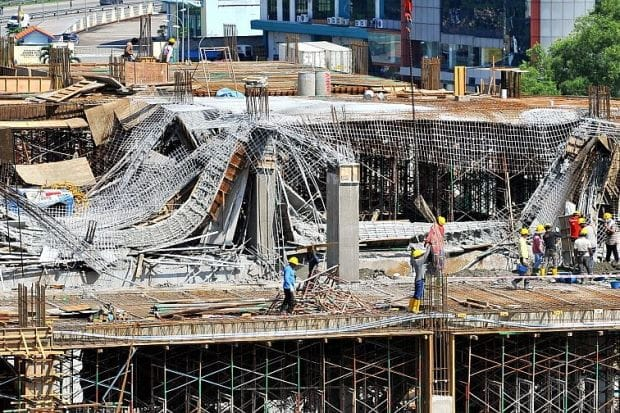
Buildings are designed for specific loads based on their intended use, occupancy type, and code-prescribed safety margins. Structural calculations assume that these loads will not be exceeded during the building’s service life. However, in real-world conditions, many buildings are overloaded during use, often unknowingly. Change of occupancy, misuse of spaces, storage of heavy materials, and unplanned additions lead to load conditions far beyond what the structure was designed to carry. Overloading does not usually cause immediate collapse—but it silently reduces safety, accelerates distress, and increases the risk of sudden failure.
Understanding Design Loads in Buildings
Structural design loads are based on dead loads (self-weight of structural and non-structural components), live loads (occupancy-related loads), and environmental loads such as wind and seismic forces. Live loads vary significantly depending on usage—residential floors are designed for much lower loads than offices, libraries, or storage areas. Designers rely on building codes to define these loads and apply safety factors accordingly.
The critical assumption is that actual usage will remain within the design intent. When this assumption is violated, structural behavior changes in ways the design never accounted for.
How Buildings Get Overloaded in Practice
Change of Occupancy Without Structural Review
One of the most common causes of overloading is a change in building use. Residential apartments converted into offices, coaching centers, hostels, or small warehouses experience much higher live loads. File storage, compact shelving, water dispensers, and dense occupancy significantly increase floor loading. These changes are often made without consulting structural engineers, creating unsafe conditions.
Excessive Storage and Concentrated Loads
Buildings are frequently overloaded by concentrated storage rather than uniform occupancy. Libraries, record rooms, server rooms, and retail storage areas impose localized loads far exceeding design values. Stacking heavy materials such as tiles, cement bags, books, or equipment in limited areas creates stress concentrations that slabs and beams may not be designed to resist.

Structural Effects of Overloading
Excessive Deflection and Cracking
One of the earliest signs of overloading is excessive deflection of slabs and beams. Floors may feel bouncy or show noticeable sagging. Cracks develop in slabs, beams, and infill walls due to increased bending and shear stresses. While these cracks may initially appear harmless, they indicate that the structure is operating beyond its intended limits.
Reduced Safety Margin and Progressive Failure Risk
Structural elements are designed with reserve strength, but overloading consumes this reserve. When combined with material deterioration, poor maintenance, or accidental loads, the risk of progressive failure increases. In flat slabs and long-span systems, overloading significantly increases the risk of punching shear and brittle failure.
Overloading in Commercial and Industrial Buildings
Commercial buildings often face overloading due to interior modifications and equipment installation. Heavy HVAC units, water tanks, and machinery are added without verifying structural capacity. Industrial buildings face similar issues when production loads increase over time. Floors designed for light industrial use may later be subjected to heavier equipment, forklifts, or storage racks, pushing them beyond safe limits.

Warning Signs Engineers and Occupants Ignore
Overloading rarely causes immediate collapse, which makes it dangerous. Warning signs such as widening cracks, misaligned doors, uneven floors, vibrations, and unusual noises are often ignored or treated as maintenance issues. In many real cases, these signs precede serious structural incidents but are dismissed due to lack of awareness.
Role of Structural Audits and Load Assessment
Structural audits play a critical role in identifying overloading risks. Load assessment involves reviewing original design drawings, evaluating current usage, and comparing actual loads with design capacity. Non-destructive testing and analytical checks help determine whether the structure can safely accommodate existing loads or requires strengthening.
Unfortunately, audits are often conducted only after visible damage appears, rather than as a preventive measure during change of use.
Engineering Solutions for Overloaded Buildings
When overloading is identified, engineers may recommend load redistribution, usage restrictions, or structural strengthening. Strengthening techniques include slab thickening, beam jacketing, addition of columns, or use of steel and fiber-reinforced polymer systems. In some cases, reducing load by limiting storage or occupancy is the safest and most economical solution.
Responsibility of Owners, Users, and Engineers
Building safety is a shared responsibility. Owners and occupants must understand that buildings are not infinitely flexible systems. Any change in use, storage pattern, or equipment load should be reviewed by a qualified structural engineer. Engineers, on the other hand, must clearly communicate load limits and risks, especially in older buildings with limited documentation.
Importance of Code Compliance and Enforcement
Many overloading issues persist due to weak enforcement of building regulations. Unauthorized changes, illegal conversions, and lack of periodic inspection allow unsafe conditions to develop unnoticed. Stronger compliance mechanisms and awareness among users can significantly reduce overloading-related failures.
Conclusion
Overloading of buildings during use represents a dangerous disconnect between design assumptions and real-life behavior. Structures do not fail because they are poorly designed, but because they are asked to perform beyond what they were built for. Overloading silently erodes safety margins, accelerates damage, and increases the risk of sudden failure. For civil engineers, recognizing overloading risks and advocating for responsible use is as important as sound design. Buildings last when their limits are respected—and fail when those limits are ignored.


Comments