
Improper Formwork Alignment: How Shuttering Errors Distort Structural Elements
- Anjali Regmi
- Mar 10
- 3 min read

Formwork (shuttering) is a temporary structure used to support wet concrete until it gains sufficient strength to hold its shape. Although formwork is removed after construction, its accuracy directly affects the shape, dimensions, and alignment of structural elements such as beams, columns, slabs, and walls.
Improper formwork alignment is a common construction issue that can lead to distorted structural elements, uneven surfaces, and dimensional inaccuracies. These defects not only affect structural performance but also create difficulties during finishing works like plastering, tiling, and painting.
Importance of Accurate Formwork Alignment
Formwork acts as a mold for concrete structures. If the formwork is not properly aligned or level, the concrete element will permanently adopt that incorrect shape.
Proper formwork alignment ensures:
Correct dimensions of structural members
Smooth concrete surfaces
Proper load distribution
Reduced finishing work
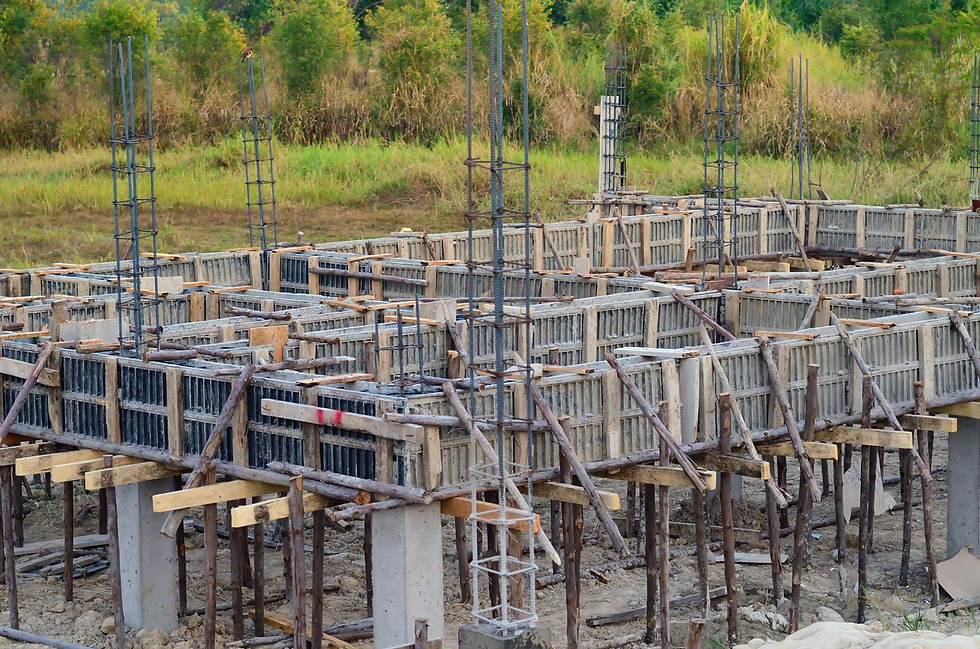
Common Formwork Alignment Errors
Tilted Columns
Improper shuttering support can cause columns to lean slightly from their vertical position.
Uneven Beam Levels
Incorrect beam formwork levels can lead to uneven floor surfaces and structural stress.
Misaligned Slab Edges
Poorly installed slab formwork may cause irregular slab edges and incorrect slab thickness.
Causes of Formwork Misalignment
Several construction mistakes contribute to formwork alignment issues:
Inadequate bracing and support
Poor surveying during layout marking
Loose connections in formwork components
Movement of formwork during concreting

Without proper supervision, these errors become permanent once concrete hardens.
Impact on Structural Performance
Improperly aligned formwork may affect structural stability by altering the geometry of structural elements.
Potential problems include:
Uneven load distribution
Structural stress concentration
Reduced strength of structural connections
Even small deviations can affect overall structural behavior.
Effects on Finishing Works
Formwork errors also create difficulties during finishing stages. Uneven concrete surfaces require additional plastering or grinding to correct surface irregularities.
Consequences include:
Increased material consumption
Higher labor costs
Delays in finishing works
Proper formwork alignment minimizes such problems.
Importance of Formwork Bracing
Bracing systems help maintain the position of formwork during concrete pouring. Wet concrete exerts significant pressure on formwork, which may cause movement if not properly supported.

Strong bracing ensures that formwork remains stable until the concrete hardens.
Role of Surveying in Formwork Alignment
Surveying tools are used to check formwork levels and alignment before concrete placement. Common instruments include:
Auto levels
Laser levels
Plumb bobs
Regular measurements ensure that formwork remains within acceptable tolerances.
Pre-Concreting Formwork Inspection
Before pouring concrete, engineers must inspect formwork thoroughly. The inspection should verify:
Correct dimensions and levels
Proper alignment and verticality
Adequate bracing and support
Tight joints to prevent leakage
These checks help prevent alignment defects.
Corrective Measures for Formwork Errors
If formwork alignment problems are detected before concreting, adjustments can be made by:
Repositioning formwork panels
Tightening bracing supports
Rechecking levels with surveying tools
Once concrete is poured, corrections become much more difficult.
Long-Term Effects of Poor Formwork Alignment
Improperly aligned structural elements may lead to:
Structural cracks
Uneven floors and walls
Increased finishing costs
Reduced structural durability
Preventing formwork errors during construction ensures better building performance.
Conclusion: Accurate Formwork Alignment Ensures Structural Precision
Formwork alignment is a critical step in concrete construction that directly affects the geometry and performance of structural elements. Most formwork defects arise from poor bracing, inaccurate measurements, and lack of supervision during installation.
Civil engineers who carefully monitor formwork installation, verify alignment with surveying tools, and conduct detailed inspections before concreting can prevent costly structural defects. In real construction practice, accurate formwork alignment reflects technical precision, effective supervision, and commitment to delivering high-quality structures.


Comments