
Improper Compaction of Concrete: How Poor Vibration Creates Weak RCC Structures
- Anjali Regmi
- Mar 6
- 3 min read

Concrete compaction is one of the most critical steps during the concreting process. After concrete is poured into formwork, it must be compacted properly to remove trapped air and ensure that the mix fully surrounds reinforcement bars and fills every corner of the formwork. When compaction is inadequate, voids remain within the concrete, leading to weak and porous structures.
Improper compaction is one of the most common execution mistakes on construction sites. It often occurs due to lack of supervision, insufficient vibration equipment, or untrained workers. Although the concrete surface may appear solid after formwork removal, hidden voids inside the structure can significantly reduce strength and durability.
Why Concrete Compaction is Necessary
Fresh concrete contains entrapped air during mixing and pouring. If this air is not removed, it creates voids inside the structure.
Proper compaction ensures:
Higher compressive strength
Better bonding between concrete and reinforcement
Reduced permeability
Improved durability
Without proper compaction, even high-quality concrete mix designs cannot achieve their intended performance.
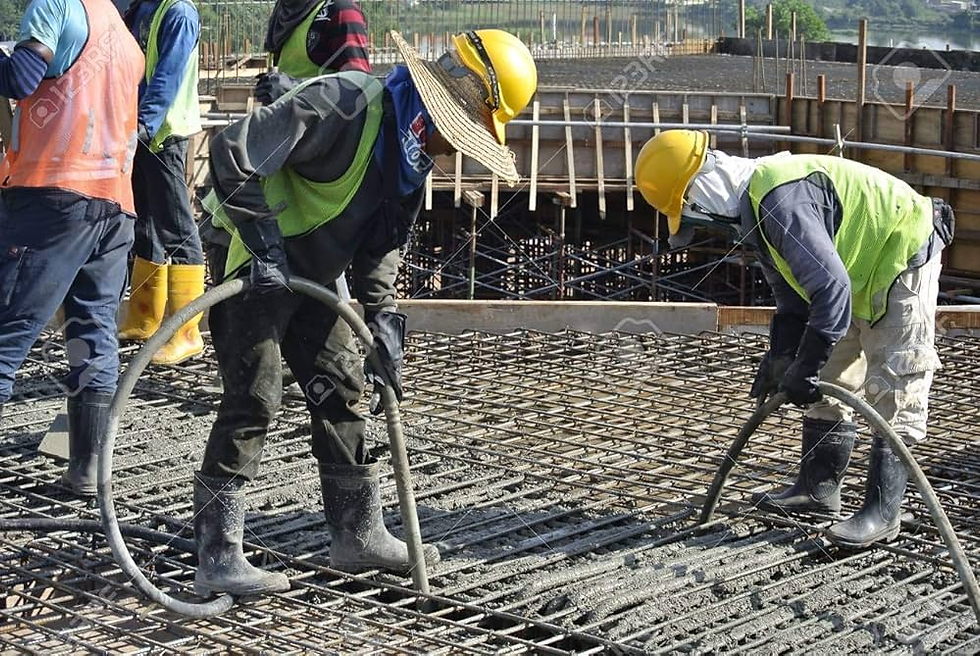
Methods of Concrete Compaction
Several techniques are used to compact concrete depending on the structural element and work conditions.
Manual Compaction
In small-scale projects, rods or tamping bars may be used to compact concrete manually.
Mechanical Vibration
Most modern construction projects use mechanical vibrators to remove air from concrete efficiently.
Types of vibrators include:
Needle (internal) vibrators
Surface vibrators
Formwork vibrators
Mechanical vibration is the most effective method for achieving proper compaction.
Common Compaction Mistakes on Construction Sites
Insufficient Vibration
Workers may remove the vibrator too quickly, leaving trapped air pockets.
Over-Vibration
Excessive vibration can cause segregation of aggregates and reduce concrete quality.
Improper Vibrator Placement
If the vibrator does not reach deeper layers of concrete, compaction becomes uneven.

Honeycombing: A Major Result of Poor Compaction
Honeycombing is a defect where voids appear on the concrete surface after formwork removal. It occurs when concrete does not properly fill spaces around reinforcement or inside formwork.
Consequences of honeycombing include:
Reduced structural strength
Exposure of reinforcement bars
Increased water penetration
Accelerated corrosion of steel
Honeycombing is often difficult to repair and may require structural strengthening.
Factors Affecting Proper Concrete Compaction
Several factors influence the effectiveness of compaction:
Workability of the concrete mix
Proper vibrator selection
Availability of skilled workers
Adequate supervision by engineers
Low-workability concrete requires more careful compaction to prevent void formation.
Role of Civil Engineers During Concreting
Site engineers must closely monitor the compaction process. Their responsibilities include:
Ensuring adequate number of vibrators are available
Supervising vibration technique
Checking that concrete fills all formwork corners
Preventing segregation during vibration
Active supervision significantly improves concrete quality.

Best Practices for Proper Concrete Compaction
To achieve effective compaction:
Insert the vibrator vertically into the concrete
Keep the vibrator in place long enough to remove air bubbles
Avoid touching reinforcement with the vibrator
Ensure overlapping vibration areas for uniform compaction
These practices help eliminate voids and ensure dense concrete.
Impact of Poor Compaction on Structural Durability
Structures with poorly compacted concrete often suffer from:
Reduced compressive strength
Cracks due to weak bonding
Water leakage through porous concrete
Reinforcement corrosion
These defects reduce the service life of the structure and increase maintenance costs.
Repair Techniques for Honeycombed Concrete
If honeycombing is detected after formwork removal, repair methods may include:
Cement grout injection
Polymer-modified mortar repair
Concrete jacketing for severe damage
However, prevention during construction is always preferable to repair afterward.
Importance of Skilled Labor and Training
Proper training of workers in vibration techniques can significantly reduce compaction-related defects. Skilled labor ensures that vibration equipment is used correctly and consistently.
Conclusion: Proper Compaction Ensures Concrete Strength
Concrete compaction is a critical step that directly affects the strength, durability, and quality of RCC structures. Many structural defects arise not from poor design but from inadequate compaction during concreting.
Civil engineers who supervise vibration carefully, ensure proper equipment usage, and maintain strict quality control can prevent honeycombing and other compaction-related problems. In real construction practice, proper compaction reflects professional discipline and commitment to delivering strong and durable structures.


header.all-comments