
Importance of Field Training for Civil Engineering Students Before Graduation
- Anjali Regmi
- Feb 15
- 3 min read

Introduction
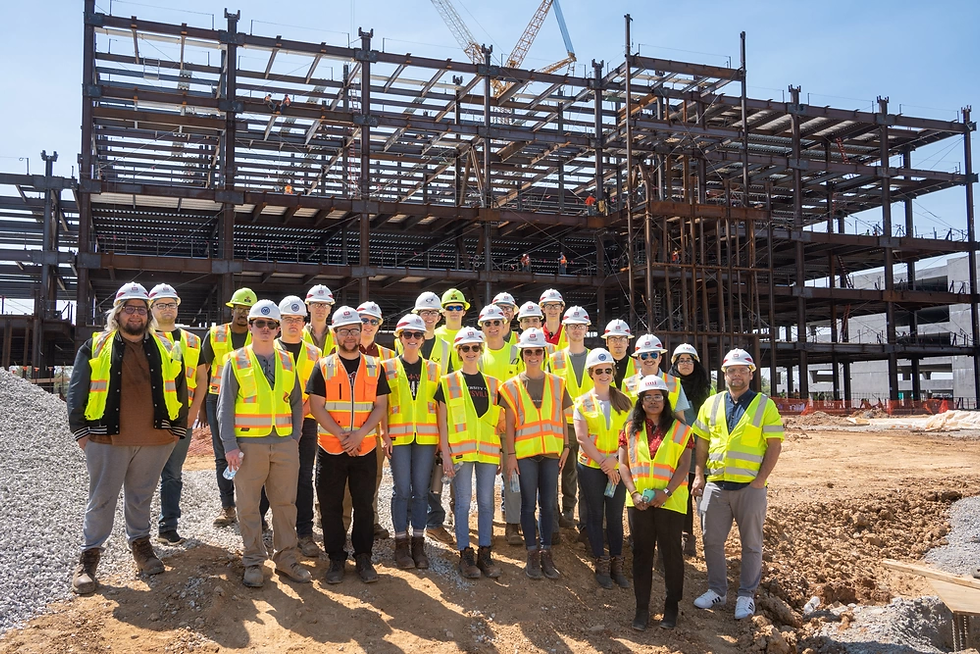
Civil engineering is fundamentally a field-oriented profession where real learning happens on construction sites, not just in classrooms. While academic education provides theoretical knowledge, it cannot fully replicate real-world construction conditions, site challenges, and execution complexities. This is why field training before graduation is one of the most crucial phases in a civil engineering student’s journey. Students who gain practical exposure during their academic years transition smoothly into professional roles, while those without field training often struggle with confidence, technical clarity, and site responsibilities.
Bridging the Gap Between Theory and Practical Application
Classroom learning focuses on concepts like structural analysis, concrete technology, and soil mechanics. However, field training shows how these theories are applied in real construction scenarios. For example, students may study concrete mix design theoretically, but field exposure teaches them about slump control, curing methods, and real-time quality challenges.
This connection between theory and practice strengthens conceptual clarity and makes academic knowledge more meaningful.
Understanding Real Construction Workflow
Construction projects follow a structured workflow that includes layout marking, excavation, reinforcement work, shuttering, concreting, and finishing. Field training allows students to observe this sequence in real time. Without such exposure, construction activities appear disorganized and confusing.
By observing the complete workflow, students develop execution logic and technical awareness that cannot be learned through textbooks alone.
Enhancing Drawing Interpretation Skills Through Site Exposure
Construction drawings become truly understandable only when students see them executed on site. Field training helps students relate plans, sections, and reinforcement details to actual structural elements. This improves visualization and technical confidence.
Students who observe drawings alongside real construction activities develop stronger engineering judgment and accuracy in interpretation.

Developing Practical RCC and Material Knowledge
Field training provides direct exposure to RCC processes such as bar bending, reinforcement placement, shuttering alignment, and concrete pouring. Students also learn how construction materials like cement, steel, aggregates, and admixtures are handled on site.
Understanding material storage, quality checks, and usage in real conditions builds practical competence that laboratory sessions alone cannot provide.
Improving Surveying and Measurement Confidence
Surveying is a daily engineering activity on construction sites. Field training allows students to observe leveling, total station usage, grid marking, and measurement verification. This exposure builds confidence in handling instruments and understanding site layouts.
Students without field training often feel hesitant when assigned measurement tasks during their first job.

Exposure to Construction Machinery and Equipment
Field training introduces students to machinery such as excavators, cranes, batching plants, and compactors. Understanding how these machines operate improves planning, safety awareness, and technical supervision skills.
This knowledge helps future engineers coordinate better with operators and manage equipment-dependent activities effectively.
Learning Site Communication and Professional Behavior
Construction sites involve coordination between engineers, contractors, supervisors, and labor teams. Field training teaches students how professional communication works in real engineering environments. Observing instructions, reporting methods, and team coordination enhances workplace readiness.
Students also learn discipline, punctuality, and responsibility through site exposure.
Understanding Safety Practices and Risk Management
Safety is a critical component of civil engineering projects. Field training exposes students to PPE usage, hazard identification, safety briefings, and safe work practices. This awareness helps students develop a safety-first mindset before entering professional roles.
Ignoring safety learning during academic years can lead to risky behavior in early career stages.
Boosting Confidence and Industry Readiness
Students who undergo field training feel more confident during interviews, internships, and job placements. They understand site terminology, construction sequence, and professional expectations. This confidence makes them stand out among candidates who only possess theoretical knowledge.
Industry readiness is built through exposure, not just academic performance.
Long-Term Career Advantages of Early Field Training
Early field exposure accelerates learning during the first job. Freshers with prior site training adapt faster, require less supervision, and handle responsibilities more effectively. They also make fewer execution errors due to their practical awareness.
Over time, this early advantage contributes to faster career growth and stronger technical competence.
Conclusion
Field training is not an optional academic activity—it is an essential component of civil engineering education. It bridges the gap between theory and practice, enhances technical understanding, and prepares students for real construction environments. From drawing interpretation and RCC work to surveying, machinery awareness, and safety practices, field training builds the foundation of a competent civil engineer. For students aiming to succeed in the construction industry, gaining field exposure before graduation is one of the smartest and most impactful steps toward becoming industry-ready professionals.


Comments