
How to Prepare for Site Audits and Inspections: A Civil Engineer’s Practical Guide
- Anjali Regmi
- Apr 22
- 2 min read

Introduction
Site audits and inspections are an essential part of construction projects. They ensure that work is being carried out according to standards, safety regulations, and contractual requirements.
For civil engineers, being prepared for audits is not just about avoiding penalties—it reflects professionalism, organization, and control over the project.
Understanding the Purpose of Audits

Audits are conducted to verify quality, safety, and compliance with project specifications.
They help identify gaps in execution, documentation, and safety practices. Understanding their purpose allows engineers to prepare effectively.
Organizing Documents and Records
Proper documentation is a key requirement during audits. Engineers must ensure that all records such as drawings, reports, and measurement books—are updated and well organized.
Clear and accessible records make the audit process smooth and efficient.
Checking Site Quality and Workmanship
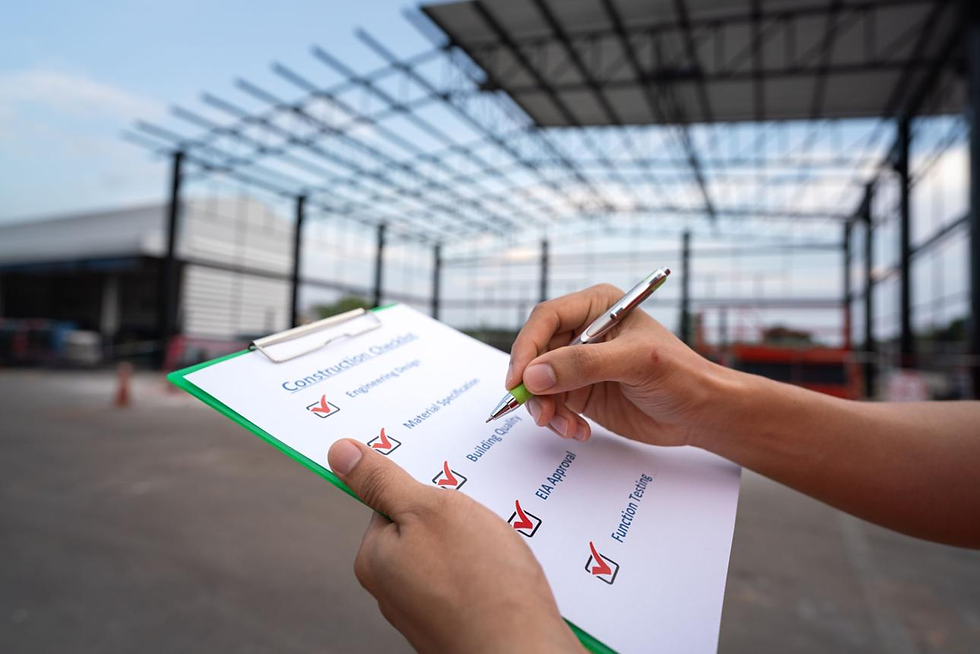
Before an audit, engineers should inspect the site thoroughly to ensure that work meets required standards.
Any defects or deviations should be corrected in advance to avoid negative observations.
Ensuring Safety Compliance
Safety is a major focus during audits. Engineers must ensure that all safety measures are in place, including PPE usage, signage, and hazard control.
A safe site reflects good management and reduces the risk of penalties.
Conducting Internal Checks
Before the actual audit, engineers should conduct internal inspections to identify potential issues.
This proactive approach helps in addressing problems early and ensures better audit performance.
Communicating with the Team
Engineers should inform the team about the upcoming audit and ensure that everyone is prepared.
Clear communication helps in maintaining coordination and readiness during the inspection.
Maintaining Professional Conduct During Audit
During the audit, engineers should present information clearly and confidently.
Professional behavior, accurate responses, and transparency create a positive impression.
Conclusion
Preparing for site audits requires organization, attention to detail, and proactive planning.
By maintaining proper documentation, ensuring quality and safety, and conducting internal checks, civil engineers can handle audits effectively. Mastering this process enhances credibility and ensures smooth project execution.


Comments