
How to Handle Unexpected Site Conditions on Construction Projects: A Civil Engineer’s Practical Guide
- Anjali Regmi
- May 12
- 2 min read

Introduction
Unexpected site conditions are a common challenge in construction projects. Engineers may encounter underground utilities, weak soil, hidden structural issues, water seepage, or site obstructions that were not identified during initial planning.
Such conditions can disrupt work progress, increase project costs, and create safety risks if not handled properly. For civil engineers, the ability to respond quickly and professionally to unforeseen site issues is essential for successful project execution.
Identifying Unexpected Conditions Early
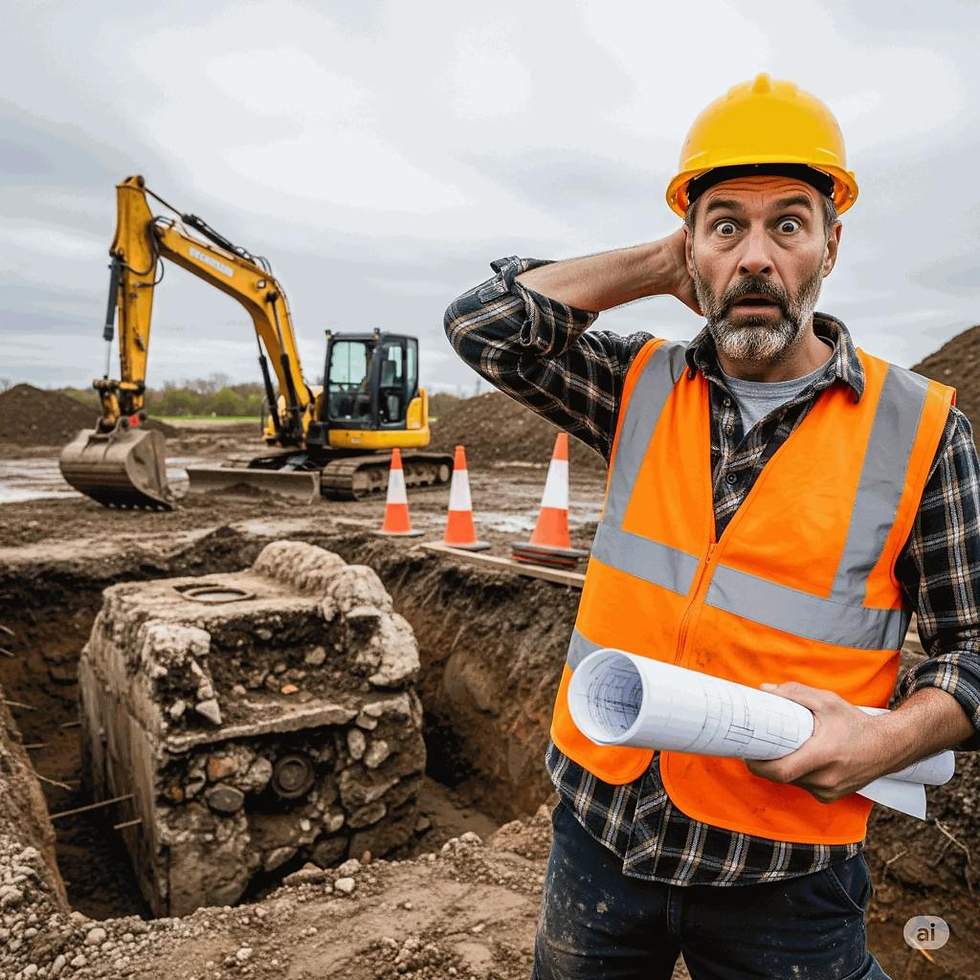
Unexpected conditions often become visible during excavation, demolition, or structural work.
Early identification allows engineers to assess the situation quickly and reduce the chances of major disruption later in the project.
Stopping Unsafe or Incorrect Work Immediately
When unforeseen conditions create safety risks or technical uncertainty, work should be paused immediately in the affected area.
Continuing without proper assessment can lead to accidents, structural damage, or costly rework.
Assessing the Technical Impact Properly

Engineers should evaluate how the unexpected condition affects design, safety, construction methods, and project timelines.
Proper technical assessment helps determine the best corrective solution.
Coordinating with Consultants and Stakeholders
Unexpected conditions often require input from consultants, geotechnical experts, architects, or clients.
Strong coordination ensures that technical decisions are made accurately and approved without unnecessary delay.
Revising Work Plans and Resource Allocation

Unforeseen issues may require changes in construction methods, equipment usage, manpower allocation, or project schedules.
Engineers should revise plans carefully to minimize the impact on overall project progress.
Maintaining Proper Documentation of Site Conditions
All unexpected conditions, observations, discussions, and corrective actions should be documented properly.
Photographs, reports, and written records help maintain accountability and support future technical or contractual discussions.
Conclusion
Unexpected site conditions are unavoidable in many construction projects, but they can be managed effectively through quick assessment, proper coordination, safe decision-making, and flexible planning.
By responding professionally and maintaining strong technical control, civil engineers can reduce project disruption and ensure safe and efficient construction execution.
Adaptability and problem-solving are essential qualities in successful construction management.


Comments