
How AI Is Quietly Transforming Civil Engineering Projects

Artificial Intelligence (AI) is often associated with futuristic robots, self-driving cars, and advanced digital assistants. However, one of the most significant yet less visible transformations caused by AI is happening in the world of civil engineering. Civil engineering, one of the oldest and most fundamental branches of engineering, is responsible for designing, constructing, and maintaining infrastructure such as roads, bridges, dams, buildings, tunnels, and transportation systems. Traditionally, this field has relied heavily on human expertise, manual calculations, and experience-based decision-making. Today, AI is quietly reshaping how civil engineering projects are planned, designed, executed, and maintained, bringing greater efficiency, safety, and innovation.
One of the most impactful ways AI is transforming civil engineering is through smart design and planning. Designing infrastructure projects often requires analyzing enormous amounts of data related to materials, environmental conditions, structural behavior, costs, and safety standards. Traditionally, engineers would spend weeks or even months reviewing designs and testing multiple possibilities. AI-powered software can now process vast amounts of data within minutes and generate optimized design alternatives. Through machine learning algorithms, these systems learn from previous successful projects and suggest designs that minimize material usage, reduce costs, and improve structural strength. This allows engineers to make better decisions much faster while reducing the chances of human error.
AI is also revolutionizing construction project management, an area where delays and cost overruns are extremely common. Large civil engineering projects involve complex coordination between contractors, suppliers, architects, labor teams, and government agencies. Even minor scheduling issues can cause expensive delays. AI systems can analyze project timelines, identify possible risks, and predict delays before they happen. By studying patterns from past construction projects, AI can suggest adjustments in resource allocation, labor scheduling, and procurement planning. This predictive capability helps project managers prevent disruptions rather than reacting after problems occur. As a result, construction companies save both time and money while improving efficiency.
Another major area of transformation is predictive maintenance and infrastructure monitoring. Bridges, highways, tunnels, and buildings experience wear and tear over time. Traditionally, engineers inspect infrastructure periodically, often identifying problems only after visible damage appears. AI combined with sensors and Internet of Things (IoT) technology allows continuous monitoring of infrastructure health. Sensors installed inside structures can collect real-time data on vibrations, temperature changes, stress levels, and material movement. AI algorithms analyze this data to detect patterns that indicate early signs of structural weakness or failure. Engineers can then perform maintenance before major damage occurs. This approach not only extends the lifespan of infrastructure but also prevents catastrophic accidents that could threaten public safety.

AI has significantly improved surveying and site analysis, a critical first step in civil engineering projects. Traditionally, land surveying requires extensive manual fieldwork, specialized equipment, and considerable time. Today, AI-powered drones equipped with cameras and LiDAR technology can map construction sites quickly and accurately. These drones capture detailed topographic data, and AI software processes the information to create highly accurate 3D models of the terrain. Engineers can study site conditions, detect environmental risks, and plan excavation or foundation work much more efficiently. What once took weeks can now be completed within hours, accelerating the entire project timeline.
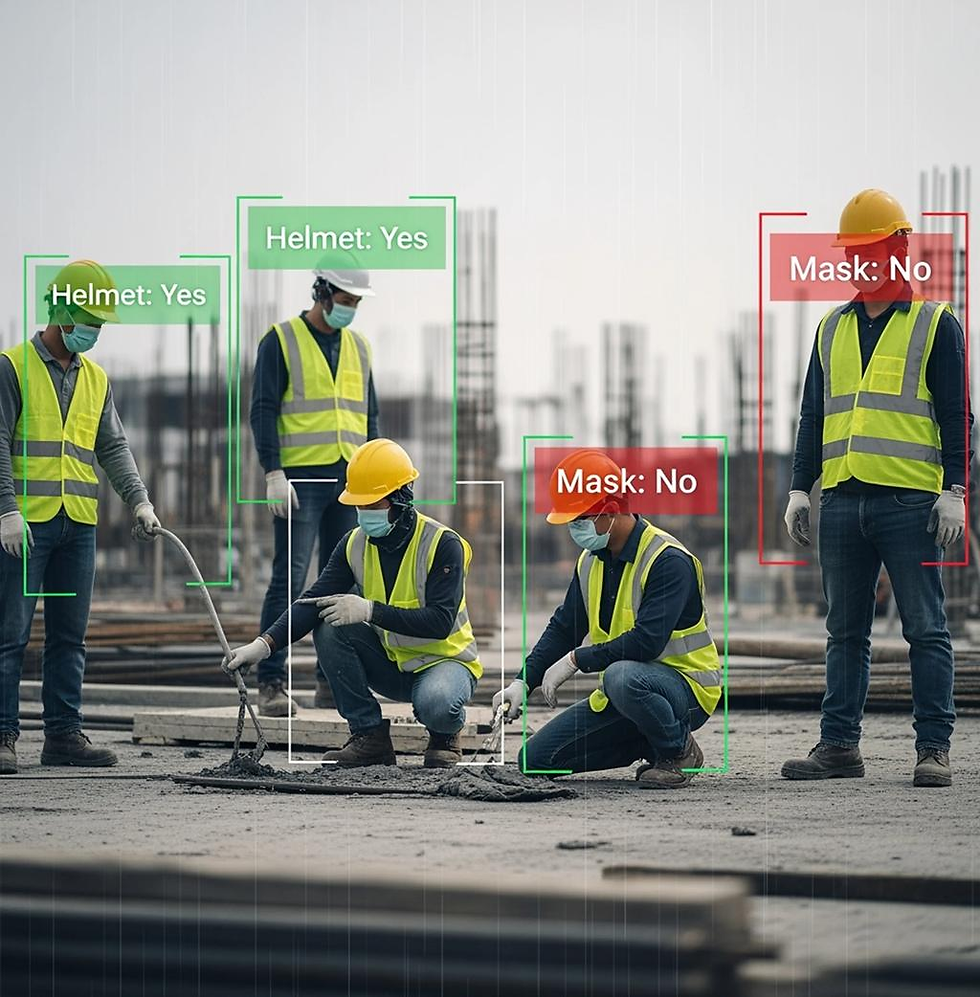
Safety management, one of the biggest concerns in civil engineering, is another area where AI is making a major impact. Construction sites are inherently dangerous environments involving heavy machinery, high elevations, electrical systems, and constant movement of workers and materials. AI-powered computer vision systems can monitor construction sites in real time through cameras and sensors. These systems can detect whether workers are wearing helmets, safety harnesses, and protective equipment. They can identify unsafe behavior, dangerous equipment placement, or potential accident risks immediately. Instead of waiting for safety inspectors to notice problems manually, AI provides instant alerts that help prevent workplace accidents. This creates safer working environments while reducing liability for construction companies.

Another quiet revolution is happening in Building Information Modeling (BIM). BIM is a digital representation of a building’s physical and functional characteristics used throughout a project’s lifecycle. AI enhances BIM systems by automatically detecting design conflicts before construction begins. For example, AI can identify situations where electrical systems, plumbing networks, and structural elements may interfere with one another. Instead of discovering these mistakes during construction, engineers can resolve them during the design stage. This reduces costly rework and improves overall project coordination. AI-powered BIM systems are becoming increasingly valuable for large infrastructure projects where even small design mistakes can have expensive consequences.
Environmental sustainability has become a major concern in modern civil engineering, and AI is helping engineers design greener solutions. Construction activities consume enormous amounts of raw materials and contribute significantly to carbon emissions. AI systems can analyze building materials and recommend alternatives that reduce environmental impact while maintaining structural performance. AI can optimize energy-efficient building designs by studying sunlight exposure, airflow patterns, water usage, and insulation requirements. Engineers can create structures that consume less energy throughout their lifecycle. As governments worldwide introduce stricter environmental regulations, AI is becoming an essential tool for sustainable construction practices.
Traffic management and transportation infrastructure are also being transformed by AI. Urban areas worldwide face increasing traffic congestion, poor road planning, and inefficient transportation networks. Civil engineers are now using AI to analyze traffic patterns and predict congestion points. AI systems collect data from GPS devices, traffic cameras, public transportation systems, and road sensors. By processing this information, engineers can design smarter road networks, improve traffic signal timing, and optimize public transport routes. In the future, AI-driven transportation infrastructure will play a central role in supporting smart cities where roads and traffic systems adapt dynamically based on real-time demand.
Despite these advantages, AI is not replacing civil engineers. Instead, it is changing the nature of their work. Engineers are spending less time on repetitive calculations, manual inspections, and administrative coordination while focusing more on creativity, strategic planning, and solving complex engineering challenges. Human expertise remains essential because engineering decisions often involve ethical judgment, contextual understanding, and practical field experience that AI cannot fully replicate.

In conclusion, AI is quietly but profoundly transforming civil engineering projects in ways many people do not immediately notice. From intelligent design optimization and predictive maintenance to safer construction sites, smarter transportation systems, and sustainable infrastructure development, AI is becoming deeply integrated into every stage of civil engineering. As technology continues to evolve, the future of civil engineering will likely depend on collaboration between human expertise and artificial intelligence. The engineers who embrace this technological transformation will lead the development of smarter, safer, and more efficient infrastructure for future generations. AI may be working quietly behind the scenes today, but its influence on civil engineering is only growing stronger with time.


Comments