
Estimation and Tendering in Civil Engineering Contracts Process Documentation and Field Execution
- Anjali Regmi
- Mar 24
- 3 min read

Introduction to Estimation and Tendering
Estimation and tendering are critical processes in civil engineering that connect project planning with execution. While estimation focuses on calculating project cost, tendering involves selecting the right contractor to carry out the work.
For students and freshers, these topics are often theoretical. However, in real projects, they play a major role in determining project feasibility, cost efficiency, and execution quality.
Understanding the Estimation Process
Estimation involves calculating the total cost of a construction project based on quantities, rates, and specifications.
It includes material costs, labor charges, equipment expenses, and overheads.
In theory, estimation is done using standard formulas and rates. On site, engineers must consider real market conditions and project specific factors.
Types of Estimates in Civil Engineering

There are different types of estimates used at various stages of a project.
Preliminary estimates are prepared during the planning stage to assess feasibility.
Detailed estimates are prepared after design completion and include item wise quantities and costs.
Revised estimates are made when project scope or costs change.
Understanding these types helps engineers manage projects effectively.
Tendering Process in Civil Engineering
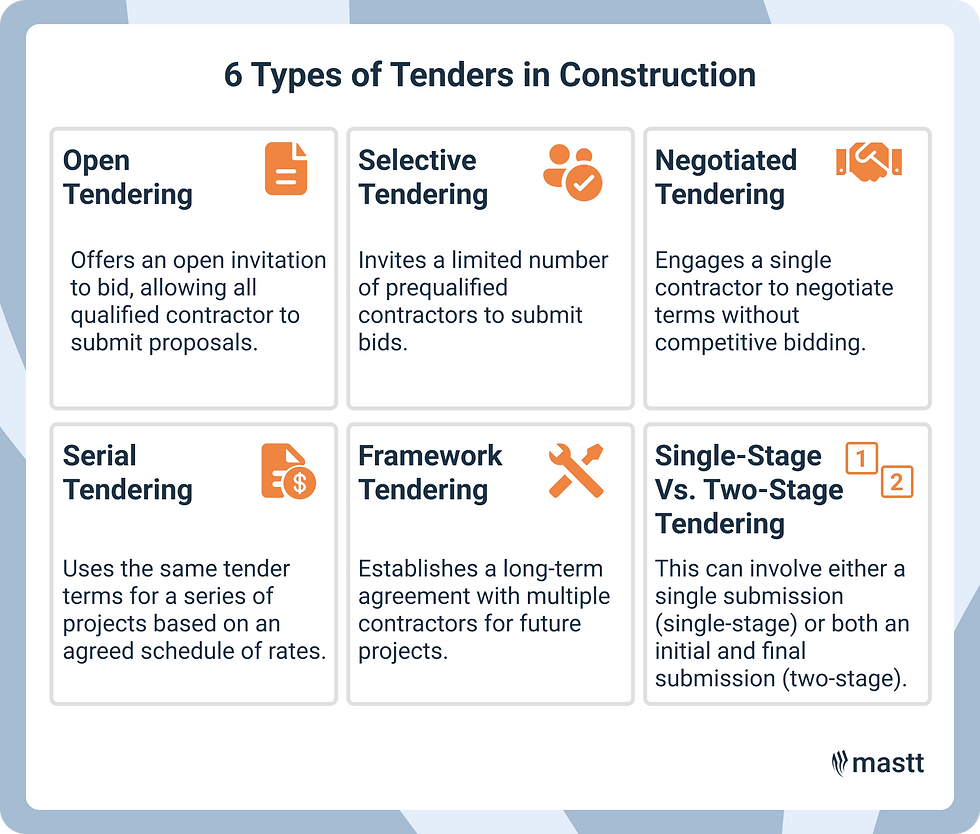
Tendering is the process of inviting contractors to submit bids for a project.
The process includes issuing tender documents, receiving bids, evaluating proposals, and selecting the most suitable contractor.
In modern practice, e tendering systems are widely used for transparency and efficiency.
Tender Documents and Their Components
Tender documents provide all necessary information about the project.
They include drawings, specifications, Bill of Quantities, and contract conditions.
These documents help contractors understand project requirements and prepare accurate bids.
Engineers must ensure that documents are clear and complete to avoid disputes later.
Contract Types in Civil Engineering
Different types of contracts are used in construction projects.
Lump sum contracts involve a fixed price for the entire project.
Item rate contracts are based on actual quantities of work done.
Cost plus contracts include actual cost plus a fixed profit.
Understanding contract types helps engineers manage financial and legal aspects of projects.
Bid Evaluation and Contractor Selection
After receiving bids, engineers evaluate them based on technical and financial criteria.
The lowest bid is not always the best choice. Factors such as experience, capability, and past performance are also considered.
Proper evaluation ensures selection of a competent contractor.
Role of Specifications and Standards
Specifications define the quality and standards required for construction.
They ensure that materials and workmanship meet expected levels.
Engineers must ensure that all work follows specifications to maintain quality.
Execution of Contract on Site

Once the contract is awarded, execution begins on site.
Engineers must coordinate with contractors, monitor progress, and ensure compliance with contract terms.
Proper execution ensures timely completion and quality work.
Variations and Claims in Construction Contracts
During construction, changes in scope may occur.
These changes lead to variations and may result in additional costs or time extensions.
Engineers must manage these variations carefully and handle contractor claims professionally.
Challenges in Estimation and Tendering
Real world projects face challenges such as fluctuating material prices, incomplete data, and time constraints.
Incorrect estimation can lead to financial losses, while poor tendering can result in selection of unsuitable contractors.
Engineers must be cautious and thorough in these processes.
Integration of Theory and Field Practice
Estimation and tendering combine theoretical calculations with practical decision making.
Concepts learned in classrooms are applied in preparing estimates and managing contracts.
Engineers who understand both aspects can handle projects more effectively.
Skills Required for Estimation and Tendering
Engineers need strong analytical and numerical skills for estimation.
Understanding of contracts and legal aspects is also important.
Communication and negotiation skills help in dealing with contractors and stakeholders.
Conclusion
Estimation and tendering are essential for successful project planning and execution in civil engineering.
For students and freshers, mastering these concepts provides a strong foundation for handling real projects.
By combining technical knowledge with practical experience, engineers can ensure cost efficiency, proper contractor selection, and smooth project execution.


Comments