
Differential Settlement in Buildings: Why It Happens and How Engineers Detect It Early
- Anjali Regmi
- Feb 8
- 4 min read

Introduction
Differential settlement is one of the most common yet misunderstood problems in civil engineering. Unlike sudden structural failures, differential settlement develops gradually and silently, often becoming visible only after significant damage has already occurred. Buildings affected by differential settlement may remain standing, but cracks, tilting, serviceability issues, and long-term structural distress reduce safety and lifespan. In real projects, many cases of differential settlement arise not because of poor structural design, but due to incomplete understanding of soil behavior and execution-level oversights. For civil engineers, early detection and prevention are far more effective than costly repairs later.

What Is Differential Settlement in Buildings
Differential settlement occurs when different parts of a structure settle by different amounts. This uneven movement introduces internal stresses that structural members are not designed to resist. Unlike uniform settlement, which may not cause serious damage, differential settlement leads to cracking, distortion, and functional failure. The structure behaves as a rigid body resting on a non-uniform and deformable foundation system.
In real-life buildings, differential settlement typically affects corners, column footings, and junctions between old and new structures. The damage pattern depends on soil variability, foundation type, load distribution, and construction sequence.
Primary Causes of Differential Settlement
Non-Uniform Soil Conditions Below Foundations
One of the most common causes of differential settlement is variability in soil strata beneath the same building. Soil properties such as compressibility, moisture content, and bearing capacity may change laterally across the site. When foundations rest partly on stiff soil and partly on soft soil, settlement becomes uneven. This condition is frequently observed in sites with reclaimed land, filled soil, or layered deposits of clay and sand.
Inadequate Soil Investigation Coverage
Differential settlement often results from insufficient boreholes or shallow investigations that fail to capture lateral soil variation. Engineers may assume uniform soil conditions across the site based on limited data. As a result, foundation design does not account for localized weak zones, leading to uneven deformation once the building is loaded.
Variation in Foundation Loads
Buildings rarely have uniform loading across all foundations. Columns carrying heavier loads experience greater settlement compared to lightly loaded columns. When load variation is not adequately balanced through foundation sizing or type selection, differential settlement develops. This issue is common in buildings with shear walls, stair cores, or heavy machinery zones.

Construction-Related Causes of Differential Settlement
Poor Compaction of Foundation Soil or Fill
In many projects, foundations are placed over compacted fill rather than natural soil. If compaction is inadequate or inconsistent, the fill compresses under load, causing uneven settlement. This problem is especially severe when compaction quality varies across the site due to poor supervision or equipment limitations.
Change in Soil Moisture Content After Construction
Soil volume changes with moisture variation, particularly in clayey soils. Leakage from underground pipes, poor drainage, or rise in groundwater table increases moisture content, reducing soil strength and causing localized settlement. Conversely, drying of expansive clays leads to shrinkage and downward movement of foundations.
Improper Construction Sequence
Construction sequencing affects load application on foundations. When parts of a building are constructed earlier or loaded sooner than others, settlement occurs unevenly. Extensions added to existing buildings without compatible foundation systems also create differential settlement due to different load histories.
Structural Symptoms of Differential Settlement
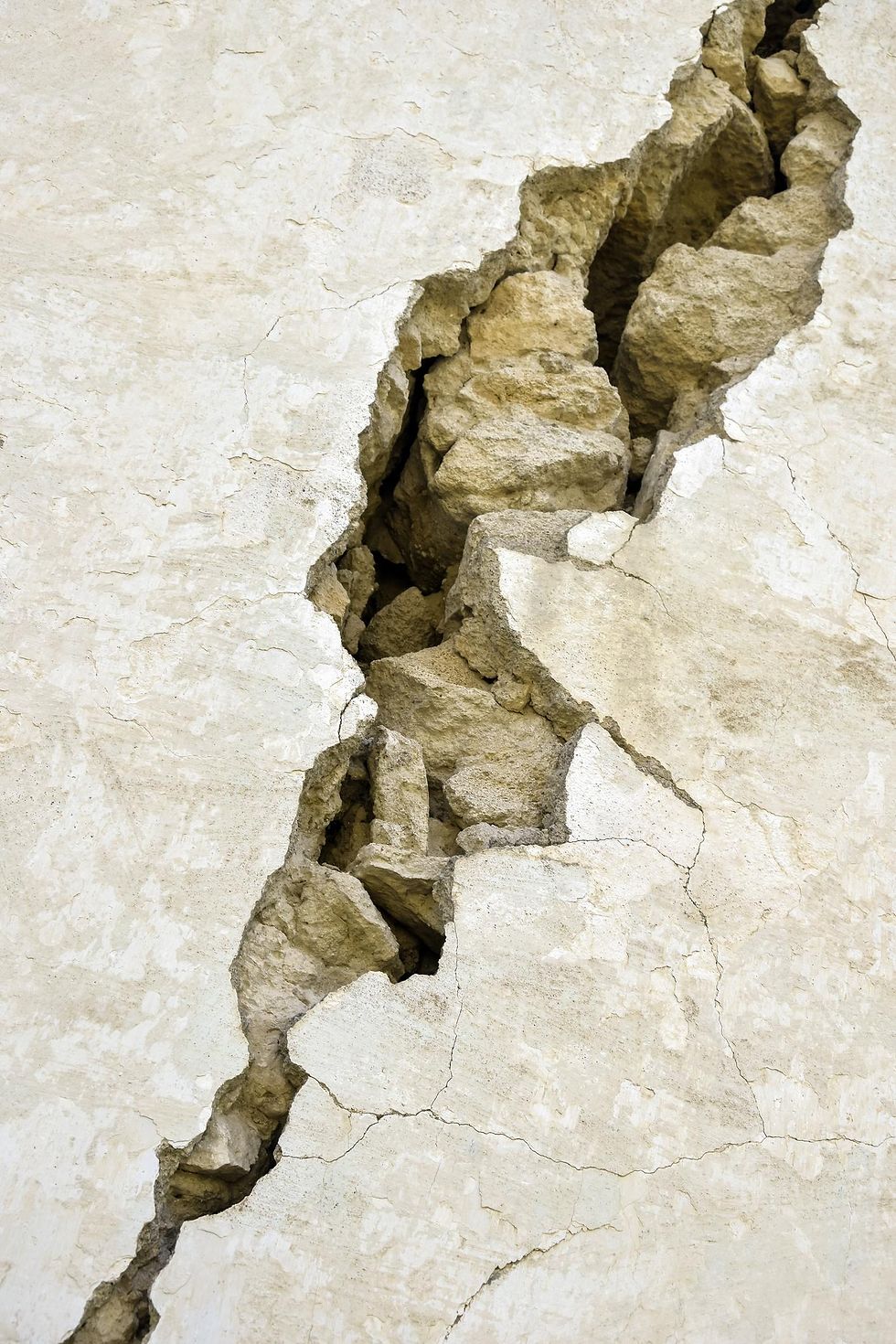
Differential settlement manifests through characteristic structural signs. Diagonal cracks in masonry walls, cracks at beam-column junctions, sloping floors, and misaligned doors and windows are early indicators. In RCC buildings, cracks often appear near column bases and in infill walls rather than in primary load-bearing members initially.
Crack patterns provide valuable diagnostic clues. Engineers trained to read these patterns can identify settlement-related distress long before structural safety is compromised.
Methods Engineers Use to Detect Differential Settlement Early
Visual Inspection and Crack Monitoring
Regular visual inspections remain one of the most effective early detection tools. Mapping cracks, measuring their width, and monitoring progression over time helps engineers distinguish between active and stabilized settlement. Crack gauges and tell-tales provide quantitative data on movement trends.
Level Surveys and Settlement Monitoring
Precision leveling surveys help detect vertical movement of foundations and floors. By comparing benchmark readings over time, engineers can identify differential movement patterns. This method is particularly useful for large buildings and industrial structures.
Instrumentation and Monitoring Systems
In critical projects, settlement markers, inclinometers, and piezometers are installed to monitor ground behavior. These instruments provide real-time data on settlement, lateral movement, and groundwater fluctuations, enabling early intervention.
Non-Destructive Testing and Structural Assessment
Rebound hammer tests, ultrasonic pulse velocity tests, and core sampling help assess whether settlement has affected structural integrity. These methods complement visual observations and provide insight into material performance under stress.
Engineering Measures to Prevent Differential Settlement
Preventing differential settlement begins at the design stage. Adequate soil investigation, proper foundation selection, and realistic load assessment are essential. Engineers often use raft foundations, combined footings, or pile foundations to distribute loads evenly where soil variability exists.
Ground improvement techniques such as compaction, grouting, and soil stabilization reduce compressibility and improve uniformity. Effective drainage systems prevent moisture-related soil changes, while construction sequencing ensures balanced load application.
Role of Civil Engineers in Managing Settlement Risks
Civil engineers must treat differential settlement as a system-level issue rather than an isolated defect. Coordination between geotechnical engineers, structural designers, and site teams is critical. Site engineers play a key role by verifying soil conditions during excavation, monitoring early signs of movement, and reporting deviations promptly.
Ignoring early settlement indicators often leads to irreversible damage and costly retrofitting. Engineers who act early protect not only the structure but also professional credibility.
Conclusion
Differential settlement is not a sudden failure but a progressive problem rooted in soil behavior, foundation design, and construction practices. Most real-life cases could be avoided through better investigation, supervision, and early detection. For civil engineers, the ability to recognize settlement patterns and respond proactively distinguishes competent professionals from reactive ones. Strong buildings begin with uniform foundations and uniform foundations begin with disciplined engineering judgment.


Comments