
Daily Responsibilities of a Site Engineer vs Project Engineer vs Project Manager
- Anjali Regmi
- Jan 21
- 3 min read

One of the most common questions asked by civil engineering students and freshers is:“What is the difference between a Site Engineer, Project Engineer, and Project Manager?”
Many assume these roles are similar, but in reality, they represent different stages of responsibility, authority, and decision-making in a construction project. Understanding these roles clearly helps freshers:
Set realistic career expectations
Prepare for their first job
Plan long-term career growth
Perform better in interviews
This blog explains the daily responsibilities of a Site Engineer, Project Engineer, and Project Manager, highlighting how a civil engineer typically grows from one role to the next.
Career Progression on a Construction Site (Big Picture)
Before diving into individual roles, it’s important to understand the hierarchy:
Site Engineer → Project Engineer → Project Manager
Each role builds on the previous one. As you move up, technical execution reduces, while planning, coordination, and decision-making increase.
1. Site Engineer: The Foundation Role

Who Is a Site Engineer?
A Site Engineer is responsible for the day-to-day execution of construction work on site. This is usually the first job role for civil engineering freshers.
Daily Responsibilities of a Site Engineer
Supervising on-site construction activities
Ensuring work is done as per drawings and specifications
Coordinating with supervisors, foremen, and labor
Checking reinforcement, shuttering, and concreting
Monitoring material usage and availability
Ensuring basic safety practices on site
Reporting daily progress to seniors
Nature of Work
Highly field-oriented
Long working hours
Hands-on execution
Close interaction with labor and contractors
Key Skills Required
Strong fundamentals
Ability to read drawings
Observation and learning attitude
Clear communication on site
👉 For freshers: This role is about learning, not commanding.
2. Project Engineer: The Bridge Between Site & Management
Who Is a Project Engineer?
A Project Engineer handles both execution and coordination, acting as a link between site engineers and senior management. This role usually comes after 3–6 years of experience.
Daily Responsibilities of a Project Engineer
Monitoring multiple site activities
Coordinating between site engineers, contractors, and consultants
Reviewing drawings and resolving execution issues
Ensuring quality and safety compliance
Assisting in planning and scheduling
Tracking progress against targets
Preparing reports for project managers
Nature of Work
Balanced between site and office
More responsibility and accountability
Less physical execution, more supervision
Involved in decision-making
Key Skills Required
Strong site experience
Problem-solving ability
Planning and coordination skills
Communication with multiple stakeholders
👉 For engineers: This role marks the transition from executor to coordinator.
3. Project Manager: The Leader of the Project

Who Is a Project Manager?
A Project Manager is responsible for the overall success of the project—time, cost, quality, safety, and client satisfaction. This role is usually reached after 8–12+ years of experience.
Daily Responsibilities of a Project Manager
Planning project timelines and milestones
Managing budgets and cost control
Coordinating with clients, consultants, and authorities
Taking high-level technical and commercial decisions
Reviewing progress and resolving major issues
Ensuring compliance with contracts and standards
Leading teams and mentoring engineers
Nature of Work
Largely managerial
Less site execution, more strategy
High accountability
Pressure-driven role
Key Skills Required
Leadership and decision-making
Strong technical + managerial knowledge
Risk management
Client and stakeholder management
👉 For senior engineers: This role defines ownership and accountability.
Key Differences at a Glance
Aspect | Site Engineer | Project Engineer | Project Manager |
Experience Level | 0–3 years | 3–6 years | 8–12+ years |
Focus | Execution | Coordination | Management |
Work Location | Mostly site | Site + office | Mostly office |
Decision Power | Low | Medium | High |
Responsibility | Assigned tasks | Section/project parts | Entire project |
How Freshers Should Prepare for This Career Path
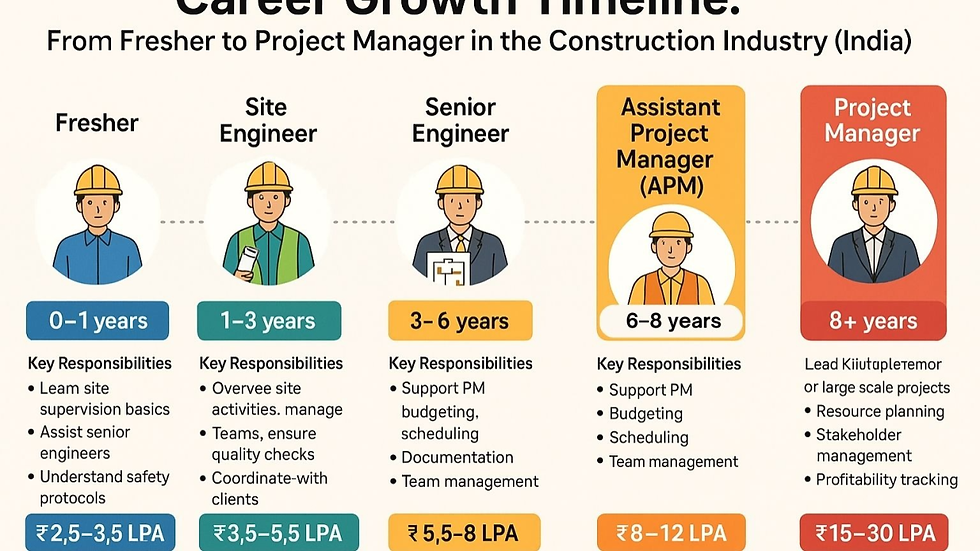
Stage 1: As a Fresher
Focus on learning site basics
Observe seniors closely
Ask questions and maintain a site diary
Stage 2: Mid-Level Engineer
Learn planning, quality, and coordination
Take ownership of work sections
Improve communication and reporting skills
Stage 3: Senior Level
Learn project management concepts
Understand contracts, cost, and risk
Develop leadership qualities
Common Misconceptions Freshers Have
❌ Site Engineer = low-level job
❌ Project Manager doesn’t need technical knowledge
❌ Management roles are easy
✔ Reality: Every role requires strong fundamentals and responsibility.
Which Role Is Best for You?
Choose Site Engineer if you enjoy hands-on work
Choose Project Engineer if you like coordination and problem-solving
Aim for Project Manager if you want leadership and responsibility
Most civil engineers start on site and grow upward—there are no shortcuts.
Conclusion
Understanding the difference between a Site Engineer, Project Engineer, and Project Manager is crucial for planning a successful civil engineering career. Each role has its own importance, challenges, and learning opportunities.
For freshers, the key is to start strong on site, build solid fundamentals, and grow step by step. Civil engineering rewards patience, discipline, and experience—and those who respect every stage of the journey rise to leadership roles naturally.


Comments