
Construction Materials Every Civil Engineer Must Understand Beyond Textbooks: Modern Sustainable Materials
- Anjali Regmi
- Jun 10
- 8 min read

Introduction
Construction materials form the backbone of every civil engineering project. From residential buildings and highways to bridges and mega infrastructure developments, the performance, durability, safety, and sustainability of a structure depend heavily on the materials used during construction. While engineering textbooks provide extensive knowledge about traditional materials such as cement, concrete, steel, bricks, timber, and aggregates, the modern construction industry is rapidly evolving.
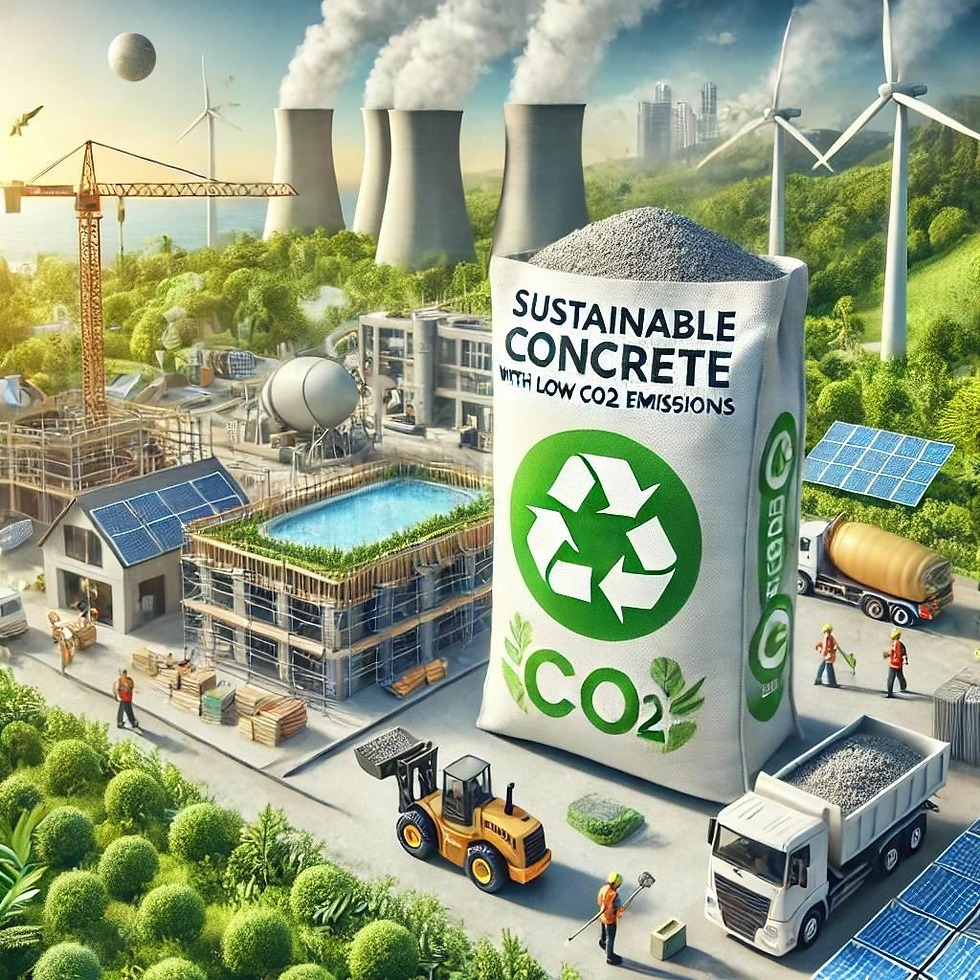
Today’s civil engineers must go beyond textbook knowledge and understand innovative sustainable materials that address environmental concerns, improve structural performance, and support the global push toward green construction.
The construction sector is one of the largest consumers of natural resources worldwide. It accounts for significant carbon emissions, energy consumption, and waste generation. As governments, industries, and societies prioritize sustainability, engineers are expected to design structures that are not only safe and economical but also environmentally responsible. This shift has led to the development of numerous sustainable construction materials that reduce carbon footprints, conserve resources, and enhance long-term performance.
Understanding these modern materials is becoming an essential skill for civil engineers entering the workforce. Employers increasingly seek professionals who can evaluate sustainable alternatives, implement green building practices, and contribute to environmentally conscious infrastructure development.
This article explores some of the most important sustainable construction materials that every civil engineer should understand beyond textbooks.
Why Sustainable Materials Matter
Traditionally, construction projects focused primarily on strength, durability, and cost. While these factors remain important, sustainability has emerged as a fourth critical parameter.
Several factors drive the adoption of sustainable construction materials:
Environmental Impact Reduction
Traditional construction materials often require extensive energy during manufacturing. Cement production alone contributes approximately 7–8% of global carbon dioxide emissions. Sustainable materials help reduce environmental damage by lowering energy consumption and greenhouse gas emissions.
Resource Conservation
Many conventional construction materials rely on finite natural resources. Sustainable alternatives often incorporate recycled content, industrial by-products, or renewable resources, reducing pressure on natural ecosystems.
Improved Building Performance
Modern sustainable materials frequently offer enhanced thermal insulation, moisture resistance, and durability, resulting in improved building performance throughout its lifecycle.
Regulatory Compliance
Many countries have introduced green building regulations and certification systems that encourage the use of environmentally friendly materials. Engineers familiar with these materials are better equipped to meet modern construction standards.
Long-Term Cost Savings
Although some sustainable materials may involve higher initial costs, they often reduce maintenance expenses, energy consumption, and repair requirements over time.
1. Green Concrete
Green concrete is one of the most significant innovations in sustainable construction. It refers to concrete produced using environmentally friendly materials and processes that reduce carbon emissions and resource consumption.
Composition
Green concrete often incorporates:
Fly ash
Ground Granulated Blast Furnace Slag (GGBS)
Silica fume
Recycled aggregates
Rice husk ash
Industrial waste materials
These materials partially replace conventional cement, which is highly energy-intensive to manufacture.
Benefits
Reduced Carbon Emissions
Replacing cement with supplementary cementitious materials significantly lowers CO₂ emissions.
Improved Durability
Many green concrete mixtures exhibit enhanced resistance to:
Sulfate attacks
Chloride penetration
Chemical deterioration
Waste Utilization
Industrial by-products that would otherwise be disposed of in landfills are transformed into valuable construction resources.
Lower Heat of Hydration
Green concrete reduces temperature rise during curing, minimizing thermal cracking in mass concrete structures.
Applications
High-rise buildings
Bridges
Dams
Pavements
Commercial developments
Civil engineers must understand mix design optimization and quality control when working with green concrete, as its behavior differs from conventional concrete.
2. Geopolymer Concrete
Geopolymer concrete is considered a potential replacement for ordinary Portland cement concrete.
Instead of relying on cement, it uses industrial by-products activated by alkaline solutions.
Materials Used
Common source materials include:
Fly ash
GGBS
Metakaolin
Silica-rich waste products
Advantages
Significant Carbon Reduction
Geopolymer concrete can reduce carbon emissions by up to 80% compared to conventional concrete production.
High Strength
Many geopolymer concretes achieve excellent compressive strength suitable for structural applications.
Chemical Resistance
The material demonstrates superior resistance to:
Acid attacks
Sulfates
Aggressive environments
Fire Resistance
Geopolymer concrete generally performs better than conventional concrete under high temperatures.
Future Relevance
As industries seek alternatives to cement-based construction, geopolymer technology is expected to become increasingly important. Civil engineers should familiarize themselves with its manufacturing processes and performance characteristics.
3. Self-Healing Concrete
One of the most fascinating developments in modern construction is self-healing concrete.
Traditional concrete develops cracks over time due to:
Shrinkage
Temperature changes
Loading
Environmental exposure
Self-healing concrete can automatically repair small cracks without external intervention.
How It Works
Several methods exist:
Bacterial Self-Healing
Special bacteria are embedded within concrete. When cracks form and water enters, the bacteria produce limestone, sealing the cracks.
Capsule-Based Systems
Microcapsules containing healing agents rupture when cracks occur, filling and repairing damaged areas.
Benefits
Extended Service Life
Structures remain functional for longer periods.
Reduced Maintenance Costs
Automatic crack repair minimizes repair requirements.
Improved Durability
Preventing crack propagation protects reinforcement from corrosion.
Applications
Bridges
Tunnels
Marine structures
Underground infrastructure
As infrastructure ages globally, self-healing concrete is gaining significant attention.
4. Recycled Aggregate Concrete
Construction and demolition waste represent a major environmental challenge.
Recycled aggregate concrete addresses this issue by incorporating crushed concrete and other recovered materials into new construction projects.
Sources of Recycled Aggregates
Demolished buildings
Road pavements
Concrete waste
Masonry debris
Advantages
Reduced Landfill Waste
Large volumes of construction debris are diverted from disposal sites.
Conservation of Natural Aggregates
Extraction of natural sand and gravel decreases.
Lower Transportation Impacts
Locally available demolition waste can often be reused nearby.
Engineering Considerations
Civil engineers must evaluate:
Aggregate quality
Water absorption
Strength characteristics
Durability performance
Proper testing is essential before structural use.
5. Cross-Laminated Timber (CLT)
Timber is experiencing a renaissance in modern construction due to advances in engineered wood products.
Cross-Laminated Timber (CLT) consists of multiple timber layers bonded at right angles.
Benefits
Renewable Resource
Wood is renewable when sourced from sustainably managed forests.
Carbon Storage
Trees absorb carbon during growth, and CLT retains that carbon throughout the building's life.
Lightweight Construction
CLT structures are lighter than concrete buildings.
Faster Construction
Prefabricated panels significantly reduce construction time.
Applications
Residential buildings
Schools
Offices
Mid-rise structures
Many countries now permit timber high-rise construction, making CLT an increasingly important material for civil engineers.
6. Bamboo as a Modern Construction Material
Although bamboo has been used traditionally for centuries, modern engineering has transformed it into a highly viable sustainable construction material.

Why Bamboo Matters
Rapid Growth
Bamboo grows significantly faster than traditional timber species.
High Strength-to-Weight Ratio
Certain bamboo species exhibit tensile strength comparable to steel.
Renewable Resource
Harvest cycles are much shorter than conventional timber.
Applications
Housing projects
Scaffolding
Temporary structures
Engineered bamboo panels
Interior construction
Challenges
Engineers must address:
Durability
Moisture resistance
Pest protection
Standardization issues
With proper treatment and design, bamboo can play a major role in sustainable construction.
7. Recycled Steel
Steel remains one of the most widely used construction materials worldwide.
Fortunately, steel is also one of the most recyclable materials available.
Sustainability Advantages
Infinite Recyclability
Steel can be recycled repeatedly without losing its properties.
Reduced Energy Consumption
Producing steel from recycled scrap requires significantly less energy than manufacturing virgin steel.
Lower Environmental Impact
Recycling reduces mining activities and associated ecological damage.
Engineering Importance
Civil engineers should understand:
Recycled steel production methods
Quality standards
Structural performance requirements
Many modern buildings already contain substantial amounts of recycled steel.
8. Hempcrete
Hempcrete is a bio-composite material gaining popularity in sustainable building projects.
Composition
Hempcrete consists of:
Hemp hurds
Lime binder
Water
Benefits
Excellent Thermal Insulation
Buildings remain energy efficient.
Lightweight Construction
Reduced structural loads improve design flexibility.
Carbon-Negative Potential
Hemp absorbs carbon during growth.
Moisture Regulation
Hempcrete helps maintain healthy indoor environments.
Limitations
Hempcrete is generally non-structural and requires a supporting frame.
However, it serves as an excellent insulation and wall infill material.
9. Ferrock
Ferrock is an emerging sustainable material developed as an alternative to conventional concrete.
Composition
Ferrock utilizes:
Recycled steel dust
Industrial waste materials
Unique Characteristics
Carbon Absorption
Unlike traditional concrete, Ferrock absorbs carbon dioxide during curing.
High Strength
The material exhibits impressive compressive strength.
Marine Resistance
Ferrock performs particularly well in marine environments.
Future Potential
Although still relatively new, Ferrock demonstrates how waste materials can become valuable engineering resources.
10. Transparent Wood
Transparent wood represents an innovative material that combines sustainability with advanced technology.
Manufacturing Process
Wood is treated to remove lignin and then infused with transparent polymers.
Benefits
Energy Efficiency
Allows natural light transmission while maintaining insulation properties.
Renewable Source
Derived from sustainably harvested wood.
Structural Potential
Stronger and more impact-resistant than traditional glass in some applications.
Future Applications
Facades
Windows
Architectural elements
Energy-efficient buildings
Civil engineers involved in green building projects should monitor developments in this field.
11. Mycelium-Based Building Materials
Mycelium refers to the root-like structure of fungi.
Researchers have developed building materials by growing mycelium around agricultural waste.
Sustainability Benefits
Biodegradable
The material naturally decomposes at end of life.
Low Energy Production
Requires minimal manufacturing energy.
Waste Utilization
Agricultural by-products become valuable inputs.
Applications
Currently used for:
Insulation panels
Acoustic materials
Non-structural components
Although still developing, mycelium-based products highlight the future of bio-based construction.
12. Phase Change Materials (PCMs)
Phase Change Materials improve building energy efficiency.
How They Work
PCMs absorb and release heat during phase transitions.
For example:
Absorb heat during hot periods
Release stored heat when temperatures drop
Benefits
Reduced Energy Consumption
Less reliance on heating and cooling systems.
Improved Indoor Comfort
More stable indoor temperatures.
Sustainable Building Design
Supports energy-efficient construction strategies.
Applications
Walls
Ceilings
Building envelopes
Knowledge of thermal performance is becoming increasingly important for civil engineers.
Skills Civil Engineers Need Beyond Material Identification
Understanding modern materials goes beyond memorizing properties from textbooks.
Engineers must develop expertise in:
Life Cycle Assessment (LCA)
Evaluating environmental impacts throughout a material's lifespan.
Carbon Footprint Analysis
Comparing emissions associated with different material choices.
Green Building Certifications
Understanding systems such as:
LEED
IGBC
GRIHA
Material Testing
Assessing durability, strength, and long-term performance.
Circular Economy Principles
Designing projects that maximize reuse, recycling, and resource efficiency.
Digital Material Management
Using Building Information Modeling (BIM) to track material performance and sustainability metrics.

Challenges in Adopting Sustainable Materials
Despite their benefits, sustainable materials face several obstacles.
Higher Initial Costs
Some innovative materials remain more expensive than conventional alternatives.
Limited Awareness
Many professionals continue relying on traditional construction methods.
Lack of Standards
Certain emerging materials lack comprehensive design codes.
Supply Chain Constraints
Availability may vary by region.
Training Requirements
Engineers, contractors, and workers require specialized knowledge and skills.
As adoption increases, these challenges are expected to diminish.
The Future of Sustainable Construction Materials
The next generation of construction materials will focus on three major goals:
Carbon Neutrality
Reducing or eliminating net carbon emissions.
Resource Efficiency
Maximizing recycled and renewable content.
Smart Performance
Materials capable of monitoring, adapting, and repairing themselves.
Future developments may include:
Carbon-capturing concrete
AI-optimized material mixtures
Advanced bio-based composites
3D-printed sustainable materials
Nanotechnology-enhanced concrete
Self-sensing infrastructure materials
Civil engineers who understand these innovations will be better prepared for the changing demands of the construction industry.
Conclusion
The role of a civil engineer is no longer limited to designing structures that meet strength and serviceability requirements. Modern engineers must also consider environmental responsibility, resource conservation, energy efficiency, and long-term sustainability. While textbooks provide the foundation for understanding traditional construction materials, the future of civil engineering depends increasingly on innovative sustainable alternatives.
Materials such as green concrete, geopolymer concrete, self-healing concrete, recycled aggregate concrete, cross-laminated timber, bamboo, recycled steel, hempcrete, Ferrock, transparent wood, my celium-based products, and phase change materials are transforming how infrastructure is designed and built. These materials not only reduce environmental impact but also improve durability, efficiency, and lifecycle performance.
For civil engineering students and fresh graduates, gaining practical knowledge of these emerging materials can provide a significant advantage in the job market. Employers increasingly value professionals who can contribute to sustainable construction practices and help organizations meet environmental goals. By understanding both traditional and modern sustainable materials, civil engineers can play a crucial role in building resilient, efficient, and environmentally responsible infrastructure for future generations.


Comments