
Complete Guide to Structural Design Basics for Civil Engineering Students and Freshers
- Anjali Regmi
- Mar 22
- 4 min read

Introduction to Structural Design
Structural design is at the heart of civil engineering. It ensures that buildings, bridges, and other structures are safe, stable, and capable of withstanding various loads and forces.
For students and freshers, structural design is often seen as a complex subject filled with calculations and codes. However, when understood properly, it becomes a logical and systematic process that directly connects theory with real world construction.

Basic Concept of Loads in Structures
Every structure is subjected to different types of loads. Understanding these loads is the first step in structural design.
Dead load refers to the self weight of the structure. Live load includes the weight of occupants, furniture, and movable objects. Environmental loads such as wind and seismic forces also play a significant role.
In textbooks, these loads are calculated using standard values. On site, engineers must ensure that the structure is designed to safely resist all possible load combinations.
Load Path and Structural Behavior
Load path refers to how forces travel through a structure from the point of application to the foundation. This concept is crucial in ensuring stability.
For example, loads from slabs are transferred to beams, then to columns, and finally to the foundation. Any break or weakness in this path can lead to failure.
Understanding load transfer helps engineers design efficient and safe structures.
Basic Elements of Structural Design
Structural design involves key elements such as slabs, beams, columns, and foundations. Each element has a specific role.
Slabs distribute loads to beams. Beams transfer loads to columns. Columns carry loads to the foundation. Foundations transfer loads to the soil.
In theory, students learn design equations for each element. On site, these elements are constructed based on detailed drawings and specifications.
Stress Strain Relationship and Material Behavior
The relationship between stress and strain helps engineers understand how materials behave under load.
Materials like steel are ductile and can undergo large deformations before failure. Concrete is strong in compression but weak in tension.
This understanding is essential for designing structures that are both strong and flexible. It also explains why reinforcement is used in concrete structures.
Reinforced Concrete Design Principles
Reinforced concrete is widely used in construction. It combines the compressive strength of concrete with the tensile strength of steel.
In design, engineers calculate the amount of reinforcement required based on loads and material properties.
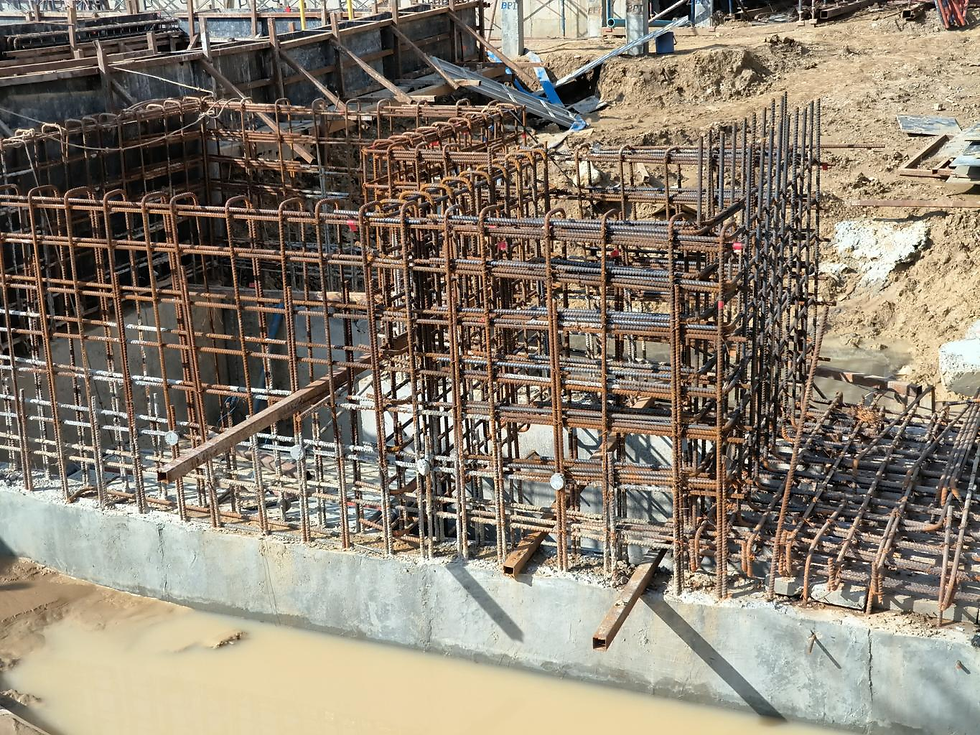
On site, this is implemented through proper placement of steel bars as per drawings. Any deviation can affect the strength and safety of the structure.
Importance of Safety Factors
Safety factors are used in design to account for uncertainties in loads, material properties, and construction quality.
Instead of designing for exact loads, engineers use higher values to ensure safety. This reduces the risk of failure under unexpected conditions.
Understanding safety factors is crucial for maintaining reliability in structures.
Structural Design Codes and Standards
Structural design follows specific codes and standards to ensure uniformity and safety. In India, IS codes are widely used.
These codes provide guidelines for load calculations, material properties, and design procedures.
Students must become familiar with these codes as they are used extensively in both design offices and construction sites.

Structural Drawings and Detailing
Structural drawings are the final output of the design process. They include detailed information about dimensions, reinforcement, and construction methods.
Reading these drawings is a critical skill. Engineers must understand bar bending schedules, spacing of reinforcement, and section details.
On site, these drawings guide the entire construction process.
Role of Software in Structural Design
Modern structural design relies heavily on software tools. Programs like ETABS and STAAD help in analyzing complex structures and generating designs.
These tools save time and improve accuracy. However, they should not replace fundamental understanding. Engineers must verify software results using basic principles.
Common Design Mistakes and Practical Challenges
In real projects, design errors can occur due to incorrect assumptions, lack of coordination, or poor understanding of site conditions.
For example, ignoring soil conditions can lead to foundation issues. Improper detailing can cause cracks or structural weakness.
Understanding these challenges helps engineers avoid mistakes and improve design quality.
Linking Theory with Site Execution
Structural design is not complete until it is correctly executed on site.
Concepts like bending moment and shear force are applied during reinforcement placement. Engineers must ensure that construction follows the design accurately.
Regular inspections and coordination with site teams are essential for successful implementation.
Skills Required for Structural Engineers
To excel in structural design, engineers need a combination of technical and practical skills.
Strong analytical ability is required for calculations. Knowledge of materials and construction methods is essential. Communication skills help in coordinating with teams.
Continuous learning is also important as design methods and technologies keep evolving.
Conclusion
Structural design is a fundamental aspect of civil engineering that ensures safety and efficiency in construction.
For students and freshers, mastering the basics of loads, material behavior, design principles, and codes is essential. At the same time, understanding how these concepts are applied on site is equally important.
When theory and practice are combined effectively, structural design becomes not just a subject, but a powerful tool for building safe and durable infrastructure.


Comments