
Basics of Tunnel Engineering Methods Design Considerations and Construction Challenges
- Anjali Regmi
- Mar 27
- 2 min read

Introduction to Tunnel Engineering
Tunnel engineering is a specialized field in civil engineering that deals with the design and construction of underground passages. Tunnels are used for transportation, water conveyance, and utilities, especially in areas where surface construction is not feasible.
For students and freshers, tunnel engineering combines geotechnical knowledge, structural design, and advanced construction techniques.
Purpose and Applications of Tunnels
Tunnels are constructed for various purposes such as roadways, railways, metros, and water supply systems.
They are particularly useful in mountainous regions, urban areas with limited space, and under rivers or seas.
Understanding their applications helps engineers choose appropriate design and construction methods.
Types of Tunnels

Tunnels can be classified based on their purpose.
Transportation tunnels are used for roads and railways.
Hydraulic tunnels are used for water supply and hydropower projects.
Utility tunnels carry services like cables and pipelines.
Each type has specific design and construction requirements.
Methods of Tunnel Construction
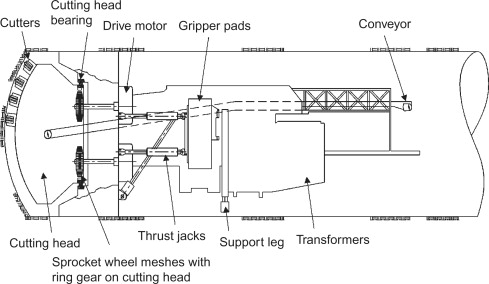
Different construction methods are used depending on soil and rock conditions.
The drill and blast method is used in hard rock.
Tunnel boring machines are used for continuous excavation in soft and hard ground.
Cut and cover method is used in shallow tunnels, especially in urban areas.
The New Austrian Tunneling Method uses surrounding ground as support.
Selecting the right method is crucial for safety and efficiency.
Geological and Geotechnical Considerations
Soil and rock conditions play a major role in tunnel design.
Engineers must study ground properties, water table levels, and stability.
Unfavorable conditions can lead to collapse or water ingress.
Proper investigation helps in selecting suitable construction techniques.
Tunnel Lining and Support Systems

Tunnel lining provides structural support and protects against collapse.
Materials such as concrete and steel are used for lining.
Support systems include rock bolts, shotcrete, and steel ribs.
These systems ensure stability during and after construction.
Ventilation and Safety in Tunnels
Ventilation is essential in tunnels to provide fresh air and remove harmful gases.
Safety measures include emergency exits, fire protection systems, and monitoring.
Engineers must design tunnels to ensure safe operation for users.
Drainage and Waterproofing
Water ingress is a major challenge in tunnel construction.
Proper drainage systems are required to remove water and prevent damage.
Waterproofing materials are used to protect the structure.
These measures ensure durability and safety.
Challenges in Tunnel Construction
Tunnel construction is complex and involves several challenges.
Unpredictable ground conditions, water seepage, and limited working space can affect progress.
In urban areas, minimizing disturbance to existing structures is also important.
Engineers must adapt to these challenges with proper planning.
Integration of Theory and Field Practice
Tunnel engineering requires a combination of theoretical knowledge and practical skills.
Concepts like soil mechanics and structural design are applied during construction.
Engineers must ensure that designs are implemented correctly in challenging conditions.
Skills Required for Tunnel Engineers
Engineers need strong knowledge of geotechnical engineering and construction methods.
Problem solving skills are essential for handling unexpected conditions.
Attention to safety and detail is critical in underground work.
Conclusion
Tunnel engineering is an advanced field that plays a vital role in modern infrastructure.
For students and freshers, understanding tunnel design, methods, and challenges is essential for working on complex projects.
By combining technical knowledge with practical experience, engineers can design and construct safe and efficient tunnels.


Comments