
Basics of Reinforcement Detailing in Civil Engineering Bar Bending Schedule and Site Execution
- Anjali Regmi
- Mar 25
- 3 min read

Introduction to Reinforcement Detailing
Reinforcement detailing is a crucial aspect of civil engineering that ensures the proper placement of steel in concrete structures. It directly affects the strength, durability, and safety of buildings.
For students and freshers, reinforcement detailing is often studied through drawings and codes. However, on site, it becomes a practical activity that requires precision and understanding of structural behavior.
Role of Reinforcement in Concrete Structures
Concrete is strong in compression but weak in tension. Reinforcement steel is added to resist tensile forces and improve overall strength.
In theory, engineers calculate the amount of steel required based on loads. On site, this is implemented through proper placement and spacing of reinforcement bars.
Correct detailing ensures that the structure performs as intended.
Types of Reinforcement Used

Different types of reinforcement are used in structures.
Main bars carry primary loads, while secondary bars provide distribution. Stirrups and ties are used to resist shear forces and provide stability.
Understanding these types helps engineers design and execute reinforcement correctly.
Basic Rules of Reinforcement Detailing
Reinforcement detailing follows certain fundamental rules.
Proper spacing must be maintained to allow concrete to flow and compact properly.
Minimum cover should be provided to protect steel from corrosion.
Bars must be anchored properly to ensure load transfer.
These rules are defined in design standards and must be followed strictly.
Bar Bending Schedule and Its Importance
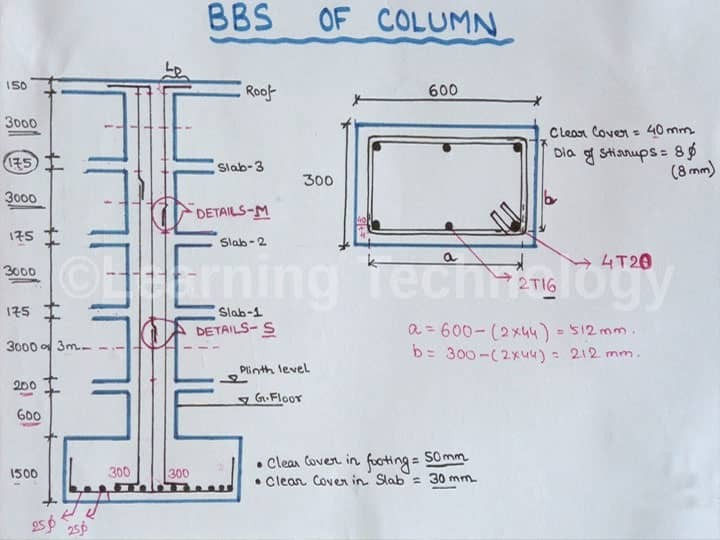
A Bar Bending Schedule, commonly known as BBS, is a detailed list of reinforcement bars required for a structure.
It includes information about bar diameter, length, shape, and quantity.
In theory, BBS is prepared using calculations and drawings. On site, it helps in cutting, bending, and placing reinforcement accurately.
A well prepared BBS reduces wastage and improves efficiency.
Reinforcement Detailing in Beams and Slabs
Beams and slabs are key structural elements that require careful detailing.
Beams are reinforced to resist bending and shear forces, while slabs are reinforced to distribute loads.
In practice, engineers must ensure correct placement of bars as per drawings.
Any mistake in detailing can affect structural performance.
Reinforcement Detailing in Columns and Foundations
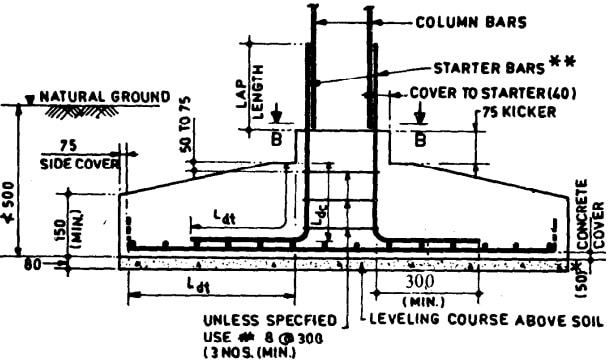
Columns carry loads from the structure to the foundation, making their reinforcement critical.
Proper spacing of vertical bars and ties ensures stability.
Foundations also require reinforcement to distribute loads to the soil.
On site, engineers must check alignment and spacing carefully.
Cutting, Bending, and Placement of Bars
Reinforcement bars are cut and bent according to the BBS.
Proper bending ensures that bars fit correctly in the structure.
Placement must follow drawings precisely, with correct spacing and alignment.
Supervision is necessary to ensure accuracy during these processes.
Common Mistakes in Reinforcement Work
Common mistakes include improper spacing, insufficient cover, and incorrect bar placement.
These errors can reduce the strength and durability of the structure.
Regular inspection and supervision help in avoiding such mistakes.
Quality Control in Reinforcement Detailing
Quality control involves checking bar size, spacing, alignment, and cover before concreting.
Engineers must ensure that reinforcement matches the design specifications.
Proper documentation and inspection help maintain quality standards.
Integration of Theory and Site Practice
Reinforcement detailing is a clear example of how theoretical design is implemented on site.
Concepts learned in classrooms are applied through drawings and construction activities.
Engineers must understand both aspects to ensure accurate execution.
Skills Required for Reinforcement Detailing
Engineers need strong understanding of structural concepts and drawings.
Attention to detail is critical for accurate placement of reinforcement.
Communication skills help in coordinating with workers and supervisors.
Conclusion
Reinforcement detailing is essential for ensuring the strength and safety of concrete structures.
For students and freshers, mastering this topic provides a strong foundation in structural engineering.
By combining theoretical knowledge with practical experience, engineers can ensure accurate detailing and successful construction.


Comments