
Basics of Project Planning and Scheduling in Civil Engineering CPM PERT and Site Management
- Anjali Regmi
- Mar 29
- 2 min read

Introduction to Project Planning and Scheduling
Project planning and scheduling are essential aspects of civil engineering that ensure timely and efficient completion of construction projects.
Planning defines what needs to be done, while scheduling determines when and how it will be done.
For students and freshers, this topic connects management principles with technical execution on site.
Importance of Planning in Construction Projects
Proper planning helps in organizing resources, reducing delays, and controlling costs.
It ensures that all activities are carried out in a systematic manner.
Without planning, projects may face confusion, inefficiencies, and cost overruns.
Work Breakdown Structure
A project is divided into smaller tasks using a Work Breakdown Structure.
This helps in understanding each activity and its requirements.
Engineers can manage complex projects more effectively through proper breakdown.
Scheduling Techniques in Civil Engineering
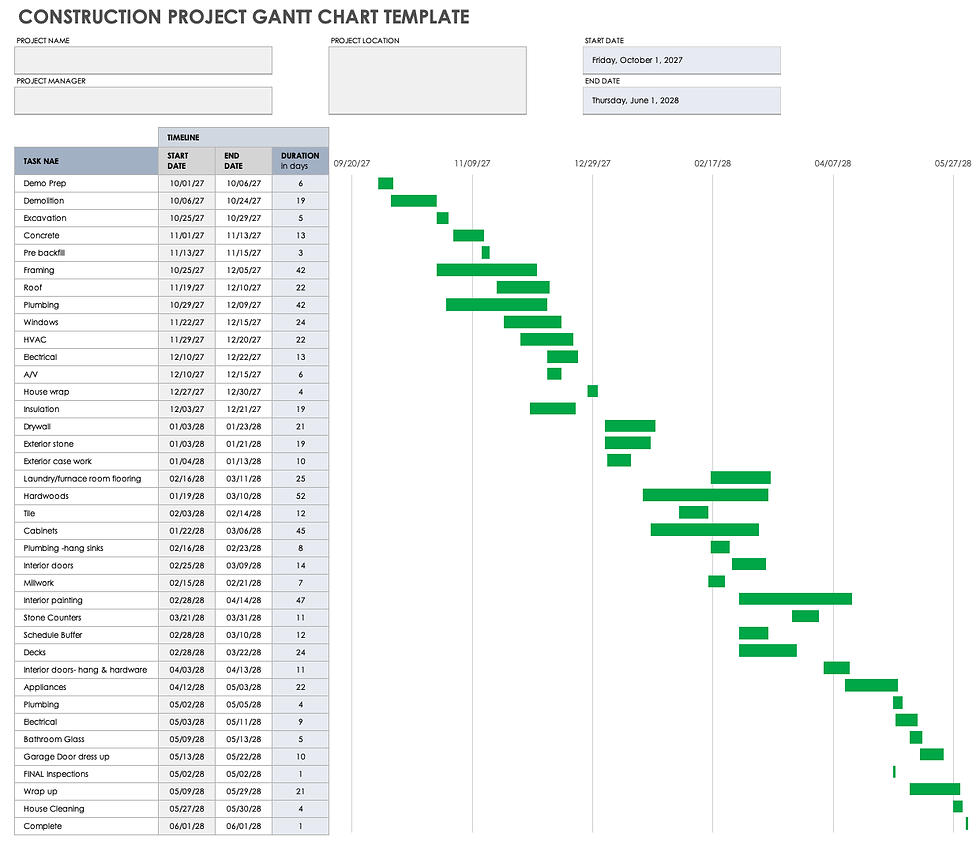
Various scheduling techniques are used in civil engineering.
Gantt charts provide a visual timeline of activities.
CPM helps in identifying the critical path and project duration.
PERT is used for projects with uncertain activity durations.
Understanding these techniques is essential for project management.
Critical Path Method CPM
CPM identifies the longest path of activities in a project.
It determines the minimum time required to complete the project.
Activities on the critical path must be completed on time to avoid delays.
Program Evaluation and Review Technique PERT
PERT is used when activity durations are uncertain.
It considers optimistic, pessimistic, and most likely time estimates.
This helps in better planning and risk management.
Resource Planning and Allocation

Resources such as labor, materials, and equipment must be planned efficiently.
Proper allocation ensures smooth workflow and avoids delays.
Engineers must balance resource availability with project requirements.
Monitoring and Control of Projects
Project progress must be monitored regularly.
Engineers compare actual progress with planned schedules.
Corrective actions are taken if delays occur.
Monitoring ensures that the project stays on track.
Site Management and Coordination
Effective site management involves coordinating different teams and activities.
Engineers must ensure communication between workers, contractors, and stakeholders.
Proper coordination improves efficiency and reduces conflicts.
Use of Software in Project Planning
Modern software tools are used for planning and scheduling.
These tools help in creating schedules, tracking progress, and managing resources.
Engineers must learn these tools for better project management.
Challenges in Project Scheduling
Projects often face challenges such as delays, resource shortages, and unexpected conditions.
Engineers must be flexible and adapt to changes.
Proper planning helps in minimizing these challenges.
Integration of Theory and Field Practice
Project planning combines theoretical methods with practical execution.
Concepts like CPM and PERT are applied on site for managing activities.
Engineers must ensure that plans are followed effectively.
Skills Required for Project Management
Engineers need planning, analytical, and decision making skills.
Communication and leadership are essential for managing teams.
Time management is critical for successful project completion.
Conclusion
Project planning and scheduling are essential for successful civil engineering projects.
For students and freshers, understanding techniques like CPM and PERT is crucial for managing time and resources.
By combining technical knowledge with management skills, engineers can ensure timely and efficient project execution.


Comments