
Basics of Masonry Work Brickwork Blockwork Bonds and Construction Techniques
- Anjali Regmi
- Apr 3
- 2 min read

Introduction to Masonry Work
Masonry work is one of the oldest and most widely used construction techniques in civil engineering. It involves the use of units such as bricks or blocks bonded together with mortar to form walls and structural elements.
For students and freshers, masonry is a fundamental topic that connects material knowledge with practical site execution.
Types of Masonry
Masonry can be classified based on materials used.
Brick masonry uses burnt clay bricks.
Block masonry uses concrete or AAC blocks.
Stone masonry uses natural stones for construction.
Each type has its own applications and advantages.
Materials Used in Masonry

The main materials used in masonry are bricks or blocks and mortar.
Mortar is a mixture of cement, sand, and water used for binding.
The quality of materials directly affects strength and durability.
Brick Bonds and Their Importance
Brick bonds refer to the arrangement of bricks in a wall.
Common bonds include English bond, Flemish bond, and stretcher bond.
Proper bonding improves strength and load distribution.
Mortar and Its Role
Mortar acts as a binding material between masonry units.
It fills gaps, provides adhesion, and distributes loads.
Proper mix and consistency of mortar are essential for quality work.
Construction Process of Masonry
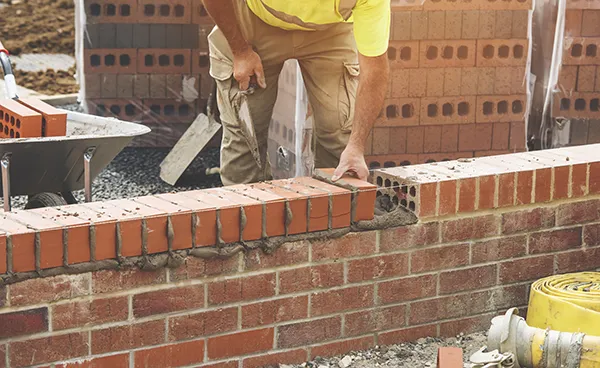
Masonry construction involves laying units in courses with mortar.
Alignment and leveling are checked using tools such as plumb bob and spirit level.
Proper curing is necessary to achieve strength.
Types of Block Masonry
Block masonry includes solid blocks, hollow blocks, and AAC blocks.
AAC blocks are lightweight and provide better insulation.
Selection depends on structural and thermal requirements.
Quality Control in Masonry Work
Quality control involves checking material quality, alignment, and mortar consistency.
Engineers must ensure proper bonding and joint thickness.
Inspection helps in maintaining durability.
Common Defects in Masonry
Common defects include cracks, uneven joints, and poor bonding.
These defects may occur due to poor workmanship or material quality.
Proper supervision helps in preventing these issues.
Advantages of Masonry Construction
Masonry provides strength, durability, and thermal insulation.
It is cost effective and widely used in building construction.
Different materials allow flexibility in design.
Integration of Theory and Field Practice
Masonry work combines theoretical knowledge of materials with practical construction techniques.
Engineers must ensure correct implementation on site.
Skills Required for Masonry Work Supervision
Engineers need knowledge of materials and construction techniques.
Attention to detail is essential for alignment and bonding.
Supervision skills help in maintaining quality.
Conclusion
Masonry work is a fundamental part of building construction in civil engineering.
For students and freshers, understanding types, materials, and construction techniques is essential.
By combining theoretical knowledge with practical experience, engineers can ensure strong and durable masonry structures.


Comments