
Basics of Green Building and Sustainable Construction Principles Materials and Rating Systems
- Anjali Regmi
- Apr 6
- 2 min read

Introduction to Green Building
Green building refers to the design and construction of structures that are environmentally responsible and resource efficient throughout their lifecycle.
It focuses on reducing energy consumption, minimizing waste, and improving occupant comfort.
For students and freshers, this topic highlights the importance of sustainability in modern civil engineering.
Importance of Sustainable Construction
Sustainable construction helps in conserving natural resources and reducing environmental impact.
It improves energy efficiency and reduces operating costs.
Engineers play a key role in promoting sustainable practices.
Principles of Green Building

+++++++
Green building is based on key principles such as energy efficiency, water conservation, and use of sustainable materials.
Passive design techniques such as natural lighting and ventilation reduce energy demand.
Indoor environmental quality is also an important consideration.
Sustainable Building Materials
Sustainable materials include recycled, renewable, and low impact materials.
Examples include fly ash bricks, recycled steel, and green concrete.
These materials reduce environmental impact.
Energy Efficient Systems
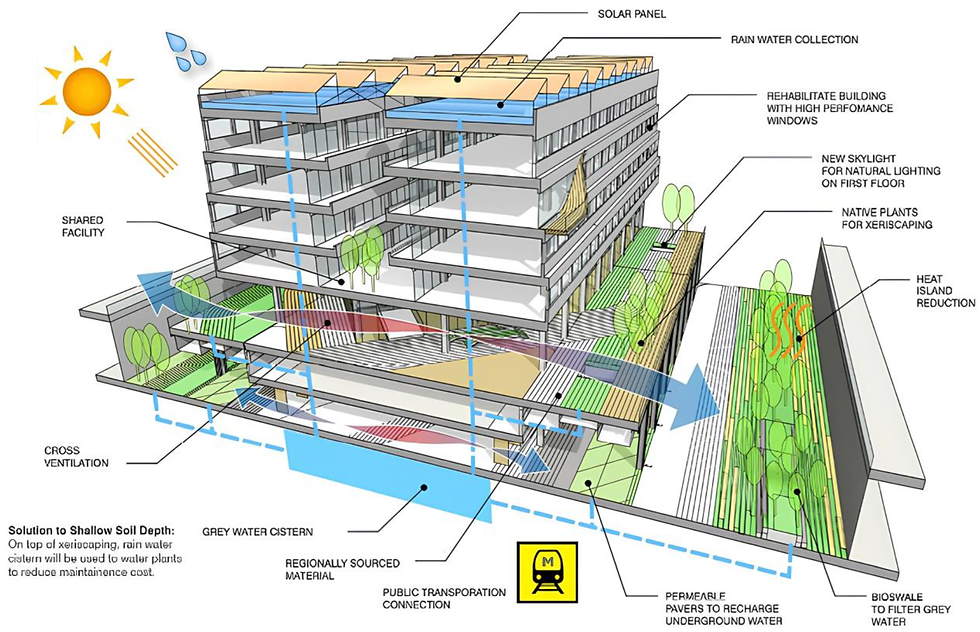
Energy efficient systems such as solar panels, LED lighting, and efficient HVAC systems reduce energy consumption.
Smart systems help in monitoring and controlling energy use.
Water Conservation Techniques

Water conservation methods include rainwater harvesting, greywater recycling, and use of efficient fixtures.
These techniques help in reducing water consumption.
Green Building Rating Systems
Green buildings are evaluated using rating systems.
These systems assess performance based on energy, water, and environmental impact.
They help in promoting sustainable construction practices.
Benefits of Green Buildings
Green buildings offer benefits such as reduced energy costs, improved indoor comfort, and lower environmental impact.
They also enhance property value and occupant well being.
Challenges in Green Construction
Challenges include higher initial cost and lack of awareness.
Engineers must balance cost and sustainability.
Proper planning helps in overcoming these challenges.
Integration of Sustainability in Civil Engineering
Sustainability must be integrated into design and construction processes.
Engineers must consider environmental impact at every stage.
Skills Required for Green Building Engineers
Engineers need knowledge of sustainable materials and technologies.
Analytical and planning skills are essential.
Awareness of environmental standards is important.
Future of Sustainable Construction
The future of construction will focus on sustainability and energy efficiency.
Green buildings will become more common as awareness increases.
Civil engineers will play a key role in this transition.
Conclusion
Green building and sustainable construction are essential for reducing environmental impact and conserving resources.
For students and freshers, understanding principles, materials, and systems is crucial.
By combining technical knowledge with sustainability practices, engineers can contribute to a better and more sustainable future.


Comments