
Basics of Formwork and Scaffolding Design Types Safety and Site Execution
- Anjali Regmi
- Mar 26
- 3 min read

Introduction to Formwork and Scaffolding
Formwork and scaffolding are essential temporary structures used in construction. While formwork provides a mold for concrete to take shape, scaffolding provides access and support for workers during construction activities.
For students and freshers, these topics are often theoretical. However, on site, they are critical for ensuring safety, accuracy, and efficiency in construction.
Purpose and Importance of Formwork
Formwork is used to hold fresh concrete in position until it gains sufficient strength.
It ensures that structural elements like beams, slabs, and columns are cast in the correct shape and dimensions.
Proper formwork is essential for achieving the desired quality and finish of concrete structures.
Types of Formwork Used in Construction

Formwork can be made from different materials such as timber, steel, aluminium, and plastic.
Timber formwork is commonly used for small projects due to its flexibility.
Steel and aluminium formwork are used in large projects for durability and reusability.
Selection of formwork depends on project requirements and cost.
Components of Formwork System
Formwork consists of several components including panels, supports, ties, and braces.
Panels give shape to concrete, while supports and braces provide stability.
Proper assembly of these components ensures strength and alignment of the structure.
Basics of Scaffolding in Construction
Scaffolding is a temporary structure used to support workers and materials during construction.
It provides safe access to heights and difficult areas.
Different types of scaffolding are used based on project requirements.
Types of Scaffolding Systems
Scaffolding can be classified into supported scaffolding, suspended scaffolding, and rolling scaffolding.
Supported scaffolding is built from the ground and is commonly used.
Suspended scaffolding is hung from the top of structures and used for maintenance work.
Rolling scaffolding is movable and used for smaller tasks.
Design Considerations for Formwork and Scaffolding
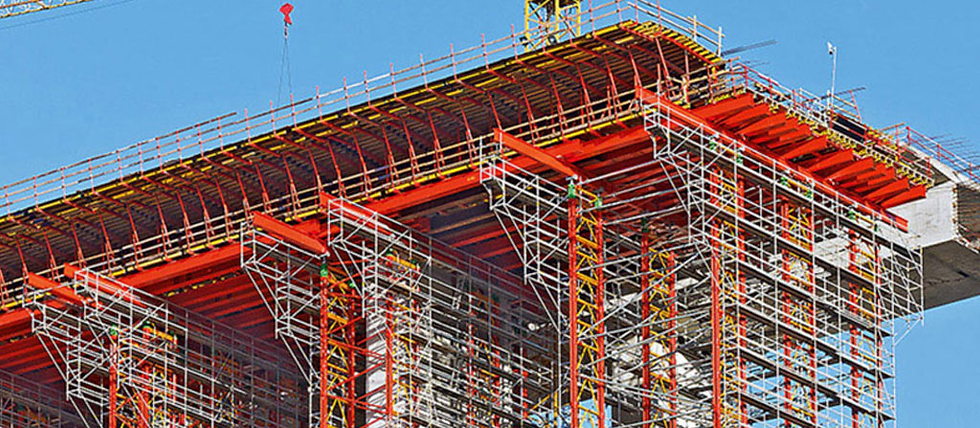
Both formwork and scaffolding must be designed to carry loads safely.
Formwork should support the weight of fresh concrete and construction loads.
Scaffolding must support workers, tools, and materials.
Proper design ensures stability and prevents accidents.
Erection and Dismantling on Site
Formwork and scaffolding must be erected carefully following proper procedures.
Incorrect assembly can lead to collapse or misalignment.
Dismantling should be done only after ensuring that concrete has gained sufficient strength.
Engineers must supervise these activities closely.
Safety Measures in Formwork and Scaffolding

Safety is a major concern in formwork and scaffolding.
Workers must use protective equipment and follow safety guidelines.
Regular inspection is necessary to check stability and strength.
Any defects should be corrected immediately to prevent accidents.
Common Issues and Failures
Common problems include improper alignment, weak supports, and overloading.
Formwork failure can lead to deformation of concrete elements.
Scaffolding failure can result in serious accidents.
Understanding these issues helps engineers take preventive measures.
Integration of Theory and Field Practice
Formwork and scaffolding design involve both theoretical calculations and practical execution.
Concepts like load calculation and stability are applied on site during erection and use.
Engineers must ensure that theoretical designs are implemented correctly.
Skills Required for Site Engineers
Engineers need technical knowledge of temporary structures and construction processes.
Attention to detail is essential for ensuring proper alignment and safety.
Communication skills help in coordinating with workers and supervisors.
Conclusion
Formwork and scaffolding are essential components of construction that ensure safety and accuracy.
For students and freshers, understanding their design, types, and practical use is crucial for site management.
By combining theoretical knowledge with practical experience, engineers can ensure safe and efficient construction operations.


Comments