
3D Printed Buildings: Will Construction Sites Look Completely Different by 2030?

The construction industry, one of the oldest and most essential sectors in human civilization, is undergoing a major transformation driven by technology. Among the most revolutionary innovations is 3D printing in construction, also known as additive manufacturing. While 3D printing has already disrupted industries such as healthcare, automotive, and aerospace, its impact on construction is becoming increasingly visible. From printing affordable homes in record time to reducing material waste and labor dependency, 3D printing has the potential to completely reshape how buildings are designed and constructed. By 2030, construction sites may look drastically different from what we know today.
What is 3D Printing in Construction?
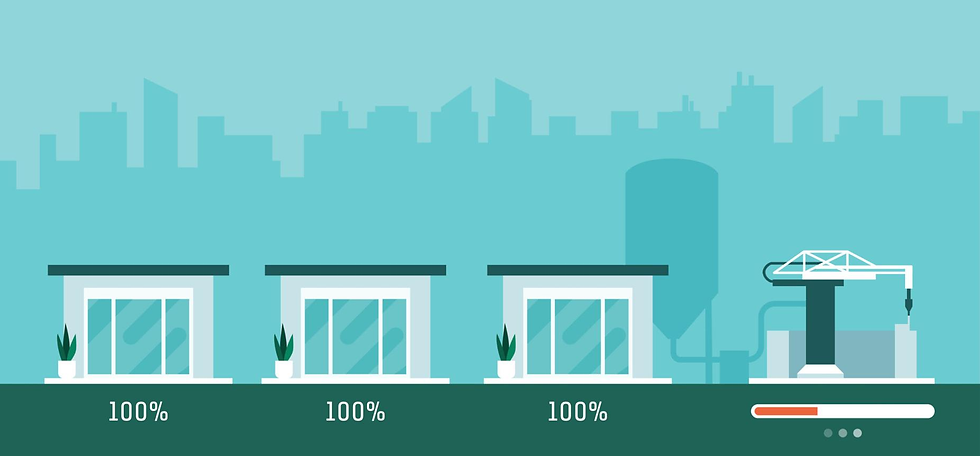
3D printing in construction refers to the process of creating building components or entire structures layer by layer using specialized machines and digital design files. Instead of relying on traditional methods such as bricklaying, concrete pouring with formwork, or extensive manual labor, giant robotic printers deposit materials like concrete, cement mixtures, polymers, or sustainable composites according to a pre-programmed design.
The technology works similarly to small desktop 3D printers, but on a much larger scale. These printers follow digital blueprints created using advanced design software, ensuring precision and reducing human error. Companies like ICON and COBOD International have already demonstrated the viability of this technology by building houses and structures within days rather than months.
Faster Construction Timelines
One of the biggest advantages of 3D printing in construction is speed. Traditional building projects often take several months or even years depending on complexity. Delays caused by weather conditions, labor shortages, supply chain disruptions, and logistical challenges are common.
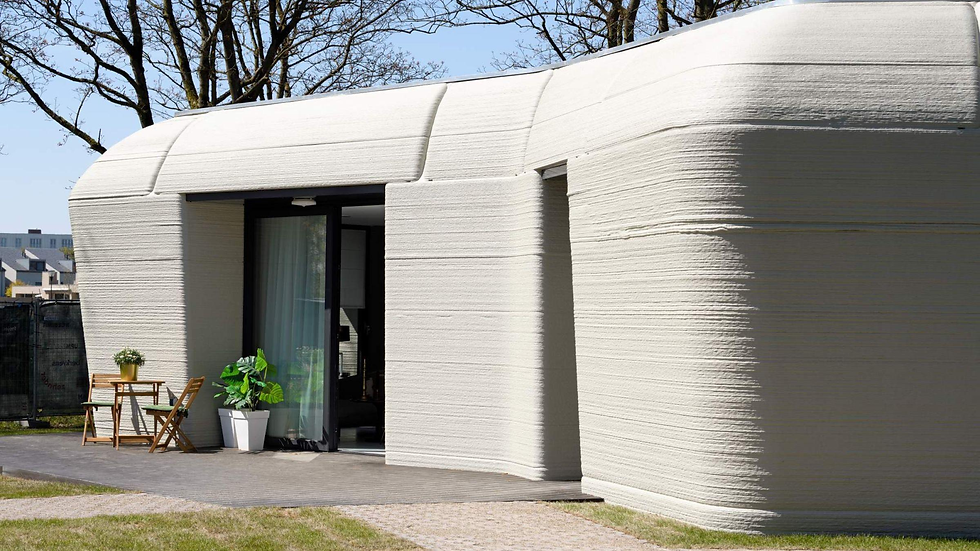
With 3D printing, walls and structural components can be printed continuously, sometimes completing the main framework of a house within 24 to 48 hours. By 2030, construction companies may rely on autonomous printing systems that operate almost continuously, dramatically reducing project timelines.
This speed can be especially valuable in disaster relief situations where temporary or permanent housing needs to be built quickly after earthquakes, floods, or war-related destruction.
Reduced Labor Dependency
The global construction industry is facing an increasing shortage of skilled labor. Tasks such as masonry, concrete work, and structural assembly require trained workers, and many countries are experiencing declining availability of such labor.
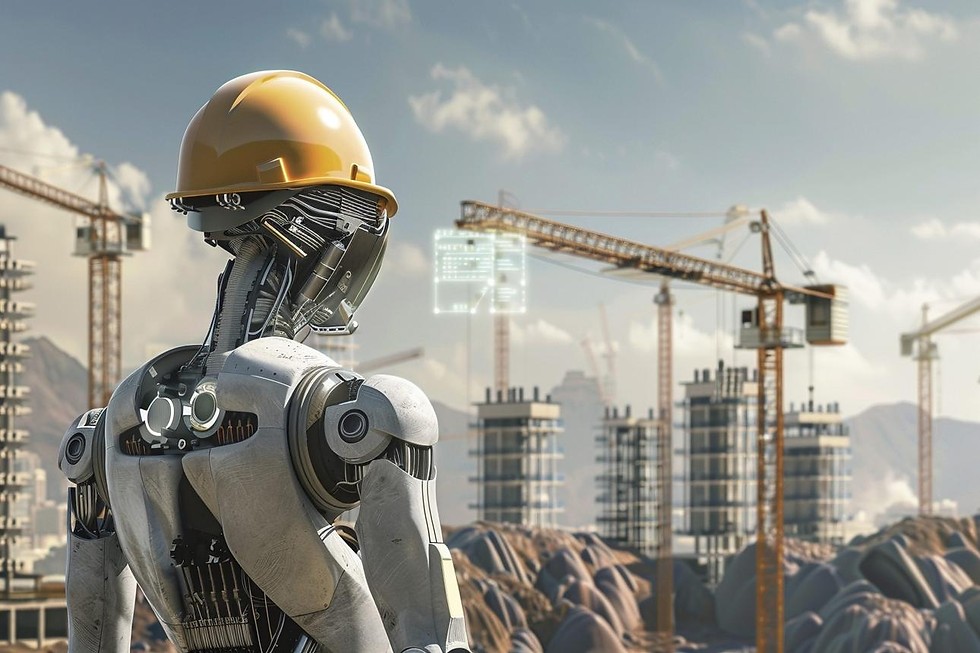
3D printing could significantly reduce dependence on large construction crews. Instead of hundreds of workers performing repetitive manual tasks, future construction sites may only require a small team of engineers, machine operators, quality inspectors, and software specialists.
This does not necessarily mean construction jobs will disappear. Rather, job roles will shift from manual labor toward operating advanced machinery, managing digital workflows, and maintaining automated systems.
Lower Construction Costs
Construction costs are influenced by material prices, labor expenses, project delays, and inefficiencies. Since 3D printers use materials more precisely, they significantly reduce waste. Traditional construction often generates excess concrete waste, unused bricks, damaged materials, and packaging waste.
3D printing minimizes this problem by depositing only the exact amount of material needed for each structural element. Lower labor requirements and faster project completion can also reduce overall expenses.
By 2030, affordable housing projects could increasingly depend on 3D printing technology to make housing more accessible for low-income populations worldwide.
More Sustainable and Eco-Friendly Construction
Sustainability has become a critical priority for modern infrastructure development. The construction sector contributes significantly to global carbon emissions because of cement production, transportation, and material waste.
3D printing supports sustainable construction in several ways:
Reduced material wastage
Lower transportation costs due to local production
Ability to use recycled construction materials
Reduced energy consumption during construction
Less dependence on temporary structures like formwork
Researchers are even experimenting with eco-friendly materials such as recycled plastics, industrial waste composites, and low-carbon concrete mixtures.
Future construction sites may become cleaner, quieter, and significantly more environmentally friendly compared to traditional sites filled with heavy machinery and waste materials.
Design Freedom and Architectural Innovation
Traditional construction methods often limit creativity because complex shapes require expensive molds, specialized labor, and additional time.
3D printing allows architects to design curved walls, organic shapes, intricate facades, and highly customized structures that would be difficult or expensive using traditional methods.
Architects can create innovative designs without worrying about conventional construction limitations. This opens possibilities for futuristic buildings, customized homes, and highly efficient structural designs optimized for both aesthetics and functionality.
By 2030, city skylines may begin featuring more unconventional and creative building designs thanks to additive manufacturing.
Challenges Slowing Adoption
Despite its enormous potential, 3D printed construction still faces major challenges.
Material Limitations
Most current construction printers primarily use concrete-based materials. More research is needed to develop materials suitable for high-rise buildings, long-term durability, and complex infrastructure.
Regulatory Challenges
Building codes and safety regulations in many countries have not yet fully adapted to 3D printed structures. Governments need to establish new standards for testing and approval.
High Initial Investment
Large-scale construction printers are expensive. Smaller contractors may struggle to afford such technology without financial support or partnerships.
Public Trust
Many people still question whether 3D printed buildings are as strong and durable as traditionally constructed buildings. Gaining consumer trust will take time.
The Future Construction Site in 2030
If adoption continues at its current pace, construction sites by 2030 may look radically different.
Instead of seeing hundreds of laborers manually carrying bricks and mixing cement, future sites could feature:
Massive robotic printing arms constructing walls automatically
AI-driven quality control systems scanning structural accuracy
Drones monitoring construction progress in real time
Autonomous vehicles transporting materials on-site
Engineers controlling machines using tablets and digital models
Minimal material waste and cleaner work environments
Technologies such as Artificial Intelligence, Autonomous Vehicle, and digital modeling systems like Autodesk Revit will work alongside 3D printing to create highly automated construction ecosystems.
Can Traditional Construction Survive?
Traditional construction methods will not disappear entirely by 2030. Large infrastructure projects such as bridges, skyscrapers, tunnels, and specialized industrial facilities may still require conventional techniques for many years.
However, residential housing, small commercial buildings, emergency shelters, and modular construction are likely to adopt 3D printing much faster.
Rather than replacing traditional construction completely, 3D printing will become a powerful complement that improves efficiency, reduces waste, and accelerates project delivery.

Conclusion
The rise of 3D printed buildings represents one of the most exciting technological shifts in the construction industry. By 2030, construction sites could look dramatically different from today’s labor-intensive environments.
Faster building times, reduced costs, sustainable practices, design flexibility, and increased automation make 3D printing a highly promising solution for the future of infrastructure development.
While challenges related to regulations, material development, and adoption remain, the direction is clear: construction is moving toward automation.
The construction site of the future may no longer be defined by cranes, scaffolding, and manual labor alone it may instead be powered by robots, intelligent software, and giant 3D printers building entire structures layer by layer.
The question is no longer if 3D printing will transform construction, but how quickly the world is ready to embrace it.


Comments